
Asteroid 99942 Apophis: Why NASA Confirms No Earth Impact in 2029
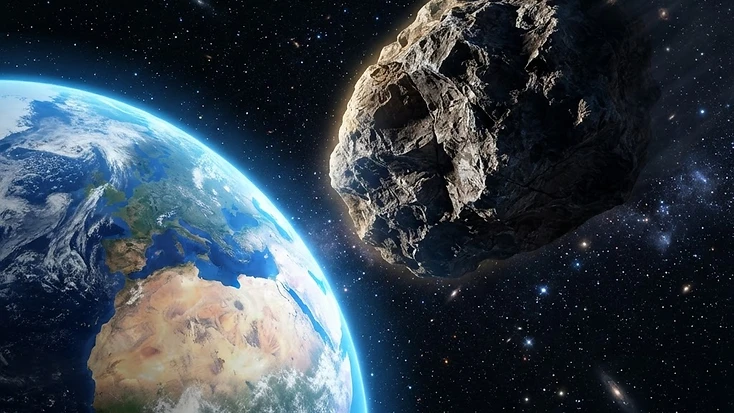
Claim being checked
"Some say the 99942 Apophis asteroid can hit Earth in 2029, is it true?"
Recent concerns regarding a potential Earth impact by the asteroid 99942 Apophis in 2029 have been definitively addressed by leading space agencies. NASA and the European Space Agency (ESA) have confirmed that the asteroid poses no collision risk during its upcoming close approach.
What the Claim Says
Social media and speculative reports have claimed that the asteroid 99942 Apophis is on a collision course with Earth, suggesting it could strike our planet on 13 April 2029.
Flarient Fact Checker Rating
This claim is entirely inaccurate or unsupported by facts.
The Verdict
False. While Apophis will indeed pass very close to Earth, rigorous orbital tracking and radar observations from NASA and the ESA have conclusively ruled out any possibility of an impact. The asteroid is projected to fly safely past our planet at a distance of approximately 32,000 kilometres.
Decomposition
- Sub-claim 1: Apophis is headed for an Earth impact in 2029.
- Sub-claim 2: There is significant scientific uncertainty regarding the 2029 trajectory.
Evidence Analysis
- Verification of Sub-claim 1: Orbital mechanics data from NASA’s Center for Near-Earth Object Studies (CNEOS) demonstrates that the asteroid’s path will miss Earth entirely. This trajectory has been refined through years of precise monitoring.
- Verification of Sub-claim 2: While initial calculations in 2004 indicated a small chance of impact, these were based on limited data. Subsequent radar observations have eliminated these early uncertainties, moving the impact probability to zero.
Rationale
The claim is false because it relies on outdated 2004 projections that have been superseded by two decades of high-precision tracking. Scientific organisations have reached an unambiguous consensus that the event is a safe flyby, rendering any fears of a collision baseless.
The Science
Asteroid trajectories are calculated using Newtonian gravity and solar radiation pressure models. When an object is first discovered, the margin of error is wide, leading to potential impact scenarios in statistical models. As observatories track the object over time, the 'error ellipse'—the region where the object might be located—shrinks significantly, eventually revealing a clear path that avoids Earth.
What the Data Shows
NASA's latest observational data from CNEOS confirms that the trajectory of Apophis is stable. Current radar measurements provide a definitive orbital solution that has allowed astronomers to map the 2029 encounter with extreme accuracy, ensuring no risk of impact.
Bottom Line
You do not need to worry about an asteroid strike in 2029. The flyby of 99942 Apophis will be a spectacular astronomical event, but it is scientifically confirmed to be entirely safe.
Live Space Weather Dashboard
Powered by Flarient — embed this on your site →
Sources
About this fact check: This verdict was generated by the Flarient Fact Checker using live space weather data from NOAA, NASA, and JPL, cross-referenced with AI analysis. It is not an official NOAA or government forecast. Always consult official space weather agencies for critical decisions.
Seen another space weather claim that seems off?
Submit a claim