
Why the Apollo 11 Moon Landing Was Not a Hoax: Fact-Checking the Conspiracy
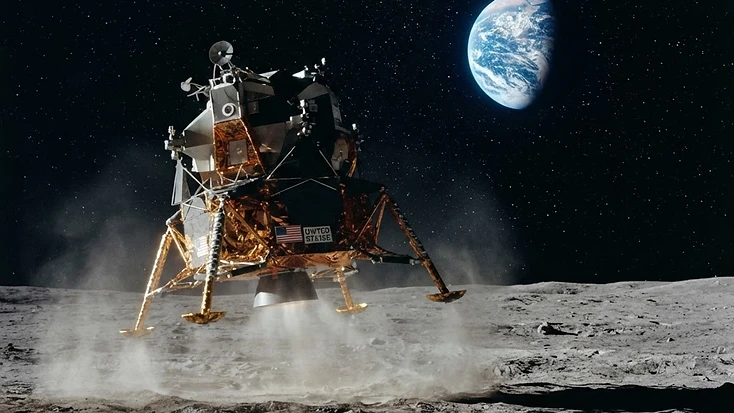
Claim being checked
"Was the first ever moon landing (Apollo 11) a hoax?"
The claim that the Apollo 11 lunar landing was a hoax is one of the most enduring conspiracy theories of the modern era, yet it remains entirely unsupported by scientific and historical evidence. Neil Armstrong and Buzz Aldrin successfully landed on the Moon on 20 July 1969, a monumental achievement verified by the global scientific community.
What the Claim Says
The conspiracy theory posits that the Apollo 11 moon landing was a staged event, filmed in a studio, and that humanity has never actually set foot on the lunar surface. Proponents of this view often cite perceived anomalies in photographs and video footage as proof of fabrication.
Flarient Fact Checker Rating
This claim is entirely inaccurate or unsupported by facts.
The Verdict
False. The mission was a genuine achievement of engineering and human exploration. There is zero credible evidence to suggest the event was staged, and the physical evidence left on the Moon, combined with independent international tracking, confirms the reality of the landing.
Decomposition
- The landing was a film set production rather than a real event.
- Anomalies in photographs (such as the flag movement or lack of stars) prove it is fake.
- The mission could not have succeeded given the technology of 1969.
Evidence Analysis
- Tracking Data: Stations globally, including those in the Soviet Union—a Cold War rival with every incentive to prove the US wrong—independently tracked the Apollo 11 spacecraft to and from the Moon.
- Physical Evidence: Astronauts returned with 382 kilograms of lunar rock samples, which have been analysed by independent labs worldwide for decades.
- Lunar Infrastructure: Retroreflectors left on the Moon during the Apollo missions continue to be used today by observatories to bounce lasers, allowing scientists to measure the precise distance between the Earth and the Moon.
Rationale
The conspiracy theory relies on the misinterpretation of scientific phenomena, such as how shadows behave in a vacuum or how light reacts to camera sensors. When these isolated observations are evaluated by experts in physics and photography, they consistently align with the laws of nature, leaving no room for the hoax narrative.
The Facts
NASA successfully conducted six crewed lunar landings between 1969 and 1972. These missions provided unprecedented data about the lunar surface, its composition, and its formation, contributing significantly to our modern understanding of the solar system.
Context
Apollo 11 was the culmination of the Space Race, a period of intense competition between the United States and the Soviet Union. The sheer scale of the mission required the collaboration of over 400,000 engineers, scientists, and technicians, making the logistics of maintaining a 'fake' secret virtually impossible.
Bottom Line
The Apollo 11 landing is one of the most scrutinised events in history, and it has withstood every rigorous scientific challenge. Readers should be wary of claims that rely on cherry-picked anomalies while ignoring the overwhelming body of corroborating physical and global evidence.
Live Space Weather Dashboard
Powered by Flarient — embed this on your site →
Sources
About this fact check: This verdict was generated by the Flarient Fact Checker using live space weather data from NOAA, NASA, and JPL, cross-referenced with AI analysis. It is not an official NOAA or government forecast. Always consult official space weather agencies for critical decisions.
Seen another space weather claim that seems off?
Submit a claim