

2026-08-13 · near asteroid
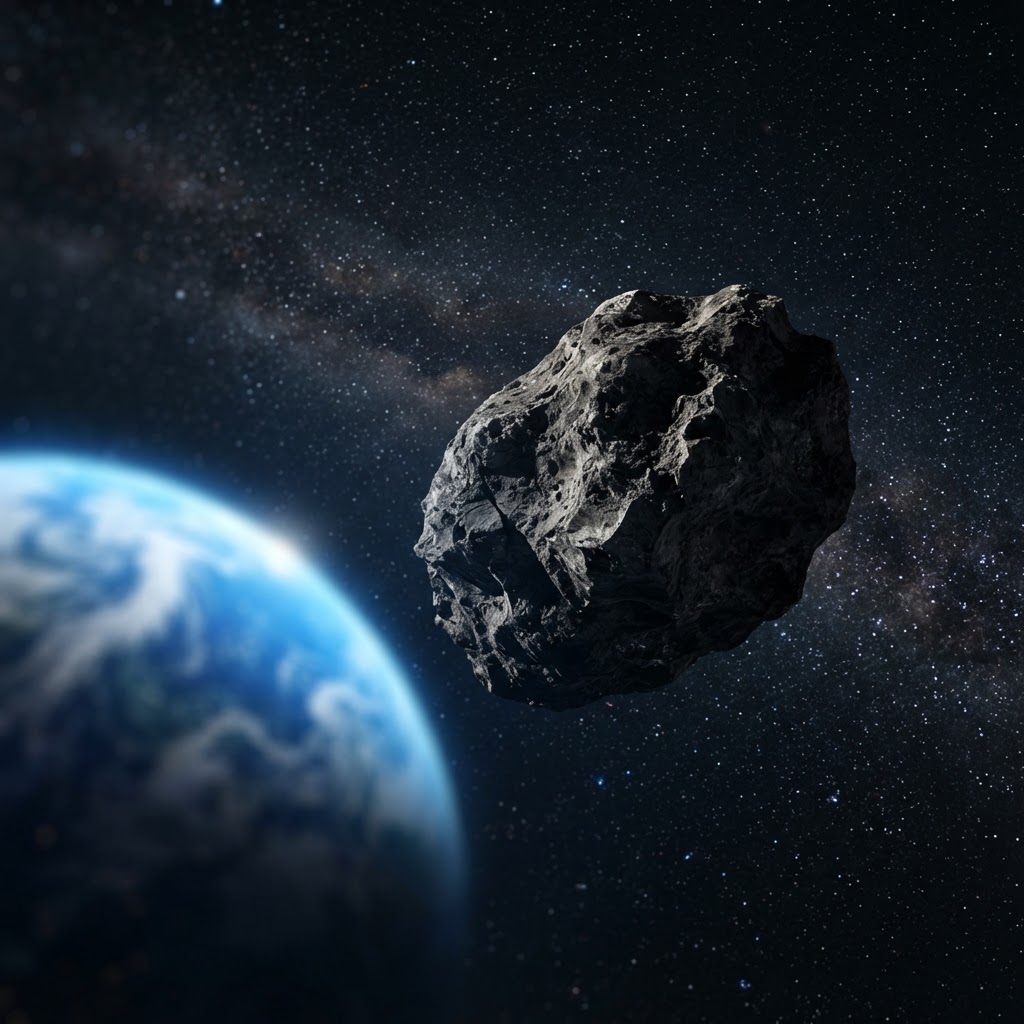
Asteroid 2025 AL2 Makes Its Close Approach
A minor near-Earth asteroid skirts past our planet while solar activity remains quiet for now.
Daily Statistics Brief
On 14 August 2026, the space weather environment remained notably tranquil. The planetary K-index peaked at a mild value of 3 during the early hours, failing to breach the threshold required for significant storms. By the time of this report, the index had settled to a negligible 0.7. Solar wind conditions mirrored this quietude, registering a steady velocity of 379 km/s with the interplanetary magnetic field’s north-south component (Bz) holding at 0 nT. Consequently, aurora activity dropped to 0 GW, offering no displays across high-latitude regions.
The Sun behaved predictably, producing only minor B-class flares throughout the day. Meanwhile, the Dst index bottomed out at -36 nT, a standard reading that reflects minimal disturbance in the magnetosphere. For those tracking near-Earth asteroids, 2025 AL2 provided the closest approach of the day. Data from NASA CNEOS confirmed that the rock passed without incident, maintaining a safe distance from our planet.
While the magnetic skies stayed hushed, the optical night sky told a different story. The Perseids meteor shower, debris shed by the comet 109P/Swift-Tuttle, remained highly active. Observers situated under clear, dark skies reported a zenithal hourly rate approaching 100 meteors per hour, with the radiant point clearly defined in the constellation Perseus. This annual spectacle provided a welcome distraction for researchers who typically pore over imagery of solar eruptions or UAP sightings.
Those looking for more technical breakdowns can consult the glossary or the NOAA SWPC archives for historical comparison. When set against the violent solar cycles captured in our archive, 14 August 2026 stood out as a day of profound stillness. For anyone planning observations for 15 August, please consult your local forecast to ensure optimal viewing conditions as the Perseids continue their display.
Aurora Oval — Peak Kp 3.0
Unsettled — aurora confined to high latitudes.
Auroral power: 0 GW
Space Events on This Day
The Daily Briefing
Read the full daily briefing — written from the live data — on its dedicated page.
Read full briefing →