How Solar Flares Impact Modern Electronic Systems
Solar flares drive space weather that can disrupt global infrastructure. Understanding these solar events helps us protect the sensitive technology powering our daily lives.

Solar Flares Impact Modern Electronic Systems
Our reliance on electricity and satellite networks has created a unique vulnerability to the whims of the Sun. While solar activity has occurred for billions of years, our modern civilisation now sits in the crosshairs of geomagnetic storms and high-energy radiation, making solar awareness a necessity rather than a scientific luxury.
Live Solar Flare Monitor
Powered by Flarient — embed this on your site →
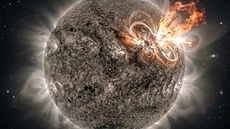
Solar flares originate from magnetic energy built up in the solar atmosphere, often near sunspots. When this energy releases, it creates intense bursts of electromagnetic radiation ranging from radio waves to X-rays, which arrive at Earth in roughly eight minutes. These flares often accompany coronal mass ejections, which are massive clouds of solar plasma that travel much slower but carry the real threat to our power grids.
The Science Behind It
The solar cycle follows an approximate 11-year pattern of intensity, with Solar Cycle 25 currently active. Solar flare classification runs from A-class at the low end to X-class at the high end, where each letter denotes a tenfold increase in energy. When these storms reach Earth, they interact with our magnetic field, inducing electrical currents that can overwhelm ground-based systems.
Physicists use the Kp index to measure the geomagnetic disturbance caused by these interactions, scaling from 0 to 9. A high index indicates significant turbulence in the magnetosphere, which often results in the beautiful, yet symptomatic, aurora appearing at lower latitudes than usual. This process is a constant reminder that our planet is deeply connected to its host star.
Real-World Implications
Electrical grids are the most susceptible infrastructure to severe solar storms. Ground-induced currents caused by rapid changes in the Earth magnetic field can damage high-voltage transformers, potentially leading to widespread power failures. As discussed in Solar Flares Influence Modern Electronic Infrastructure, our interconnected world leaves little room for such systemic instability.
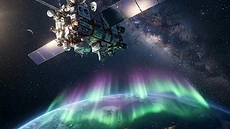
Satellite operations face a dual threat during active solar periods. Increased atmospheric drag from heating can de-orbit low Earth orbit satellites, while radiation damage can degrade sensitive on-board electronics. Navigational systems like GPS are particularly vulnerable, as ionospheric disturbances bend the signals we depend on for everything from aviation to shipping.
What You Can Do
Staying informed is the primary defence against solar weather disruption. By checking the archive for historical storm intensity, you can gain perspective on how major events have been handled in the past. If you are planning a trip to witness the northern lights, guided aurora tours in countries such as Iceland, Finland, Norway, and Canada offer expert knowledge on where and when to best view the skies.
Integrating data into your own workflow is surprisingly straightforward. If you manage a website or a technical blog, you can use embeddable widgets to provide your audience with real-time solar data. This proactive approach helps demystify space weather and ensures that the public remains aware of current solar conditions.
Key Takeaways
Solar flares and their resulting geomagnetic storms represent a natural risk that modern technology must accommodate. While we cannot stop the Sun from releasing energy, our capacity to predict and prepare for these events has never been higher. Robust design, redundant systems, and reliable forecasting remain our best tools for mitigating potential damage.
Understanding the mechanics of solar activity helps us appreciate both the beauty of the auroral oval and the fragility of our power grid. By staying educated on these processes, we ensure that our global society remains resilient against the inevitable fluctuations of our nearest star.
People Also Ask
Can a solar flare destroy all electronics?+
A solar flare is unlikely to destroy all electronics globally. While extreme X-class flares can induce current surges in long-distance power lines or damage satellite circuitry, most consumer devices are shielded by their small size and circuit design. The main risk remains to high-voltage grid infrastructure.
How long does it take for a solar flare to reach Earth?+
Electromagnetic radiation from a solar flare, including light and X-rays, travels at the speed of light and reaches Earth in approximately eight minutes. However, the associated solar plasma or coronal mass ejection travels much slower, typically arriving at Earth between 18 hours and several days after the initial flare.
What is the Carrington Event?+
The Carrington Event of 1859 was the most intense geomagnetic storm on record. It caused widespread telegraph failures and allowed aurora to be seen as far south as the Caribbean. If a storm of that magnitude occurred today, it would cause significant disruption to modern electrical and communication grids.
Continue Reading
Forecast These Questions
View all →Express your probability on these active forecast questions.