Solar Flare Monitoring for Home Use
Discover the reality behind home-based solar flare warning systems and how you can monitor space weather from your own living room.
Solar Flare Monitoring for Home Use
Many people search for a dedicated device they can plug into a wall outlet to warn them about incoming solar flares. In reality, there is no single consumer hardware product that functions like a smoke detector for space weather. Solar events happen millions of kilometres away, and tracking them requires a global network of satellites rather than a local sensor.
Live Solar Flare Monitor
Powered by Flarient — embed this on your site →
While you cannot buy a specific box to sit on your shelf, you can access the same data professional researchers use. The NOAA SWPC maintains a constant feed of solar activity that anyone with an internet connection can monitor.
Understanding how to interpret this data allows you to track the space environment with professional-grade accuracy.
The Science Behind It
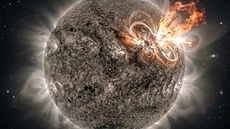
Solar flares are intense bursts of radiation released from the sun. These events are classified by their X-ray intensity, ranging from the weakest A-class to the most powerful X-class, with each level representing a tenfold increase in energy. Solar Cycle 25, which began in December 2019, reminds us that the sun is a dynamic engine that follows an approximately 11-year cycle.
When a flare occurs, light travels at 300,000 kilometres per second, meaning its effects reach us in roughly eight minutes. Coronal Mass Ejections, or CMEs, are clouds of charged particles that travel more slowly, typically between 400 and 700 kilometres per second, though some reach 3,000 kilometres per second. When these reach Earth, they interact with our magnetosphere, causing fluctuations in the Kp index.
Real-World Implications
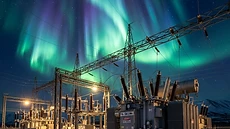
Space weather can influence systems we rely on daily. Strong geomagnetic storms, often measured by the Dst index to determine their intensity, can cause power grid instability and interfere with high-frequency radio communications. You can read more about these mechanics in our guide on how solar flares impact Earth and our technological infrastructure.
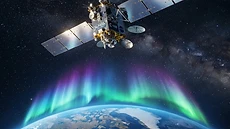
Satellites in low Earth orbit, where the ISS sits at about 408 kilometres, are particularly vulnerable to increased atmospheric drag during solar maximums. While most people will not notice minor fluctuations, those who operate radio equipment or rely on precise satellite navigation can experience noticeable disruptions. For a deeper dive into these geomagnetic patterns, you can check our analysis on understanding the Dst index and geomagnetic intensity.
What You Can Do
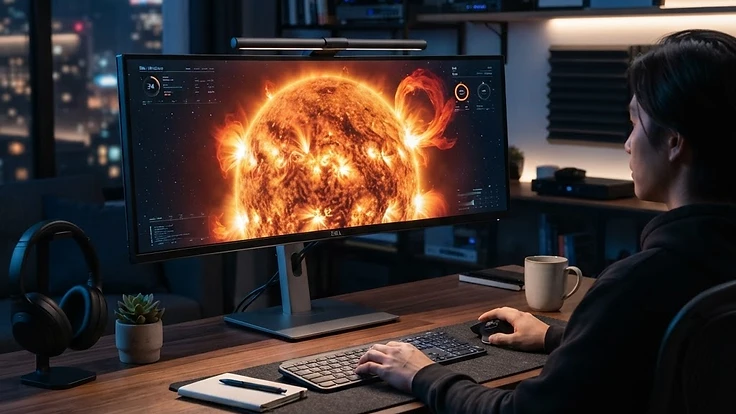
Since no commercial hardware device exists for your home, the best approach is to utilise digital dashboards that aggregate real-time data. You can observe current activity levels through solar imagery and keep an eye on active sunspots that show potential for flaring. If you are tracking the potential for a [local aurora forecast](/#local) after a flare, many enthusiasts find these data points essential for planning.
If you want to view these conditions when travelling to places like Iceland, Norway, Canada, or Alaska, consider booking guided aurora tours to improve your chances of witnessing the lights. You can also integrate live data into your own digital environment using embeddable widgets that provide visual updates on solar conditions.
These tools turn your computer or tablet into an effective monitoring station for space weather.
Key Takeaways
Solar flare monitoring is best handled through web-based platforms rather than proprietary home hardware. By keeping an eye on the solar cycle and understanding how geomagnetic storms translate to the G-scale, you become far more prepared than any off-the-shelf gadget could make you. Space weather is a global phenomenon, and the best way to track it is through the global data provided by space agencies.
Ultimately, the ability to monitor the sun provides a fascinating perspective on our place in the solar system. Whether you are a radio hobbyist or a casual observer, the data is available for everyone to explore. Stay curious about the skies and use the resources at your disposal to watch the sun as it enters its most active periods.
For observers
If you would like to complement data based solar monitoring with direct observation, for example imaging sunspots or trying portable astrophotography, one compact option for observers is Explore a compact capture setup.
Ad · Affiliate link. Flarient may earn a commission if you purchase through this link, at no additional cost to you.
Continue Reading
Forecast These Questions
View all →Express your probability on these active forecast questions.