Solar Flares Occur Frequently Throughout the Eleven-Year Cycle
Solar flares are a fundamental, recurring feature of our sun. Far from being rare anomalies, these explosive bursts of radiation occur on a predictable, yet dynamic, cycle of approximately eleven years.
Solar Flares Occur Frequently Throughout the Eleven-Year Cycle
Solar flares are an inherent aspect of our sun’s nature, driven by the intense magnetic forces at its core. Rather than being rare, isolated events, they occur with rhythmic consistency throughout the standard eleven-year solar cycle.
Live Solar Flare Monitor
Powered by Flarient — embed this on your site →
Since the beginning of Solar Cycle 25 in December 2019, our star has demonstrated this inherent volatility repeatedly. Understanding that these events are a normal part of the solar lifecycle helps shift our perspective from fear to informed observation.
The Science Behind It
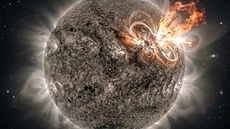
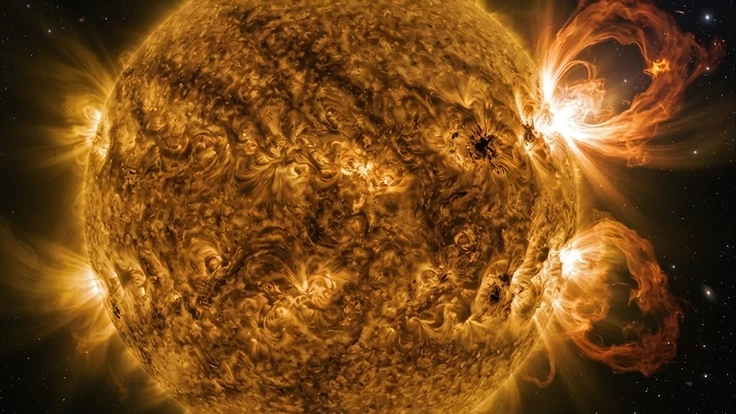
At its core, a solar flare is a sudden, explosive release of energy caused by the twisting and snapping of magnetic field lines near sunspots. These regions on the solar surface act as reservoirs for massive amounts of energy which, when released, accelerate particles to nearly the speed of light.
Astronomers categorise these events using a scale of A, B, C, M, and X, with each class being ten times more powerful than the last. An M-class flare is significant, but X-class events represent the most extreme end of this classification system.
These energetic outbursts send radiation and material hurtling through space. While light reaches Earth in about eight minutes, solar wind typically travels at speeds between 400 and 700 kilometres per second, though massive Coronal Mass Ejections (CMEs) can reach speeds as high as 3,000 kilometres per second.
Real-World Implications
When these high-energy particles interact with Earth's magnetosphere, they cause geomagnetic storms. Scientists track the severity of these disturbances using the G-scale, which ranks geomagnetic activity from G1 to G5.
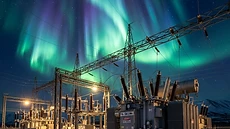
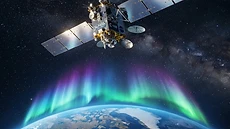
Significant events can disrupt long-range radio communications and increase drag on objects orbiting in low-Earth orbit, such as the International Space Station. While our atmosphere provides robust protection for life on the surface, modern technology like power grids remains vulnerable to intense space weather.
For a deeper dive into how utility providers maintain resilience, refer to our analysis on how power grid operators manage geomagnetic storms. Understanding these threats allows engineers to build more resilient infrastructure for the modern age.
What You Can Do
Monitoring space weather is the best way to stay prepared for periods of increased solar activity. You can check the current status of solar activity through our live dashboard to see real-time updates on flare classes and geomagnetic indices.
If you prefer a visual approach, look through our curated solar imagery to see the sun’s current state through instruments like the SDO. You can also explore our glossary to learn about technical terms like "Dst index" or "coronagraph" to better interpret data from sources like the NOAA SWPC.
Prefer to let a local guide do the driving? [Bookable aurora tours](https://vi.me/HuXHi) operate in Tromsø, Reykjavik, Yellowknife and Fairbanks, taking you straight to the night's best viewing window.
Key Takeaways
Solar flares are a natural, expected, and frequent occurrence. Their frequency ebbs and flows in line with the eleven-year cycle, ensuring that space weather remains a constant consideration for our technologically dependent society.
While the prospect of solar activity might seem daunting, consistent monitoring and historical archive data demonstrate that we are well-equipped to manage these events. Continued scientific observation allows us to enjoy the beauty of phenomena like the aurora while mitigating the risks posed to our orbital and terrestrial infrastructure.
For solar observers
For readers interested in tracking sunspots or trying basic solar imaging during the solar cycle, one compact option for portable daytime and night-sky capture setups is Explore an observation setup.
Ad · Affiliate link. Flarient may earn a commission if you purchase through this link, at no additional cost to you.
Continue Reading
Forecast These Questions
View all →Express your probability on these active forecast questions.