Solar Flares Regularly Exceed the Size of Earth
Solar flares are massive eruptions on the Sun that frequently dwarf our planet in scale. Understanding these events is key to grasping our place in the solar system.
Solar Flares Regularly Exceed the Size of Earth
When we look at the Sun, it appears as a steady, golden disc in the sky. In reality, our host star is a violent, churning engine of magnetic energy that periodically unleashes massive bursts known as solar flares.
Live Solar Flare Monitor
Powered by Flarient — embed this on your site →
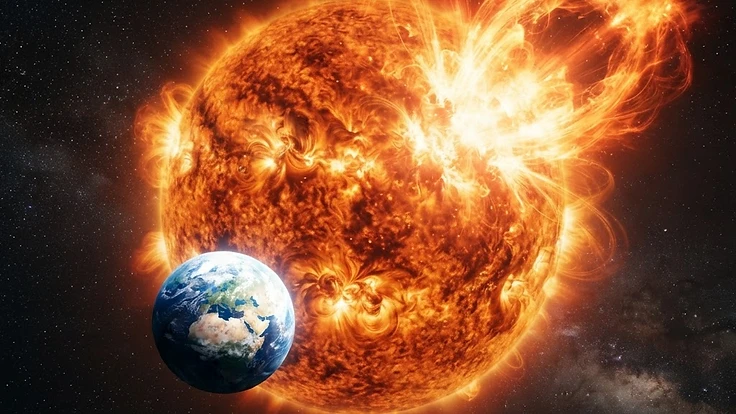
People often wonder if these flares are truly larger than our planet. The answer is a definitive yes, as these eruptions often cover areas many times the size of Earth.
The Science Behind It
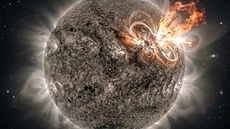
A solar flare is a sudden flash of increased brightness on the Sun, caused by the release of magnetic energy associated with sunspots. These events are measured in classes ranging from A, B, and C to the much more powerful M and X categories, where each class is ten times stronger than the one preceding it.
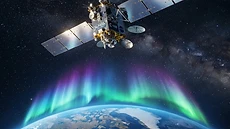
These eruptions occur throughout the approximately 11 year solar cycle, a pattern of activity that influences everything from radio waves to the intensity of the aurora seen at higher latitudes. You can explore the history of these events by checking the archive of past solar activity.
Because the Sun is so vast, a flare that spans a significant fraction of its surface is technically gargantuan by terrestrial standards. When these flares are accompanied by coronal mass ejections, they send billions of tonnes of plasma hurtling through space.
Real-World Implications
When these clouds of solar material strike Earth, they interact with our magnetic field to trigger a geomagnetic storm. These events are measured on a G-scale from G1 to G5, which corresponds to the Kp index.
Severe storms can induce electrical currents in long-distance transmission lines, potentially overwhelming power grids. They also pose risks to satellites orbiting at altitudes such as the 408 km mark occupied by the ISS.
Communication systems, including satellite-based GPS and high-frequency radio, may experience significant signal degradation during these periods. Modern infrastructure must be designed to withstand these cosmic weather shifts, a topic often explored in depth in our blog.
What You Can Do
Staying informed is the best way to mitigate the risks associated with solar weather. You can monitor conditions in real time using tools like the Flarient live dashboard to see how current solar activity might influence local conditions.
If you are an enthusiast wanting to catch the light shows triggered by these events, you might consider booking guided aurora tours in destinations like Iceland, Norway, Canada, or Sweden to maximise your chances of witnessing the phenomenon. For website owners, our embeddable widgets offer a way to keep your audience updated on the latest space weather data.
It is also worth brushing up on terminology by visiting our glossary to ensure you understand the difference between flares, coronal mass ejections, and general solar wind. Preparedness helps turn a potentially disruptive event into a manageable occurrence.
Key Takeaways
Solar flares are immense magnetic phenomena that regularly dwarf Earth in total area. While they represent a natural part of our star's lifecycle, their impact on our technology remains a point of significant scientific focus.
Understanding the physics behind these events allows us to protect our power grids and satellite networks more effectively. By using the right monitoring tools and staying alert during active solar cycles, we can continue to thrive in the shadow of our dynamic, beautiful Sun.
People Also Ask
How many Earths could fit in a solar flare?+
A large solar flare can span an area equivalent to dozens or even hundreds of Earths. Because the Sun's diameter is roughly 109 times that of Earth, flares often cover massive swaths of the solar surface, making them significantly larger than our entire planet.
Can solar flares destroy Earth?+
No. While solar flares can disrupt technology, satellite communications, and power grids, they cannot destroy Earth. Our planet's magnetic field and atmosphere act as a robust shield, protecting the surface from the direct impact of high-energy particles associated with these solar events.
How long does a solar flare take to reach Earth?+
Light and X-rays from a solar flare travel at approximately 300,000 kilometres per second, reaching Earth in about eight minutes. However, the slower-moving plasma from a coronal mass ejection typically takes one to three days to traverse the distance through space.
Continue Reading
Forecast These Questions
View all →Express your probability on these active forecast questions.