Astrobiologists Define the Habitable Zone Through Planetary Equilibrium
Discover how scientists identify the 'Goldilocks' conditions necessary for life to thrive on distant exoplanets beyond our solar system.
Defining the Habitable Zone Through Planetary Equilibrium
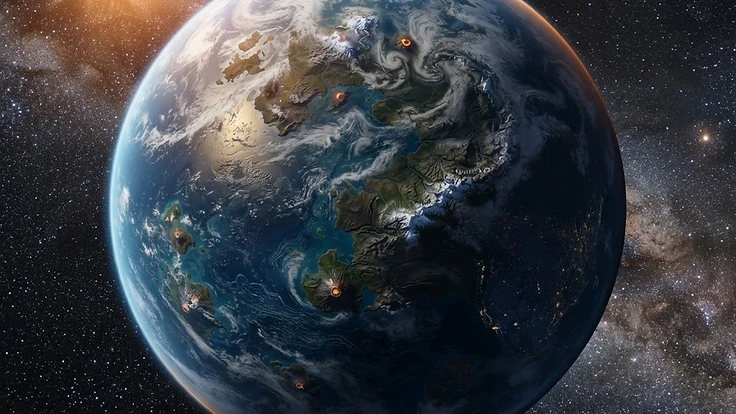
Astrobiologists rely on the concept of the habitable zone, often called the Goldilocks zone, to narrow down the search for life in our galaxy. This region defines the specific orbital distance around a star where conditions might allow liquid water to persist on a planet surface.
While the concept seems straightforward, it relies on complex modelling of planetary atmospheres and stellar radiation. It remains a cornerstone for prioritising which exoplanets warrant further study with high precision telescopes.
The Science Behind It
The habitable zone is primarily defined by the stellar flux, or the amount of energy a planet receives from its host star. If a planet is too close, extreme heat boils away liquid water, potentially leading to a runaway greenhouse effect like that seen on Venus.
Conversely, a planet too far from its star suffers from freezing temperatures where water remains locked as ice. Astrobiologists must also factor in the planet atmospheric composition, as greenhouse gases can trap heat and effectively widen the habitable region.
Atmospheric pressure plays a critical role in stabilising liquid water, as it influences the boiling point. Recent research suggests that planetary magnetic fields also serve as a vital defence against stellar winds, ensuring that atmospheres are not stripped away over aeons.
Understanding these variables requires precise analysis of stellar classifications. A cooler red dwarf star possesses a much narrower habitable zone than a hot yellow star like our own Sun.
Real-World Implications
The study of habitable zones dictates our entire strategy for space exploration and the search for extraterrestrial intelligence. It helps researchers decide which targets offer the highest probability of finding biosignatures, or chemical indicators of life.
These findings indirectly shape our appreciation of Earth as a fragile oasis within a vast, often hostile, cosmic landscape. Recognising the precarious balance of our own climate helps us better understand the dynamics of planetary stability elsewhere.
Furthermore, the technology developed to detect these distant worlds drives innovation in satellite infrastructure and remote sensing. We rely on these advancements for everything from monitoring geomagnetic storms, such as those measured by the Kp index, to protecting global communications networks.
What You Can Do
You do not need to be an astronomer to participate in the excitement of space discovery. Public databases provided by NASA allow anyone to explore the latest findings on confirmed exoplanets and their orbital characteristics.
If you want to observe the mechanics of our own solar system in action, you might start by exploring the aurora phenomena in your area to see how our planet reacts to solar activity. For those interested in the history of such events, the archive provides a fascinating look at past solar weather occurrences.
Many enthusiasts use embeddable widgets on their personal websites to keep track of live space weather data, fostering a deeper connection to the science of our universe. Whether you are tracking the next near-Earth asteroid or simply staying curious, the tools available today make space science more accessible than ever.
Rather someone else chase the oval for you? Guided Northern Lights trips run in Norway, Finland, Alaska and Greenland — the guide tracks the data and drives you to the gap in the clouds.
Key Takeaways
The habitable zone is a vital tool that serves as a compass in the immense search for life among the stars. It balances stellar energy with planetary attributes to identify where liquid water might exist.
While this scientific framework continues to evolve as we learn more about atmospheric chemistry, it remains our most reliable metric for filtering the noise of the galaxy. By observing our own solar system, we gain a clearer picture of how planets function under the influence of their stars.
Ultimately, the quest to define habitability is a mirror that shows us the uniqueness of our home. We continue to look outward, refining our methods and our understanding of what it means to be a living planet.
People Also Ask
Can life exist outside the habitable zone?+
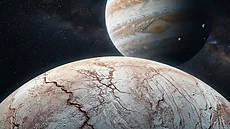
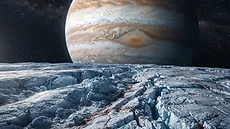
Yes, it is possible. Life could potentially exist in subsurface oceans on moons like Europa or Enceladus, heated by tidal forces rather than stellar radiation. These environments fall outside the traditional definition of a habitable zone but remain high-priority targets in the search for microbial life.
Does the habitable zone account for all types of stars?+
Yes, but the zone shifts significantly based on the star size and temperature. Red dwarfs have habitable zones very close to the star, while brighter stars have them much further out. The definition is dynamic and must be recalculated for every specific star system studied by astronomers.
Why is liquid water so important for life?+
Liquid water acts as a universal solvent, allowing chemical reactions necessary for life to occur. It is stable over a wide range of temperatures and pressures, and its unique properties make it ideal for transporting nutrients and facilitating complex biological processes within living cells.
Continue Reading
Forecast These Questions
View all →Express your probability on these active forecast questions.