The Possibility of Extraterrestrial Life Within Our Solar System
Could we be sharing our cosmic neighbourhood with alien life? We examine the potential for organisms to exist on moons and planets orbiting our sun.
The Search for Life Beyond Earth
For generations, humanity has gazed upward, wondering if life exists elsewhere in the cosmos. While we often look toward distant star systems, our own backyard contains environments that might support biological processes. Investigating these possibilities changes our perspective on how common life might be in the universe.
Modern astrobiology focuses on the criteria for habitability, primarily the presence of liquid water, an energy source, and specific chemical building blocks. By studying our neighbours, we gain insights into the fragility and resilience of life. This pursuit is not just about finding aliens, but about understanding our place among the planets.
The Science Behind Habitability
Water is the essential solvent for life as we know it, yet it exists in various forms across the solar system. While the surface of Mars is currently a frozen desert, geological evidence suggests it once held vast lakes and rivers. Scientists actively search for subsurface water that might sustain microbial life today.
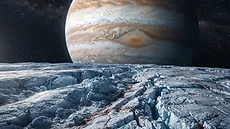
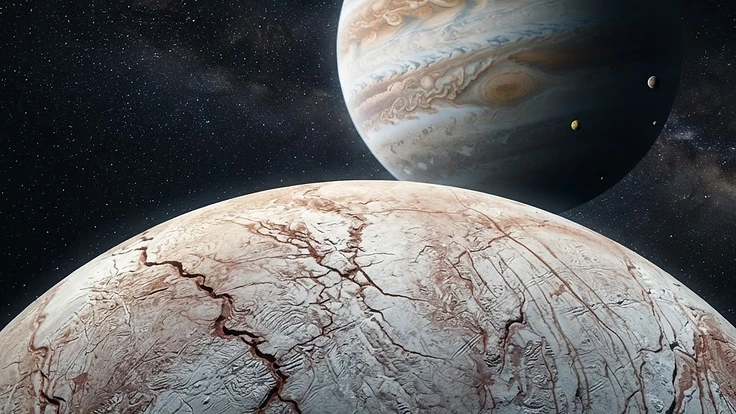
Moons like Europa and Enceladus present even more compelling cases. Beneath their thick icy crusts lie global oceans kept liquid by tidal heating from their parent gas giants. These submarine environments mirror conditions near hydrothermal vents on the ocean floor, where life on Earth flourishes in darkness.
We also analyse the chemistry of these worlds to see if they possess the carbon based molecules required for biological structures. Beyond liquid water, researchers investigate solar energy flux and chemical gradients that could fuel metabolism. Understanding these mechanisms helps us define the narrow boundary between a sterile rock and a living world.
Real World Implications
Discovering evidence of life, even at a microbial level, would fundamentally alter our understanding of biology. It would suggest that life is a natural outcome of planetary evolution rather than a singular fluke. This knowledge influences how we design space missions and where we invest our exploration budgets.
If we confirm life exists nearby, it raises significant questions about planetary protection and the risks of cross contamination. We must ensure that our probes do not carry Earth microbes to these fragile ecosystems. This discipline, known as forward contamination defence, is central to current space policies set by NASA.
Furthermore, the search for life drives technological innovation in robotics and sensing equipment. Instruments developed to detect chemical signatures on distant moons often find immediate applications in environmental monitoring on Earth. As we learn to identify the subtle signs of life, we improve our capacity to study Earth as a planet within a broader system.
What You Can Do
Staying informed about the latest planetary research is easier than ever with modern digital tools. You can track ongoing missions and their findings by visiting the glossary to understand complex astrobiological terms. Accessing data from space observatories provides a clearer view of the challenges these missions face.
If you are interested in the broader context of our cosmic environment, keeping an eye on near-Earth asteroid movements or monitoring space weather helps you appreciate the dynamic nature of our system. You can even use embeddable widgets to display real time data on your own websites. These resources bridge the gap between abstract scientific data and the reality of living in a solar system that is constantly shifting.
Key Takeaways
The solar system remains our most accessible laboratory for testing the origins of life. Whether on the icy moons of Jupiter or the dusty plains of Mars, the search for biological signatures is a testament to human curiosity. We continue to refine our methods and expand our reach into the dark reaches of space.
By continuing to observe, measure, and analyse these worlds, we move closer to answering one of the oldest questions in human history. Whether or not we find neighbours, the journey itself provides an invaluable map of the possibilities for life across the wider galaxy.
People Also Ask
Is there life on Mars currently?+
There is no definitive proof of life on Mars yet. While missions have confirmed the presence of organic molecules and ancient water, scientists continue to search for evidence of living or fossilized microbes in the subsurface soil.
Why is Europa considered a candidate for life?+
Europa is a top candidate because it possesses a vast, salty ocean of liquid water beneath its thick icy shell. Tidal flexing from Jupiter provides internal heat, which could support life similar to the organisms found near Earth deep sea vents.
What is the biggest challenge in finding life in our solar system?+
The primary challenge is the extreme distance and harsh environments of these worlds. Reaching subsurface oceans requires advanced drilling technology, and maintaining communication with landers over millions of kilometres remains a significant engineering hurdle.
Continue Reading
Forecast These Questions
View all →Express your probability on these active forecast questions.