Choosing High-Quality Cameras for Noctilucent Cloud Photography
Discover the essential camera gear and techniques for capturing the ethereal glow of noctilucent clouds, the highest clouds in our atmosphere.
Capturing the Ethereal Glow of Noctilucent Clouds
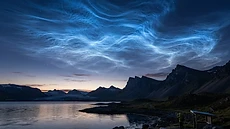
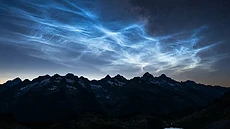
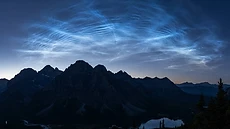
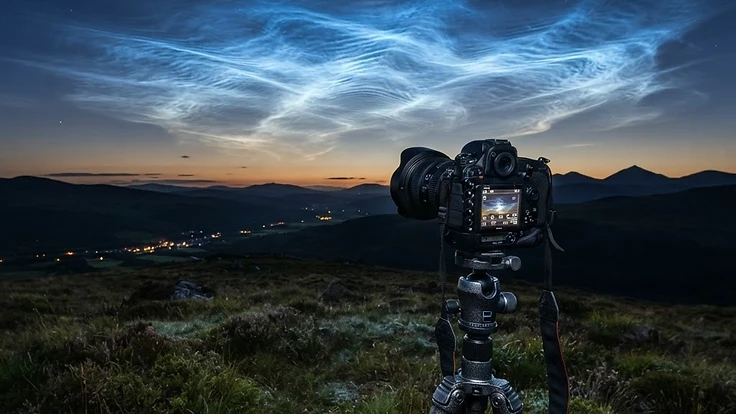
Noctilucent clouds, also known as polar mesospheric clouds, represent one of the most elusive and striking phenomena in the night sky. Floating at altitudes of roughly 80 kilometres, these ice crystal formations catch the sunlight long after the sun has dipped below the horizon for observers on the ground.
Capturing them requires more than just luck, as it demands equipment capable of handling low-light conditions and long exposures. Professionals and hobbyists alike seek out cameras that balance sensor sensitivity with low noise performance to document these silvery-blue displays.
The Physics of Noctilucent Clouds
These clouds form in the mesosphere, specifically in the very cold regions near the poles during the summer months. Unlike ordinary clouds that reside in the lower troposphere, noctilucent clouds consist of ice particles that nucleate on meteor smoke, which is the fine dust left behind by incoming space debris.
Their appearance is highly seasonal and latitude dependent, often coinciding with the high altitude reality of noctilucent clouds that requires specific atmospheric conditions. Because they sit so high above the Earth, they reflect sunlight from below the horizon, creating a striking contrast against the deepening twilight.
Understanding these features is essential for any sky watcher interested in space science. While you observe these clouds, remember that the sun itself follows an 11-year cycle, which can influence various atmospheric and solar interactions that affect our glossary of terms regarding the night sky.
Equipment Choices and Performance
To document these transient events, you need a camera with a large sensor, such as a full-frame mirrorless or DSLR model. Larger pixels generally provide better signal-to-noise ratios, which is crucial when shooting in the dim, blue light of nautical or astronomical twilight.
Brands such as Sony, Nikon, and Canon have long been the industry favourites for their range of fast prime lenses. A lens with an aperture of f/2.8 or wider is necessary to gather enough light without requiring excessively long shutter speeds that might cause star trailing.
Beyond the camera body, your choice of tripod is equally vital to ensure absolute stability during long exposures. Vibration reduction should always be disabled when the camera is mounted, as the movement of the internal mechanism can actually introduce blur rather than preventing it.
Practical Preparation for Success
Predicting the appearance of noctilucent clouds is part art and part science. Monitoring local weather patterns is essential, but so is understanding the broader context of space weather that impacts our upper atmosphere.
If you are planning an expedition, you might consider [guided aurora tours](/https://vi.me/HuXHi) in countries like Iceland, Norway, or Canada, as these regions offer the dark skies and northern vantage points perfect for both auroral displays and noctilucent clouds. Keeping track of current data is easier when you utilise tools like the Flarient live dashboard to stay updated on conditions.
You can even embed on your site specific data feeds to track real-time changes in the ionosphere or upper atmosphere. This preparation ensures that when the conditions align, you are ready to capture the moment with precision and clarity.
Key Takeaways for the Serious Photographer
Success in capturing noctilucent clouds relies on a combination of patient observation and reliable, low-light hardware. Prioritise a full-frame sensor and fast glass, but do not neglect the importance of a sturdy tripod and a solid understanding of your local twilight window.
By keeping a close eye on the local aurora forecast and atmospheric data, you increase your chances of witnessing these high-altitude wonders. Persistence remains the most valuable tool in any photographer's bag when chasing the fleeting light of the mesosphere.
People Also Ask
What is the best time of year to see noctilucent clouds?+
Noctilucent clouds are best viewed during the summer months in the northern and southern hemispheres, typically between late May and August in the north. They appear when the sun is between 6 and 16 degrees below the horizon, providing the perfect angle to illuminate the high-altitude ice crystals.
Do I need a special telescope to see noctilucent clouds?+
No, you do not need a telescope. Noctilucent clouds are large, expansive structures that are best viewed with the naked eye or a standard camera lens. A wide-angle lens is ideal for capturing their extensive, wave-like patterns across the twilight horizon, which telescopes are too narrow to frame.
How do noctilucent clouds differ from the aurora?+
Noctilucent clouds are physical ice formations in the mesosphere that reflect sunlight. In contrast, the aurora is a light show caused by solar wind particles colliding with Earth's magnetic field in the upper atmosphere. While both occur at high altitudes, they have entirely different physical causes and visual appearances.
Continue Reading
Forecast These Questions
View all →Express your probability on these active forecast questions.