Cislunar Space Represents the New Frontier for Human Activity
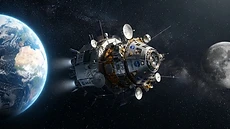
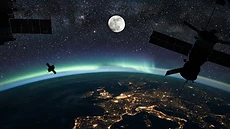
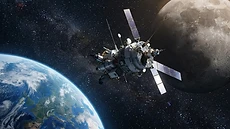
Cislunar space, the region between Earth and the Moon, is rapidly transforming into a bustling arena for global commerce, research, and national security interests.
Cislunar Space Represents the New Frontier for Human Activity
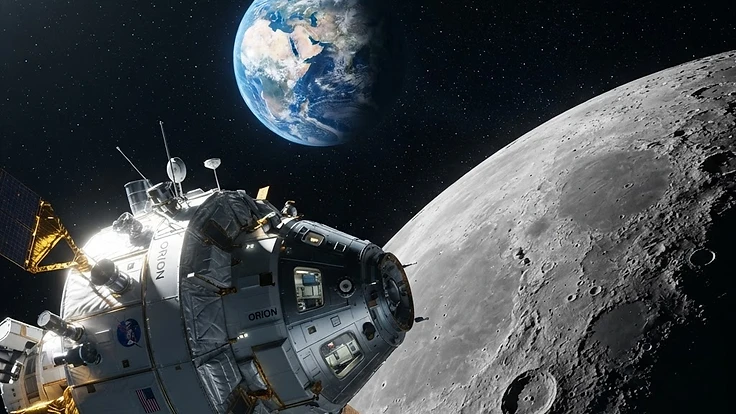
Cislunar space describes the vast, mostly empty volume between our planet and the Moon. While humanity has spent decades orbiting within a few hundred kilometres of Earth, we are now pushing further into the deep gravity well that connects us to our lunar neighbour. This transition from low Earth orbit to the region surrounding the Moon marks a pivotal moment in our history as a spacefaring species.
This territory is becoming vital because it serves as the staging ground for deep space exploration. Establishing a presence here allows us to test technologies for long term missions, manage critical satellite infrastructure, and eventually fuel the future of lunar industrialisation. It is no longer just a destination for scientific curiosity but an extension of the human economic sphere.
The Science Behind It
The physics of cislunar space revolves around the complex interplay of gravitational forces. Objects in this region are governed by the gravitational tug of both the Earth and the Moon, creating unique points of stability known as Lagrange points. These locations, particularly the Earth-Moon L1 and L2 points, provide ideal sites for positioning satellites that need to maintain a fixed relationship with the lunar surface or the far side of the Moon.
Navigating this environment requires a precise understanding of orbital mechanics which differs significantly from standard Earth orbit procedures. Energy requirements for travelling between these points are distinct, often relying on the natural orbital pathways that connect the two bodies. Understanding the glossary of these trajectories is essential for any organisation planning to operate infrastructure beyond the traditional 408 kilometre altitude of the ISS.
Radiation levels in cislunar space are also much higher than those experienced near our planet. Without the protective shield of the Earth's magnetic field, spacecraft and crews are more susceptible to high energy particles from the Sun. Engineers must rely on data from the ESA Space Weather office to model these risks and design robust shielding for the next generation of lunar explorers.
Real-World Implications
The shift toward cislunar activity brings immediate consequences for global communications and navigation. Many of our current satellites operate in high altitude orbits, but a permanent lunar presence will require a dedicated communications network that does not rely on ground stations on Earth. This transition mirrors the challenges discussed in How Solar Flares Impact Modern Electronics, where we must protect systems from the whims of the solar wind.
Furthermore, the economic promise of mining asteroids and harvesting lunar ice has moved from science fiction to serious debate. Organisations are currently analysing the feasibility of extracting resources to fuel spacecraft in orbit. This capability would fundamentally change the cost of space travel by enabling a refuelling infrastructure that operates entirely in the vacuum of space.
Defence and national security interests are also playing a significant role in this rapid expansion. Monitoring the region for non-cooperative objects is a priority for major space agencies, requiring advancements in tracking technology. Ensuring the safety of this shared environment is essential to prevent collisions and maintain the sustainability of future lunar endeavours.
What You Can Do
You can keep track of the conditions that define our space environment by staying informed about ongoing solar cycles. The Sun dictates the safety of space travel through its 11 year rhythm of activity. You can follow this dynamic by monitoring the K-index which provides an essential measure of geomagnetic storm intensity affecting satellite operations.
For those interested in the visual impact of space weather, understanding the aurora is a great starting point. Whether you are interested in the Northern Lights or the Southern Lights, you can check your local aurora forecast to see if solar activity might light up your night sky. If you are planning a trip to witness these events, you might look into guided aurora tours in countries like Iceland, Norway, or Canada to ensure a safe and memorable experience.
Using accessible digital tools is the best way to keep up with developments in our celestial neighbourhood. Flarient provides a comprehensive dashboard where you can track solar imagery and current space conditions. You can even embed widgets on your own site to display real time data for your community or research group.
Key Takeaways
Cislunar space is fundamentally changing how we define our reach into the cosmos. It is the bridge between our home planet and the infinite possibilities of the solar system. By mastering the physics and logistics of this region, we are laying the foundation for a permanent human presence beyond our current orbit.
While the challenges of radiation, navigation, and infrastructure remain significant, the progress we see today is unprecedented. We are transitioning from brief, exploratory visits to establishing sustainable systems. As we continue to monitor the Sun and the space around us, we must maintain our focus on collaboration and safety to ensure that this new frontier remains open for the benefit of all humanity.
People Also Ask
What is the difference between cislunar and lunar space?+
Cislunar space refers to the entire region between the Earth and the Moon, including the orbits surrounding both bodies. Lunar space typically refers specifically to the immediate vicinity of the Moon and its surface. Cislunar is the broader term covering the transition zone between our home planet and our satellite.
Why is it difficult to navigate in cislunar space?+
Navigating cislunar space is complex because it involves the competing gravitational pulls of both the Earth and the Moon. Unlike low Earth orbit, where gravity is relatively uniform, this region features changing gravitational gradients, requiring highly precise orbital mechanics and fuel management for any spacecraft moving between these points.
How does space weather affect operations in cislunar space?+
Space weather, driven by solar wind and flares, creates high radiation environments outside Earth's magnetic protection. These charged particles can damage sensitive satellite electronics, degrade solar panels, and pose significant health risks to humans travelling beyond Earth's protective field, making constant monitoring of the solar cycle vital for mission success.
Continue Reading
Forecast These Questions
View all →Express your probability on these active forecast questions.