Space Agencies Navigate the Complexities of Cislunar Space
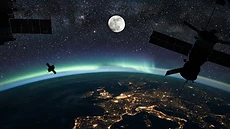
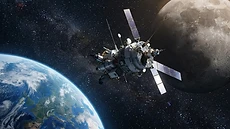
Cislunar space has become a critical theatre for modern exploration. Understanding how space agencies navigate the region between Earth and the Moon is essential for the future of orbital safety and mission success.
Space Agencies Navigate the Complexities of Cislunar Space
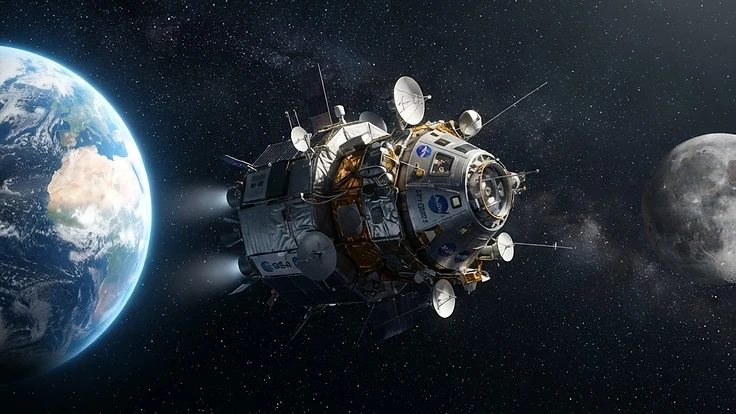
Cislunar space, the region extending from Earth to the Moon, is currently undergoing a period of intense activity. Agencies like NASA and ESA now manage a growing density of assets that must traverse this environment to reach lunar orbit or deep space destinations.
Navigating this area requires more than simple orbital mechanics. It involves managing complex gravitational influences, radiation hazards, and the persistent threat of solar weather that can impact sensitive hardware.
The Science Behind It
At the heart of cislunar navigation lies the challenge of gravity. Unlike the predictable environment of low Earth orbit where the ISS resides at roughly 408 kilometres, the space between Earth and the Moon is dominated by shifting gravitational tugs from both bodies.
Space agencies use sophisticated modelling to calculate trajectories. These paths must account for solar wind travelling at 400 to 700 kilometres per second, which can displace satellites if not properly monitored. When solar activity increases, space weather events trigger fluctuations measured by the Kp index, indicating the potential for geomagnetic disturbances.
Agencies also watch for high energy events like coronal mass ejections. These can travel at speeds up to 3,000 kilometres per second, creating hazardous conditions that require autonomous adjustments to onboard shielding and communications protocols.
Real-World Implications
Navigating cislunar space directly affects the infrastructure supporting modern life. Global communications rely on satellite constellations that must remain stable despite solar interference. Frequent solar flares serve as a reminder that our technological reach is vulnerable to the volatile nature of the Sun.
Beyond communications, there is the ever-present issue of orbital traffic. Agencies like ESA work to catalogue and avoid space debris, which poses a constant risk to high-value satellites operating in or passing through the cislunar environment.
As discussed in Space Debris Poses a Growing Challenge to Orbital Safety, keeping these lanes clear is a task that grows in complexity as more nations launch missions.
What You Can Do
Understanding your local space environment is easier than ever. You can consult the [local aurora forecast](/aurora-forecast) to see how current geomagnetic conditions might influence satellite performance or signal propagation in your area. For those interested in the history of these phenomena, our archive holds data on significant past events.
If you are planning an expedition to see the night sky, we recommend booking guided aurora tours across prime locations in Iceland, Norway, Canada, and Alaska. These experts combine local knowledge with real-time solar data to maximise your chances of a successful sighting.
You can also monitor solar imagery through tools like SDO to see the Sun in real time.
Key Takeaways
Cislunar space is far from empty and requires constant vigilance. Through international cooperation and rigorous data analysis, space agencies ensure that our ventures into the deep reach of the Earth-Moon system remain safe.
Remaining informed about space weather allows everyone to appreciate the delicate balance of our orbital environment. Whether you are tracking a near-Earth asteroid or simply observing the effects of the solar cycle, your engagement helps bridge the gap between scientific inquiry and public awareness.
People Also Ask
What is cislunar space?+
Cislunar space is the volume of space between the Earth and the Moon, including the lunar orbit. It acts as a critical gateway for deep space exploration and contains various satellites, lunar probes, and orbiting infrastructure essential for scientific and commercial space activities.
Why is solar weather a problem for space agencies?+
Solar weather, including solar flares and coronal mass ejections, releases charged particles that can damage satellite electronics, degrade communications, and increase atmospheric drag. Agencies must monitor these events to protect high-value orbital assets and ensure the safety of deep space missions.
How do satellites avoid colliding with space debris?+
Agencies use precise tracking data to monitor space debris in real time. When a potential collision is identified, mission controllers perform orbital manoeuvres to adjust the satellite's trajectory, ensuring it remains at a safe distance from identified objects or other orbiting craft.
Continue Reading
Forecast These Questions
View all →Express your probability on these active forecast questions.