Engineers Harden Spacecraft Against the Harsh Realities of Solar Weather
Spacecraft must endure extreme solar radiation and electromagnetic storms. Learn how engineers design for resilience against these space weather challenges.
Engineering Spacecraft for Resilience in Harsh Solar Environments
Spacecraft operate in an environment defined by high energy particles and erratic electromagnetic activity. Unlike terrestrial structures, satellites face constant bombardment from the solar wind and potential surges from geomagnetic storms. Engineers must ensure these systems survive for years while orbiting far above the protection of the Earth's atmosphere.
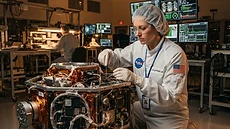
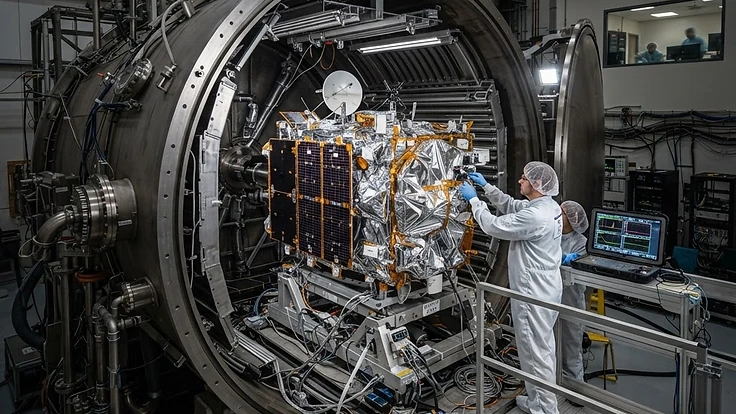
Designing for this resilience is a complex discipline that bridges physics and material science. Every component must function reliably despite the absence of repair crews, making rigorous ground testing essential for mission success.
The Science Behind Space Weather Hazards
The sun emits a constant stream of plasma known as the solar wind, which typically travels at 400 to 700 km/s. When solar flares erupt, they release massive amounts of energy across the spectrum, often accompanied by Coronal Mass Ejections. These events can trigger a geomagnetic storm that disrupts orbital mechanics and onboard electronics.
Engineers categorise these threats using metrics like the G-scale which spans from G1 to G5. High-energy particles can penetrate shielding, leading to surface charging or deep dielectric charging within circuit boards. Such events cause single-event upsets where bits flip in computer memory, potentially compromising entire mission objectives.
Real-World Implications for Global Infrastructure
The robustness of our orbital assets dictates the reliability of modern communication and navigation. When a powerful storm strikes, it can induce currents in satellite solar arrays and internal wiring. This increases the risk of permanent hardware degradation or loss of communication.
Beyond immediate damage, solar activity impacts the upper atmosphere's density, creating drag that alters orbital decay rates. Monitoring these conditions is essential, as noted in the physics of solar flares.
Engineers rely on historical data found in the archive to model future survivability requirements.
What You Can Do to Monitor Space Weather
Staying informed is the best way to understand how these environmental changes affect our daily technology. You can track current conditions using Flarient's real-time dashboard which provides clear visualisations of solar activity. These tools help bridge the gap between complex satellite telemetry and public understanding.
If you want to integrate this data into your own projects, you can use our embeddable widgets on your website. For those curious about the terminology used by engineers, our glossary provides quick definitions for complex terms. Understanding these fluctuations is essential for anyone interested in the resilience of our space-based infrastructure.
Key Takeaways for Future Missions
Designing for space weather requires a combination of robust hardware shielding and redundant software systems. We cannot control the solar cycle, but we can build systems that withstand its intensity. As our reliance on satellites grows, our methods for testing and hardening these machines will continue to evolve.
By leveraging accurate data and rigorous testing, we ensure that our technology remains viable amidst the unpredictable nature of our star. Resilience in space is not just about survival, it is about maintaining the connectivity that powers our modern civilisation.
People Also Ask
What happens to a satellite during a solar storm?+
During a solar storm, satellites may experience surface charging, deep dielectric charging, or single-event upsets in their computer memory. These phenomena can lead to temporary sensor glitches, communication loss, or in extreme cases, permanent hardware failure due to induced electrical currents within the sensitive onboard circuitry.
How do engineers simulate space weather on Earth?+
Engineers use ground-based facilities like thermal vacuum chambers and radiation testing laboratories to simulate the vacuum and particle bombardment of space. They subject components to high-energy ion beams and extreme temperature fluctuations to ensure materials and electronics can survive the harsh conditions of their operational orbit.
Why is the Kp index important for satellite operations?+
The Kp index measures the magnitude of geomagnetic disturbances on a scale of 0 to 9. It is vital for satellite operators because higher values indicate increased ionospheric density and potential electromagnetic interference, which can cause increased orbital drag or data corruption in sensitive spacecraft instruments.
Continue Reading
Forecast These Questions
View all →Express your probability on these active forecast questions.