
Aerospace Engineering Defined and Explored
Aerospace engineering is the backbone of modern aviation and space exploration. This guide explains what the discipline entails and the critical roles engineers play in our skies and beyond.
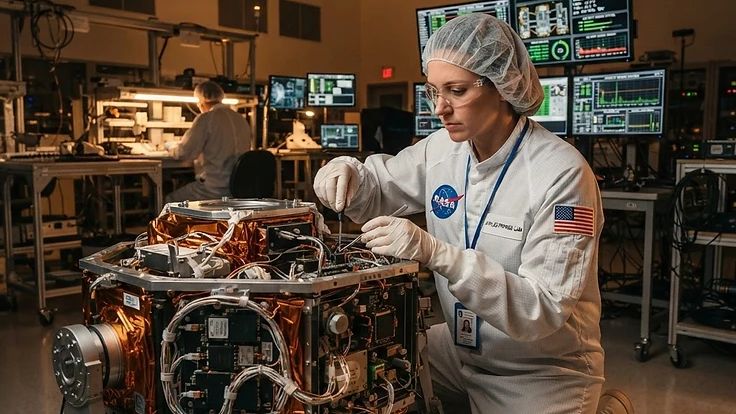
Aerospace Engineering Defined and Explored
Aerospace engineering stands as the pinnacle of human ingenuity, combining the complex worlds of aerodynamics, materials science, and propulsion. It is the field responsible for designing, building, and maintaining everything that flies, from the humble passenger aeroplane to satellites orbiting deep in the vacuum of space.
At its core, this discipline is divided into two distinct but overlapping branches: aeronautics and astronautics. Aeronautical engineers focus on flight within Earth's atmosphere, while astronautical engineers tackle the extreme challenges of space travel beyond the 100 kilometre Kármán line.
The Science Behind It
To master flight, engineers must contend with the fundamental forces of nature. Aeronautics relies on the delicate balance of lift, weight, thrust, and drag, ensuring that an aircraft can overcome gravity through precisely engineered wing shapes and powerful turbine engines.
Astronautics, by contrast, operates in an environment where air resistance vanishes but orbital mechanics dominate. Engineers must design vehicles capable of surviving the intense heat of atmospheric reentry and the harsh radiation of the solar wind, which often travels between 400 and 700 kilometres per second.
Spacecraft must be resilient enough to handle high energy events, such as solar flares or geomagnetic storms. When these events push the Dst index below negative 100 nT, satellite electronics often face severe stress, making the study of space environment dynamics a critical component of modern engineering design.
Real-World Implications
Aerospace engineering directly shapes our daily existence through global communication networks and satellite navigation systems. Without the work of these specialists, the signals that guide our aeroplanes and smartphones would be impossible to maintain.
Beyond communications, the field ensures the safety of global travel and the security of nations. Engineers constantly refine safety standards, from structural integrity testing to understanding the physics of orbital decay, ensuring that our infrastructure remains reliable as the number of objects in orbit continues to climb.
This work is increasingly vital as we manage the growing density of near-Earth asteroids and space debris. By observing the skies and monitoring the health of the magnetosphere, engineers help us anticipate potential hazards before they reach our home planet.
What You Can Do
Staying informed about the environment in which our technology operates is easier than ever. You can monitor the current Kp index to understand how solar activity might be affecting satellite communications or infrastructure near your location.
If you are interested in the visual impact of these solar interactions, check your local aurora forecast to see if the northern or southern lights are likely to be visible. For those who want to integrate these insights into their own platforms, using embeddable widgets allows you to display live space weather data directly on your own website.
To dive deeper into the history of these events, you might explore our archive to see how past solar cycles have influenced our technology. Understanding these patterns is essential for anyone interested in the future of space exploration and flight.
For travellers who want expertise over guesswork, guided Northern Lights excursions in Sweden, Scotland and Alaska pair you with photographers who read the aurora oval in real time.
Key Takeaways
Aerospace engineering is far more than just building machines that leave the ground. It is a rigorous scientific pursuit that bridges the gap between our atmosphere and the infinite void of space.
As we advance into the future, the integration of new materials and smarter navigation systems will define the next century of flight. Professionals in this field will remain the guardians of our safety in the sky and the pioneers of our expansion into the stars.
By keeping a close eye on the forces that shape our space environment, we can better appreciate the complex systems working behind the scenes. The marriage of science and engineering continues to propel humanity toward horizons that were once thought to be unreachable.
People Also Ask
What is the difference between aeronautics and astronautics?+
Aeronautics is the science of flight within the Earth's atmosphere, dealing with aircraft design and aerodynamics. Astronautics focuses on travel outside the atmosphere, dealing with spaceflight, satellite engineering, and orbital mechanics, requiring materials and systems capable of surviving the vacuum and radiation of space.
Do aerospace engineers study space weather?+
Yes, aerospace engineers must understand space weather to protect satellites and onboard electronics. Solar radiation and geomagnetic storms can damage sensitive hardware or disrupt signals, so engineers model these effects to design more resilient materials and communication systems for spacecraft operating in high-orbit environments.
How do aerospace engineers contribute to safety?+
Engineers ensure safety through rigorous structural testing, computer modelling of flight dynamics, and the analysis of past failures. By studying orbital debris and atmospheric conditions, they develop protocols and hardware that minimise risk for both aviation passengers and the complex network of satellites orbiting the Earth.
Continue Reading
Forecast These Questions
View all →Express your probability on these active forecast questions.
Related Articles

Engineers Harden Spacecraft Against the Harsh Realities of Solar Weather
2026-09-26 · 6 min read

Satellite Operators Use Advanced Strategies to Mitigate Space Weather Risks
2026-11-10 · 5 min read


Planetary Science Reveals the Fragile Nature of Earth
2026-11-10 · 8 min read