Satellite Operators Use Advanced Strategies to Mitigate Space Weather Risks
Space weather poses significant threats to orbital infrastructure. Discover how operators protect vital satellites from solar radiation, geomagnetic storms, and atmospheric drag.
Satellite Operators Use Advanced Strategies to Mitigate Space Weather Risks
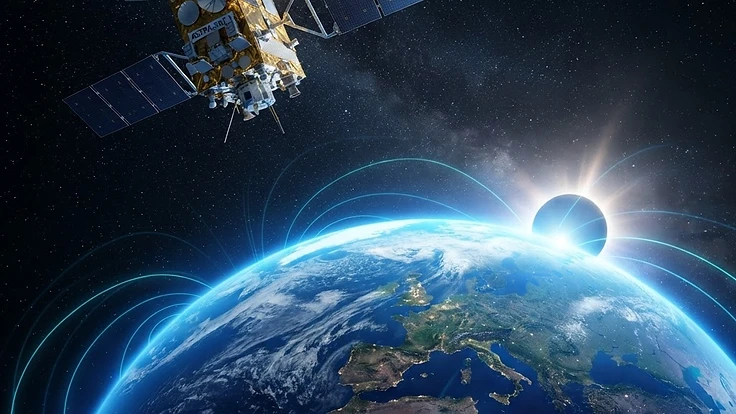
The modern world depends on a silent, orbital web of satellites. These machines facilitate global communication, weather monitoring, and precision navigation, yet they operate in a harsh, dynamic environment. Space weather, driven by our nearest star, presents a constant challenge to this infrastructure.
Solar activity periodically disrupts these orbital systems. Operators must employ sophisticated methods to safeguard their assets against high energy particles and geomagnetic disturbances. Understanding these risks is essential for maintaining the connectivity upon which society relies.
The Science Behind It
The sun undergoes cycles of roughly 11 years, dictating the intensity of solar activity. Solar Cycle 25 began in December 2019, bringing increased solar flares and coronal mass ejections. These events release plasma and high energy particles into the solar system.
When these particles reach Earth, they interact with the magnetosphere. A geomagnetic storm is measured by its intensity, often categorised by the G-scale from G1 to G5. These events alter the ionosphere and shift the boundaries of the auroral oval, complicating satellite operations.
Satellites in low Earth orbit, such as the ISS at roughly 408 kilometres, face unique physical threats. During intense solar events, the upper atmosphere heats and expands, increasing drag. This leads to orbital decay, which operators must counter using onboard fuel to maintain altitude.
Real-World Implications
Space weather impacts are not merely theoretical. High energy particles can cause single event upsets, where memory bits flip, potentially crashing satellite software. Solar radiation can also degrade solar panels and sensor performance over time.
Communication satellites are particularly vulnerable to ionospheric scintillation. This phenomenon disrupts radio frequency signals, affecting GPS accuracy and satellite internet links. To learn more about these physics, explore how Solar Flares and the Reliability of GPS Navigation directly affect our daily technological reliance.
Operators often resort to putting critical systems into safe mode during peak activity. By limiting instrument operations, they reduce the risk of permanent damage from intense particle bombardment. This process balances the need for data collection against the longevity of the hardware.
What You Can Do
Staying informed is the first step toward understanding space weather. You can monitor live solar data through solar imagery to see the sun in various wavelengths. This provides a tangible connection to the forces acting on the satellites above our heads.
For those curious about the physical manifestations of these events, Understanding the Physics and Beauty of the Aurora offers a deeper look at the atmospheric interactions involved. You might even consider joining guided aurora tours in countries like Iceland, Norway, or Canada to witness this phenomenon firsthand.
Using tools like embeddable widgets can also help you keep track of environmental conditions directly on your own platforms.
Key Takeaways
Satellite resilience is a product of constant vigilance and engineering ingenuity. From manoeuvring to avoid drag to shielding sensitive electronics, the industry remains at the forefront of space risk management. As NOAA SWPC continues to provide vital forecasts, our ability to predict and prepare for these events grows stronger.
Recognising the influence of the solar cycle is critical for any long-term mission planning. By studying the archive of past events, we refine our models and improve the reliability of our space assets. We live in an era where mastering the space environment is not optional, but a prerequisite for technological progress.
People Also Ask
How do solar flares affect satellites?+
Solar flares emit intense X-rays and ultraviolet radiation that heat the upper atmosphere, causing it to expand. This increases drag on satellites in low Earth orbit, which can cause them to lose altitude and potentially crash. Additionally, high-energy particles can damage sensitive onboard electronics and cause communication errors.
What is the Kp index in simple terms?+
The Kp index is a scale from 0 to 9 used to measure the intensity of geomagnetic storms. A higher Kp value indicates more significant disturbances in Earth's magnetic field. It is a vital tool for satellite operators to determine when to take protective measures for their orbital assets.
Why is the solar cycle important for satellite lifespan?+
The solar cycle lasts approximately 11 years and dictates the frequency of solar storms. During the peak of the cycle, known as solar maximum, increased solar activity accelerates the degradation of satellite materials and requires more fuel for station-keeping, which can shorten the overall operational lifespan of the craft.
Continue Reading
Forecast These Questions
View all →Express your probability on these active forecast questions.