The Mechanics of Sustained Orbital Motion
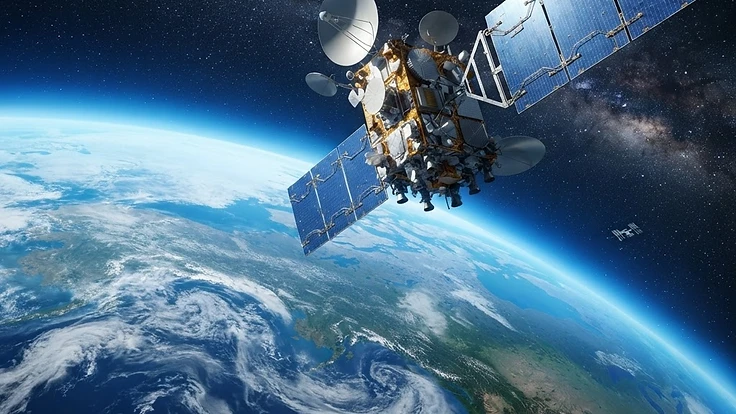
Satellites do not simply float in space, they exist in a constant, high-speed freefall balanced by the curvature of the Earth.
The Mechanics of Sustained Orbital Motion
Satellites are vital to modern life, providing everything from global navigation to instantaneous communication. Yet, a common misconception persists that these objects are somehow weightless or magically suspended above the planet.
In reality, a satellite is simply an object moving fast enough that its fall toward the Earth matches the planet's curvature. Gravity is constantly pulling the craft downward, but its forward speed keeps it moving around the sphere rather than crashing into the surface.
The Science Behind It
To understand orbit, one must first recognise the role of velocity. An object needs enough horizontal speed to ensure that as it falls, the ground curves away beneath it.
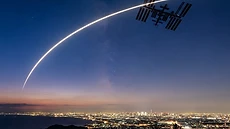
At the altitude of the International Space Station, which sits at approximately 408 kilometres, this requires a speed of roughly 28,000 kilometres per hour. If the satellite moves any slower, gravity eventually wins and drags it back into the thicker atmosphere.
Atmospheric drag remains a persistent threat even at these altitudes. Although space is a vacuum, the thinning layers of gas cause friction that slowly saps the orbital energy of a spacecraft.
This is why engineers must periodically perform reboost manoeuvres to maintain altitude. Without these adjustments, even a perfectly launched satellite would eventually decay and burn up upon re-entry.
Real-World Implications
Maintaining a stable orbit is not just a mathematical exercise but a requirement for the global infrastructure we rely on daily. Orbital perturbations caused by solar activity can significantly complicate these mechanics.
When the Sun becomes active, the atmosphere expands as it absorbs solar energy. This increased density creates greater drag on satellites, forcing them to bleed speed faster than anticipated.
We monitor this relationship between solar flares and orbital stability through the Kp index, which acts as a proxy for geomagnetic disturbances. High activity can disrupt satellite tracking, influence radio communications, and even lead to temporary communication blackouts.
Keeping track of these conditions helps operators adjust their flight paths. Understanding the nuances of the mechanics of orbital motion ensures that we can continue to rely on these vital platforms for years to come.
What You Can Do
Staying informed about the space environment is easier than ever for the average enthusiast. You can monitor current solar conditions to see how they might impact satellite performance and the auroral oval from your home computer.
If you are interested in the broader impact of space weather, you might want to look through our archive of past events. Seeing how previous storms affected orbital assets provides valuable context for modern space exploration.
For those who prefer a more visual experience, you can explore live imagery from the Solar Dynamics Observatory. These tools allow you to see exactly how solar activity fluctuates in real time without needing a degree in astrophysics.
If planning around Kp and cloud cover feels like work, guided aurora tours in Norway, Finland and Iceland remove the guesswork — a guide watches the data while you stay warm until it's time to move.
Key Takeaways
Orbit is a dynamic balancing act between horizontal velocity and gravitational pull. It is a fragile equilibrium that requires constant maintenance and observation to sustain.
As our dependence on space technology grows, our need to monitor the space weather environment becomes more critical. By keeping an eye on solar cycles and geomagnetic fluctuations, we protect the tools that keep our world connected.
Understanding these forces is not just for scientists. It is the key to appreciating the complex infrastructure that orbits silently above our heads.
People Also Ask
Why do satellites not fall to Earth?+
Satellites do fall toward Earth, but they travel horizontally at such a high speed that the planet's surface curves away from them. Gravity acts as the centripetal force that keeps them in a circular path, preventing them from flying off into deep space.
What is the Kármán line?+
The Kármán line is the internationally recognised boundary of space, located at an altitude of 100 kilometres above sea level. While it is not a physical barrier, it is the altitude where the atmosphere becomes too thin to support aeronautical flight.
How does atmospheric drag affect satellites?+
Even in the thin upper atmosphere, particles interact with satellites, creating drag that gradually slows them down. This loss of velocity causes the satellite to lose altitude over time, eventually requiring a boost to stay in its intended orbit.
Continue Reading
Forecast These Questions
View all →Express your probability on these active forecast questions.