Tracking Satellites in Real Time
Tracking thousands of satellites in orbit requires sophisticated physics and global coordination. Learn how real-time tracking data helps monitor our skies.
Tracking Satellites in Real Time
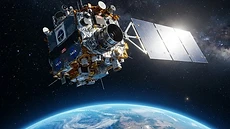
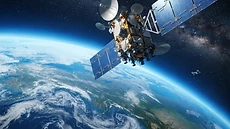
Humanity has populated Earth orbit with thousands of active and inactive objects. From the International Space Station orbiting at 408 km to deep space telecommunications arrays, keeping tabs on these objects is a complex task. Tracking satellites allows scientists and amateur enthusiasts to understand the orbital landscape, anticipate potential collisions, and observe the sheer scale of human engineering in space.
The Science Behind It
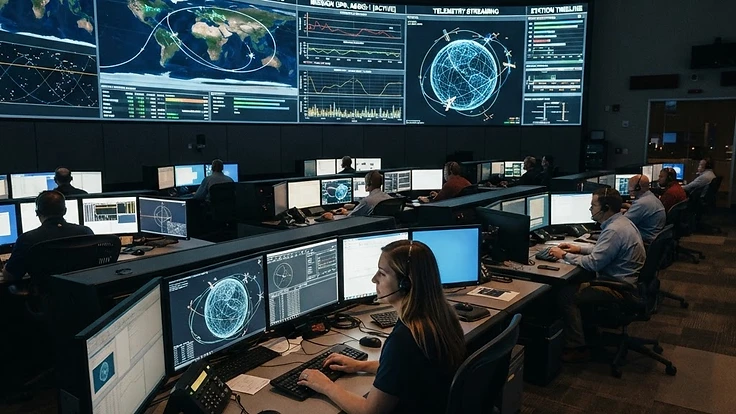
Satellite tracking relies on high-precision orbital mechanics. Objects in space do not simply float, they travel at immense speeds to maintain their altitude against Earth gravity. Radar and optical sensors on the ground observe these objects, feeding data into models that account for atmospheric drag and gravitational perturbations.
These calculations determine a Two Line Element set, which provides the necessary coordinates to predict where a satellite will be at any given future second.
Understanding these orbits is vital for managing orbital satellite collisions. When space agencies monitor these paths, they use complex algorithms to ensure that active hardware does not occupy the same space as defunct debris. This requires continuous updates because the orbital velocity is often thousands of kilometres per hour, and even a minor deviation can change a trajectory significantly.
Real-World Implications
Satellite monitoring affects every aspect of modern infrastructure. Global positioning systems, weather forecasting, and international telecommunications all rely on precise orbital stability. When space weather events occur, such as a high-intensity geomagnetic storm, the increased drag from the expanded atmosphere can alter the paths of low-Earth orbit satellites.
Tracking systems help operators perform necessary manoeuvres to protect their assets from these shifts. You can monitor the intensity of such space weather events through the K-index or by checking the strongest storms on record via our storm leaderboard. This data is essential for protecting the hardware that powers our digital lives, ensuring that internet connectivity and navigation remain reliable despite the volatile conditions of the space environment.
What You Can Do
Technology has made it easier than ever to follow orbital paths from your own home. You can use online databases or mobile applications that visualise live satellite positions in real time. If you are interested in space monitoring, you might find our embeddable widgets useful to integrate live tracking data or space weather metrics directly onto your own website for others to see.
Beyond tracking satellites, many people take an interest in atmospheric phenomena like the aurora. If you wish to witness these displays firsthand, many travellers choose guided aurora tours in countries such as Iceland, Norway, Canada, Finland, Sweden, and Alaska to ensure they find the best viewing conditions.
Staying informed about the local aurora forecast is the best way to plan your observation, ensuring you have the best chance to see the night sky light up when conditions are ideal.
Key Takeaways
Real-time satellite tracking is a triumph of modern physics and global cooperation. By understanding the data behind orbital mechanics, we gain a deeper appreciation for the infrastructure currently hovering above our heads. It reminds us that our reliance on space technology is absolute, linking our daily lives to the mechanics of the cosmos.
Whether you are a casual observer or a dedicated researcher, the tools available today make the complex movements of satellites accessible. We encourage you to explore the glossary to learn more about technical terms and to keep an eye on our archive for insights into historical space events. Staying curious about the space environment keeps you informed in an increasingly connected world.
People Also Ask
How do satellites stay in orbit without falling?+
Satellites stay in orbit because they are travelling sideways at a very high velocity. As gravity pulls the satellite toward Earth, the satellite effectively falls around the planet's curvature. Because there is little to no atmospheric drag in vacuum, they maintain this speed indefinitely.
Can I see satellites with the naked eye?+
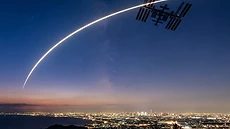
Yes, many satellites are visible to the naked eye, particularly the International Space Station. They appear as steady, white points of light moving across the sky at a constant speed. Unlike aeroplanes, they do not have flashing navigation lights or leave long exhaust trails behind them.
What happens to a satellite when its mission ends?+
When a mission ends, operators may perform a final manoeuvre to send the satellite into a graveyard orbit or drop it into the atmosphere to burn up. Otherwise, it becomes space debris, where it remains in orbit until its altitude decays enough for it to re-enter naturally.
Continue Reading
Forecast These Questions
View all →Express your probability on these active forecast questions.