Planetary Science Reveals the Fragile Nature of Earth
Exploring planetary science offers vital insights into Earth's climate, atmosphere, and vulnerability to space weather. By studying our celestial neighbours, we better understand the unique conditions that sustain life on our own planet.
Planetary Science Reveals the Fragile Nature of Earth
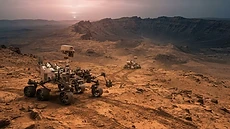
Planetary science acts as a mirror for our own world. By studying the atmospheres of Venus or the thin crust of Mars, scientists gain perspective on how Earth maintains its stability. This field moves beyond simple curiosity, providing the foundational knowledge required to protect our infrastructure and environment from cosmic events.
Understanding our place in the solar system allows us to view Earth as a dynamic system rather than a static home. We learn how geological history and solar interaction shape the world today. This context is essential for addressing long term environmental changes and navigating our future in space.
The Science Behind It
The sun serves as the primary engine for space weather, driving phenomena that reach our planet in mere minutes. Solar flares and coronal mass ejections launch energy and plasma across the void at speeds reaching 3,000 km/s. When this material arrives, it interacts with our geomagnetic field, often resulting in fluctuations measured by the G-scale.
Earth is shielded by its magnetic field, which deflects much of the solar wind. However, intense events can compress this barrier, creating disturbances in the ionosphere that affect radio and satellite signals. By analysing solar imagery from satellites like the SDO, researchers can model these interactions to predict how our magnetosphere might react to incoming solar plasma.
Beyond the sun, the history of our planet is punctuated by collisions with rocky bodies. A near-Earth asteroid roughly 10 km wide struck the Yucatan Peninsula 66 million years ago, fundamentally altering the climate. Studying these objects helps us quantify the risk of future impacts while refining our understanding of how planetary surfaces evolve over billions of years.
Real-World Implications
Space weather poses a tangible risk to our modern, interconnected society. A major geomagnetic storm can induce electrical currents in power grids, potentially causing widespread outages similar to historical events like the 1859 Carrington Event. Learning about understanding ionospheric disturbances during geomagnetic storms helps engineers design more resilient electrical infrastructure.
Technological reliance on GPS and satellite communication makes us particularly vulnerable. Solar activity can delay or distort signals, disrupting everything from aviation logistics to marine navigation. Readers interested in the specifics of these disruptions can explore Solar Flares and the Reliability of GPS Navigation for a deeper look at the mechanics involved.
Infrastructure providers now treat space weather as a critical operational factor. By incorporating data into their daily planning, they maintain stability in transport and communications networks. This shift in perspective ensures that we are not caught unprepared when the sun enters a more active phase of its 11 year cycle.
What You Can Do
Staying informed is the first step toward personal preparedness. You can monitor live solar data using tools like the Flarient dashboard to see how current conditions might impact your region. If you want to share this data with others, you can even embeddable widgets directly onto your own website to track trends in real time.
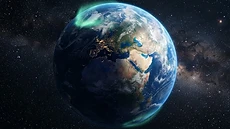
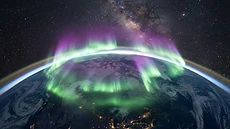
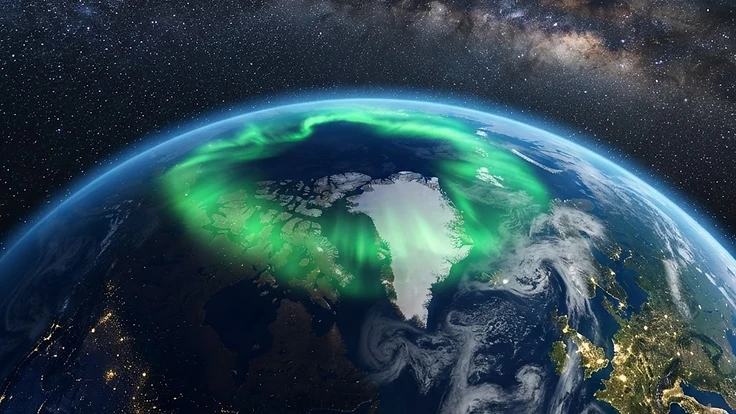
For those drawn to the beauty of our planet's interaction with the sun, the aurora is the most visible sign of space weather. If you are planning a trip to catch these lights, consider booking guided aurora tours in countries like Iceland, Norway, Canada, or Alaska to improve your chances of success.
These experts use local knowledge to find the best viewing spots.
Finally, make a habit of consulting the glossary to familiarise yourself with technical terms. Understanding the difference between a solar flare and a coronal mass ejection changes how you interpret space weather reports. Being literate in these concepts empowers you to separate fact from speculation.
Key Takeaways
Planetary science teaches us that Earth is not an isolated sanctuary but a participant in a vast, energetic solar system. Our planet's climate and technological stability depend on a delicate balance between geological processes and external cosmic forces. By studying our neighbours, we gain the tools to predict and mitigate risks from solar storms and asteroid impacts.
We live in a time where monitoring these threats is possible through real time data and global cooperation. Maintaining awareness of solar cycles and near Earth objects remains our best defence against unexpected cosmic events. Continued investment in planetary research is not just about discovery, but about ensuring the long term security of life on Earth.
People Also Ask
How do solar flares affect Earth?+
Solar flares emit intense electromagnetic radiation that can ionise the upper atmosphere. This process often disrupts high frequency radio communication and degrades satellite navigation accuracy. In severe cases, these events can cause increased drag on satellites orbiting in the thermosphere, potentially shortening their operational lifespan.
Why is the 11-year solar cycle important?+
The solar cycle represents the periodic rise and fall in solar activity, including the frequency of flares and coronal mass ejections. Understanding this cycle helps scientists and infrastructure managers anticipate periods of higher risk to power grids, communication systems, and space-based hardware, allowing for better long-term operational planning.
Can we predict asteroid impacts?+
NASA and other space agencies track near-Earth objects through continuous observation programmes. By measuring the orbit and trajectory of asteroids, scientists calculate the probability of close approaches. While we cannot always predict every small object, we have identified the vast majority of large asteroids that pose a global risk.
Continue Reading
Forecast These Questions
View all →Express your probability on these active forecast questions.