How Planetary Science Reveals Earth's Vulnerability
Planetary science is not just about distant worlds. It provides the essential context to understand Earth's climate, magnetic field, and history of asteroid impacts.
Planetary Science Reveals Earth's Vulnerability
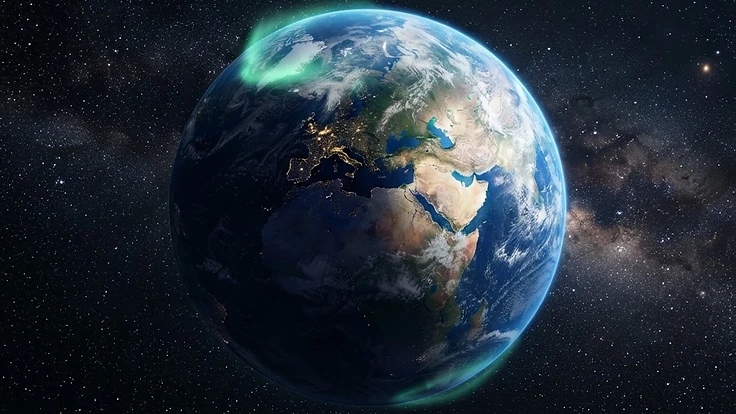
Planetary science often feels like an academic pursuit of distant, cold rocks orbiting far stars. Yet, the study of our solar system is the mirror in which we see Earth most clearly. By observing the atmospheres of Venus or the magnetic environments of gas giants, we gain a baseline for our own fragile home.
This discipline provides the vital data required to understand our climate, the stability of our protective magnetic bubble, and the history of cosmic threats that have shaped life as we know it.
The Science Behind It
Earth exists within a dynamic, high energy environment dominated by the Sun. Solar activity, including the release of charged particles, directly impacts our planet's magnetosphere. Scientists use the Kp index to measure these geomagnetic disturbances, providing a scale that quantifies the interaction between solar wind and our magnetic field.
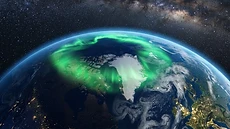
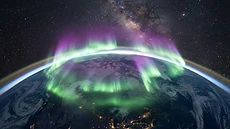
Understanding this relationship helps us map the aurora, which serves as a visual indicator of energy dumping into our upper atmosphere.
Beyond solar influence, planetary science tracks the movement of celestial debris. Millions of near-Earth asteroid objects orbit in our cosmic neighbourhood, many of which are remnants from the formation of the solar system. Modelling their trajectories allows us to predict potential close approaches.
Studying the history of these impacts, such as the event that led to the Chicxulub crater 66 million years ago, provides a stark reminder of the long term risks posed by space rocks.
Real-World Implications
Our modern reliance on technology makes us uniquely susceptible to space weather. A significant geomagnetic event can disrupt satellite navigation, affect power grids, and degrade high frequency radio signals. By studying historical archive data, we can build better models to anticipate how solar cycles, which typically last around 11 years, might stress our infrastructure.
This is critical as we enter active phases like the current Solar Cycle 25.
Space weather also poses a direct risk to assets in orbit. The International Space Station, orbiting at roughly 408 kilometres, remains protected by the Kármán line transition zone, but severe storms can increase atmospheric drag. Monitoring these conditions is essential for mission success.
We rely on agencies like NOAA SWPC to provide the data that keeps our digital world functioning, even when the Sun is at its most volatile.
What You Can Do
Staying informed is the best defence against unexpected space weather. You can track current conditions using a local aurora forecast to see if solar activity might manifest in your region. Tools that offer real-time updates help you understand when a storm is brewing or when the sky might light up with activity.
For those looking to see the phenomenon in person, many travellers enjoy guided aurora tours in countries like Iceland, Norway, Canada, Finland, Sweden, and Alaska.
If you run a website or a personal project, consider using embeddable widgets to display live space weather data directly to your audience. These tools translate complex scientific indices into readable formats. Keeping an eye on the latest solar imagery from platforms like the Solar Dynamics Observatory is another way to appreciate the sheer scale of the forces interacting with our planet daily.
Key Takeaways
Planetary science teaches us that Earth is not an island, but an integrated part of a larger, volatile system. Whether it is tracking the threat of asteroid impacts or preparing for the next major geomagnetic storm, the lessons from our solar neighbours are universal. We are better positioned to protect our technological society when we respect the forces of the cosmos.
By staying engaged with the science of space weather, we turn potential threats into predictable events. The more we understand the mechanics of our solar system, the more resilient our life on Earth becomes. Keeping watch on the heavens is not just for astronomers, it is a necessity for modern living.
People Also Ask
Why is the study of other planets important for Earth?+
Studying other planets allows scientists to create models of planetary evolution and climate. By observing extreme environments on Venus or Mars, we gain a better understanding of the processes that keep Earth habitable and how our climate might change under different atmospheric or solar conditions.
How often do significant solar storms occur?+
Solar activity follows an 11-year cycle. During the solar maximum, the frequency and intensity of geomagnetic storms increase significantly. While extreme events like the 1859 Carrington Event are rare, smaller G1 to G3 class storms happen with relative frequency during active years of the current solar cycle.
Can we predict all asteroid impacts?+
NASA and other international agencies track near-Earth objects using ground-based and space telescopes. While we have successfully catalogued most large, civilization-threatening asteroids, smaller objects are harder to detect. Constant monitoring and international collaboration are essential to identifying potential threats long before they reach Earth.
Continue Reading
Forecast These Questions
View all →Express your probability on these active forecast questions.