Planetary Science Reveals Earth's Cosmic Connections
Planetary science offers a vital lens through which we view our own world. By studying distant space phenomena, we better understand the risks and cycles that shape life on Earth.
Planetary Science Reveals Earth's Cosmic Connections
Planetary science often feels like a pursuit concerned only with distant worlds and silent craters. Yet, observing the mechanics of our solar system provides an essential framework for understanding the environment of Earth.
We do not exist in a vacuum, but rather within a dynamic system defined by solar activity and orbital dynamics. By studying other bodies, we gain perspective on our unique, protected status in the cosmos.
The Science Behind It
The sun dominates our local neighbourhood, operating on a roughly 11-year solar cycle. As we progress through Solar Cycle 25, which began in December 2019, we witness how solar wind travelling at speeds of 400 to 700 kilometres per second shapes our magnetosphere.
Occasionally, coronal mass ejections can reach velocities of 3,000 kilometres per second. When these charged particles interact with our magnetic field, they produce geomagnetic storm activity, often quantified by the Dst index or the G-scale from G1 to G5.
Beyond solar physics, planetary science teaches us about impact risks. The Chicxulub asteroid, measuring roughly 10 kilometres wide, altered the course of biological history 66 million years ago when it struck the planet.
We monitor current near-Earth asteroid threats to prevent similar catastrophes. Understanding these past events, such as those found in our archive, allows scientists to refine orbital modelling and detection protocols.
Real-World Implications
Space weather has direct consequences for our modern infrastructure. Strong geomagnetic storms can induce currents in power grids, leading to hardware damage and widespread outages.
Satellite operations face continuous risk from energetic particles. Understanding the physics of solar flares is crucial, as these events can lead to radio blackouts and errors in navigation systems, a topic explored in our blog.
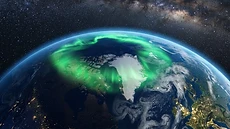
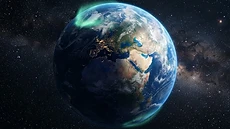
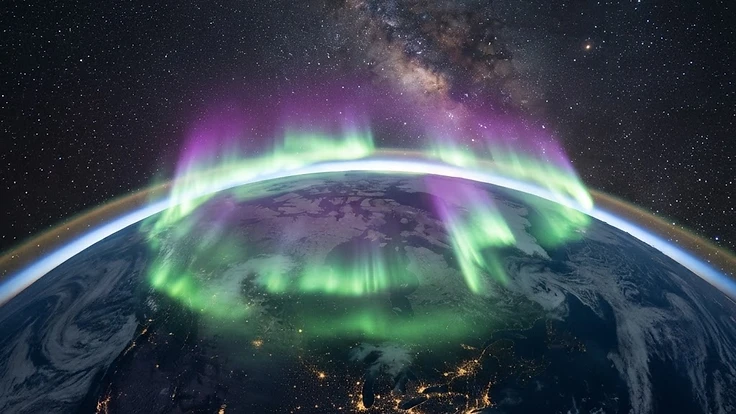
When the magnetosphere is sufficiently disturbed, we see the aurora expand toward lower latitudes. These light shows are more than beautiful, as they act as a visible manifestation of energy transfer between the sun and our atmosphere.
We must treat the space environment with the same diligence as terrestrial weather. The ability to forecast disturbances helps industry leaders protect valuable assets currently orbiting the Earth.
What You Can Do
Staying informed is the most effective form of personal preparation. You can check the local aurora forecast to see if celestial activity is expected in your region tonight.
If you are planning to chase the lights, consider booking guided aurora tours in destinations like Iceland, Norway, or Alaska to maximise your chances of a clear viewing experience. These excursions provide local expertise that is invaluable when weather conditions change quickly.
For those who manage websites or digital platforms, integrating embeddable widgets can help share this data with a wider audience. Keeping a watch on space weather ensures you are never caught unprepared when the sun becomes particularly active.
Key Takeaways
Planetary science serves as both a warning system and a historical record for our planet. We learn that Earth is part of a larger, active system that requires constant monitoring to safeguard our technology and society.
By engaging with resources like the glossary, anyone can grasp the basics of these complex phenomena. Knowledge of the sun, our orbits, and the history of impacts allows us to live more securely on our home planet.
People Also Ask
How does the solar cycle affect Earth?+
The solar cycle, which lasts approximately 11 years, dictates the frequency of sunspots, solar flares, and coronal mass ejections. During the solar maximum, increased solar activity can trigger geomagnetic storms that impact satellite operations, high-frequency radio communication, and electrical power grid stability on Earth.
What is the Kp index?+
The Kp index is a global geomagnetic activity index ranging from 0 to 9. It measures the intensity of geomagnetic disturbances caused by solar wind. Higher values indicate more intense magnetic activity, which often correlates with a wider and more brilliant visibility of the aurora borealis.
Are all asteroids a threat to Earth?+
No. While there are thousands of near-Earth objects, most pose no immediate threat. Astronomers use precise orbital tracking to monitor objects that pass near Earth. The vast majority of asteroids will pass harmlessly by, and impact events of a significant scale are extremely rare on a human timescale.
Continue Reading
Forecast These Questions
View all →Express your probability on these active forecast questions.