The Physics of Solar Flares: Composition and Consequences
Discover what constitutes a solar flare, the massive energy releases that shape our space environment. Understand the magnetic processes and the impact these events have on Earth's technology and infrastructure.
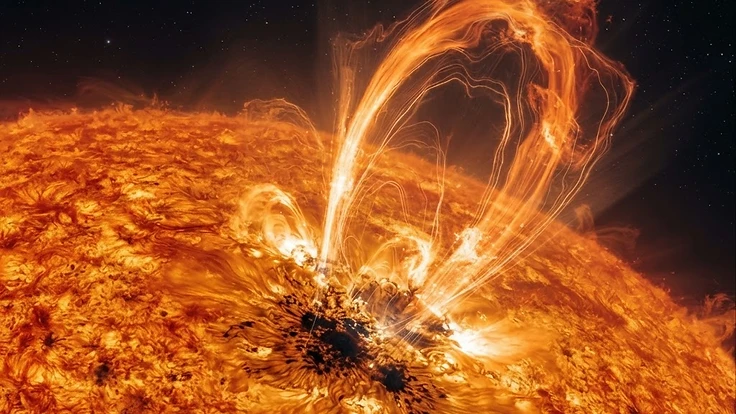
Solar Flares Are Intense Bursts of Electromagnetic Radiation
A solar flare is a sudden, powerful eruption on the surface of the Sun that releases a vast amount of energy into space. These events happen when magnetic energy that has built up in the solar atmosphere is suddenly released.
Live Solar Flare Monitor
Powered by Flarient — embed this on your site →
Flares are observed across the entire electromagnetic spectrum, from radio waves to X-rays and gamma rays. They originate from active regions near sunspots where magnetic field lines are tightly tangled and strained.
The Science Behind It
At their core, solar flares consist of high energy photons and accelerated particles. The process is driven by magnetic reconnection, a phenomenon where magnetic field lines snap and rearrange themselves into a more stable configuration.
This process converts magnetic energy into heat and kinetic energy. Electrons, protons, and heavier ions are accelerated to near light speed, creating the distinct signatures we observe through advanced solar imagery like the SDO mission.
The energy released can be equivalent to millions of hydrogen bombs exploding at once. Because the speed of light is approximately 300,000 kilometres per second, the electromagnetic radiation from a flare reaches Earth in just over eight minutes.
Real-World Implications
The most immediate effect of a strong flare is the disruption of radio communications and satellite operations. Increased X-ray flux ionises the upper atmosphere, which can scramble high frequency radio signals used by aviation and maritime industries.
While the radiation arrives quickly, flares are often accompanied by coronal mass ejections that carry plasma and magnetic fields. These can trigger a geomagnetic storm, which is measured on the G-scale from G1 to G5, causing significant fluctuations in the Kp index.
Severe events can affect power grids, potentially causing voltage surges or blackouts. We have documented the historical impacts of these events in our extensive archive of past storms, which shows how infrastructure has evolved to handle such stresses.
What You Can Do
Staying informed about solar activity is the best way to mitigate risks to your technology and plans. You can track these events using our live dashboard or by setting up real-time alerts to monitor the solar environment.
If you are an avid observer of the night sky, you might consider booking guided aurora tours in countries like Iceland, Norway, Canada, or Finland to see the natural results of solar activity firsthand. Watching how aurora lights are formed is a transformative experience for any enthusiast.
For website owners or weather hobbyists, integrating our embeddable widgets can provide your audience with direct access to space weather data. Keeping track of the latest developments helps you prepare for any potential interference with your daily routines.
Want the aurora without the homework? Guided aurora tours in Finland, Norway and New Zealand's Stewart Island put a local expert between you and the forecast.
Key Takeaways
Solar flares are magnetic phenomena that release massive amounts of electromagnetic energy. They serve as a reminder that our Sun is an active, dynamic star that influences the entire solar system.
Understanding the components of these flares is vital for protecting modern technology, from satellite networks to ground based power grids. You can deepen your knowledge by exploring our glossary for technical definitions or reading more articles in our blog.
By monitoring solar cycles, which typically last about eleven years, we gain valuable insight into how our star behaves over time. Staying prepared ensures that we can continue to advance our presence in space while safeguarding our lives on Earth.
People Also Ask
How long does a solar flare take to reach Earth?+
The electromagnetic radiation from a solar flare travels at the speed of light and reaches Earth in approximately eight minutes. However, associated particle events or coronal mass ejections travel much slower, usually taking between one to three days to reach our planet's magnetosphere.
What is the difference between a solar flare and a CME?+
A solar flare is an intense burst of radiation from the Sun's atmosphere, while a coronal mass ejection is a massive cloud of solar plasma and magnetic field expelled into space. Flares are light-based, while CMEs are physical matter that can cause geomagnetic storms.
Can solar flares destroy the internet?+
Extreme solar flares could potentially damage global telecommunications infrastructure by inducing currents in undersea cables and satellite systems. While a total internet collapse is unlikely, significant outages and disruption to sensitive digital services are possible during severe geomagnetic storm events.
Continue Reading
Forecast These Questions
View all →Express your probability on these active forecast questions.