Practical Steps for Preparing for a Major Solar Event
Preparing for a severe solar storm requires understanding the space weather cycle and leveraging real-time data to protect your infrastructure and personal communications.
Preparing for Significant Solar Activity
Space weather remains a constant force of nature that shapes our modern technological landscape. While the sun maintains a predictable rhythm, occasional bursts of intense activity demand awareness from those who rely on satellite navigation, global communication, or stable power grids.
Learning how to monitor solar conditions is the first step in building resilience. By understanding the solar cycle and the mechanisms behind magnetic storms, individuals can better prepare for potential disruptions before they manifest in our daily lives.
The Science Behind It
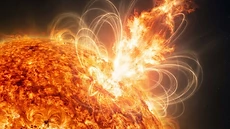
The sun operates on a cycle lasting roughly 11 years, dictating the frequency of solar flares and coronal mass ejections. During peak activity, such as the current Solar Cycle 25 which began in December 2019, the sun frequently ejects high-energy plasma into the heliosphere.
Live Solar Flare Monitor
Powered by Flarient — embed this on your site →
These charged particles travel toward Earth at speeds ranging from 400 to 700 kilometres per second, though major events can exceed 3,000 kilometres per second. Upon arrival, this solar wind interacts with the magnetosphere, potentially causing geomagnetic storms measured by the Kp index.
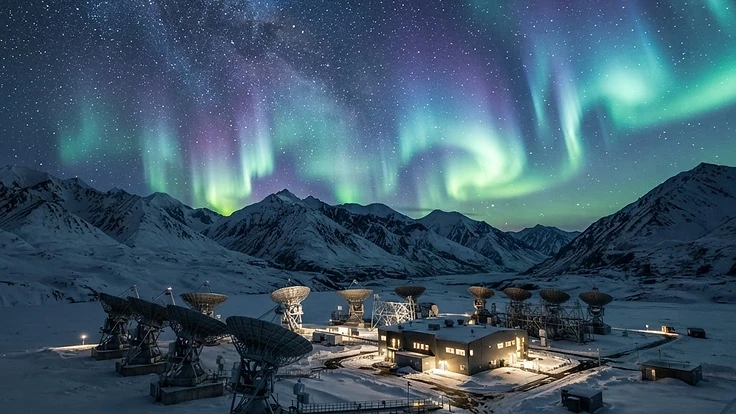
When a major CME impacts the magnetic field, the Dst index drops into negative territory, indicating severe compression and intense currents. This process triggers the aurora, which manifests at high and middle latitudes as the magnetosphere reconfigures itself under pressure.
Real-World Implications
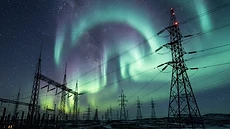
The most significant risks from solar activity involve the induced currents on long-distance electrical conductors, such as power transmission lines. Large storms can overwhelm regional grids, leading to operational instability or equipment damage if not properly managed by utilities.
Communication systems often face challenges during these events as well. High-frequency radio propagation suffers during ionospheric disturbances, and satellite-based GPS navigation may experience decreased precision or intermittent signal loss.
For a deeper dive into these effects, you can review how solar flares impact Earth and its technology. Understanding these vulnerabilities allows users to manage expectations for their devices during periods of heightened activity.
What You Can Do
Preparedness begins with information. By using tools like the Flarient dashboard, you can track the current Kp index to understand if conditions are likely to affect your local infrastructure or signal reliability.
If you are planning to witness the beauty of a geomagnetic storm, consider booking guided aurora tours in countries like Iceland, Norway, Canada, or Alaska to ensure the best viewing experience with expert guides. You can also explore solar imagery from orbiting observatories to see real-time updates on active regions on the solar disk.
For those managing digital infrastructure, integrating embeddable widgets provides a seamless way to display space weather status for your audience. Staying informed through the glossary helps clarify complex terms you might encounter during a significant space weather event.
Key Takeaways
Solar events are natural, cyclical, and largely predictable with modern observational tools. While major storms can affect our tech-heavy world, proactive monitoring and a basic understanding of space weather physics offer a clear path for mitigation.
Consistency is key when observing space weather trends over the long term. You can read more about these phenomena and track past events to understand how different solar cycles compare. By staying connected to reliable data, you turn potential uncertainty into manageable knowledge.
People Also Ask
How do solar storms affect the power grid?+
Solar storms induce geomagnetically induced currents in long electrical conductors like power lines. These extra currents can overwhelm transformers and relay equipment, potentially leading to voltage instability or damage to the grid infrastructure if utility operators do not take proactive mitigation measures to manage the flow.
What is the difference between a solar flare and a CME?+
A solar flare is an intense burst of radiation caused by magnetic field reconnection on the sun. A coronal mass ejection, or CME, is a massive eruption of solar plasma and magnetic field material that travels through space. Flares arrive in minutes, while CMEs take days.
Can I predict a solar storm in my area?+
You can monitor solar activity using the Kp index, which tracks global geomagnetic storm levels. While exact local impacts are complex to predict, high Kp values indicate a higher likelihood of auroral displays and ionospheric disruptions that may interfere with satellite navigation and radio communication in your region.
Continue Reading
Forecast These Questions
View all →Express your probability on these active forecast questions.