How Solar Flares Impact Earth and Its Technology
Solar flares are intense bursts of radiation from the Sun that can disrupt global technology. Understanding how these events interact with our magnetosphere helps us better prepare for space weather impacts.
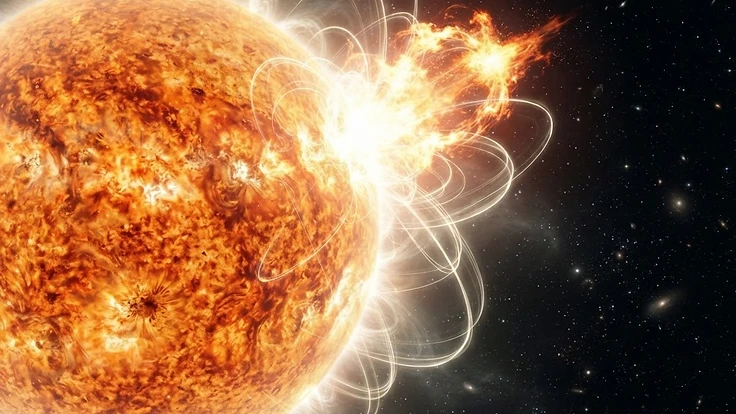
Solar Flares Impact Earth and Its Technology
The Sun is a dynamic engine that constantly releases energy into the solar system. While this provides the light and warmth necessary for life, it also generates solar flares that can pose risks to our modern infrastructure.
Live Solar Flare Monitor
Powered by Flarient — embed this on your site →
These sudden releases of magnetic energy travel across the void of space at the speed of light. When this energy interacts with our atmosphere, it can disrupt systems we rely on every single day.
The Science Behind It
Solar flares are classified by their strength, ranging from the smallest A class to the most intense X class. Each category is ten times more powerful than the one preceding it.
These bursts of radiation occur when magnetic field lines in the solar atmosphere become twisted and reconnect. This process accelerates particles to high velocities and emits intense electromagnetic radiation.
While radiation reaches us in minutes, coronal mass ejections involve plasma clouds that travel much slower. These clouds often reach Earth after one to three days, though they can travel at speeds up to 3,000 kilometres per second.
When this material hits our planet, it collides with the magnetic field. This creates a geomagnetic storm that is measured by the Kp index, a scale of zero to nine.
Real-World Implications
Our modern dependence on satellite technology makes us uniquely vulnerable to solar activity. High-energy particles can damage sensitive electronics or increase drag on satellites orbiting in the thermosphere.
Geomagnetic storms also induce currents in long-distance power grids. These currents can overload transformers and cause widespread instability or outages if the power companies are not prepared.
Radio communication, particularly at high frequencies, often suffers during these events. Signals that bounce off the ionosphere can be absorbed or scattered, which disrupts aviation and maritime navigation.
Astronauts on the International Space Station must also remain vigilant. While they are protected by the Earth magnetic field at their 408-kilometre altitude, extreme events can still pose radiation risks.
What You Can Do
Staying informed is the most effective way to manage the risks associated with solar weather. You can monitor current activity through our live dashboard to understand the status of our magnetosphere in real time.
If you are a technology enthusiast or operate radio equipment, using embeddable widgets on your own site can provide critical data for your audience. Many observers also look to the aurora display as a visual indicator of geomagnetic activity.
For those interested in experiencing these lights firsthand, we recommend guided aurora tours in locations like Iceland, Norway, Canada, or Sweden. Expert guides know exactly how to interpret the weather and solar conditions to find the best viewing spots.
Preparation is simple when you keep an eye on historical data via our archive. Learning about the long-term patterns in solar cycles, such as those detailed in our guide on understanding the solar cycle and its influence on earth, provides essential context.
Key Takeaways
Solar flares represent a constant natural phenomenon in our solar system. By tracking the activity levels of the current cycle, we can predict and mitigate the impacts on our global infrastructure.
Technology is resilient, but it is not immune to the power of the Sun. Continued vigilance and better modelling allow us to navigate these space weather events with minimal disruption.
Keep track of your local environment by reviewing the local aurora forecast to see if you might catch the visual evidence of a geomagnetic storm tonight. Understanding these forces ensures that we stay connected even when the Sun is at its most active.
People Also Ask
Can solar flares cause global blackouts?+
While extreme solar flares can induce electrical currents in long-distance power lines that cause transformer damage, they rarely trigger total global blackouts. Modern power grids have protection systems in place, though intense G5-level geomagnetic storms still pose a legitimate risk to infrastructure stability in specific regions.
How long does it take for a solar flare to reach Earth?+
Radiation from a solar flare, including X-rays and ultraviolet light, travels at the speed of light and reaches Earth in about eight minutes. However, the associated clouds of charged particles from a coronal mass ejection take much longer, typically arriving at Earth between one and three days later.
Do solar flares affect the GPS on my phone?+
Yes, intense solar activity can disrupt the ionosphere, which is the layer of the atmosphere that GPS signals pass through. This interference can reduce the accuracy of satellite-based positioning systems, leading to navigation errors for both consumer smartphones and professional aviation or maritime systems during major geomagnetic storms.
Continue Reading
Forecast These Questions
View all →Express your probability on these active forecast questions.