Understanding the Solar Cycle and Its Influence on Earth
The solar cycle dictates the rhythm of space weather, influencing everything from power grids to satellite operations. Understanding this eleven-year pattern is essential for navigating our modern technological landscape.
The Solar Cycle Dictates Space Weather Patterns
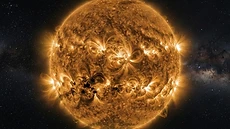
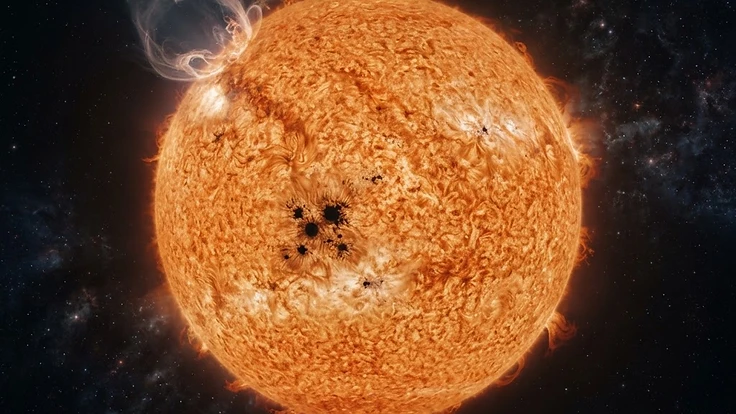
The Sun operates on a rhythmic cycle that lasts approximately eleven years. This period, known as the solar cycle, marks the transition from a relatively quiet star to one brimming with magnetic energy and activity.
Solar Cycle 25 officially began in December 2019, and we are currently witnessing an increase in sunspots and solar eruptions. These cycles are not merely scientific curiosities, as they define the baseline for the space weather environment that surrounds our planet.
The Science Behind Solar Dynamics
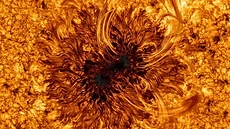
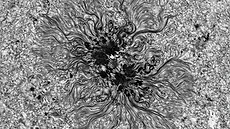
Sunspots are cooler, darker regions on the solar surface caused by intense magnetic fields that inhibit convection. As these fields twist and tangle, they store immense amounts of energy that can suddenly release as solar flares or coronal mass ejections.
Solar flares are classified by their X-ray strength, with X-class flares representing the most powerful events. When these eruptions occur, they blast charged particles into space at speeds that can reach 3,000 kilometres per second.
These particles travel through the interplanetary medium, sometimes arriving at Earth within days or even hours. The interaction between this solar wind and our magnetosphere is what we measure using the G-scale, which tracks the intensity of geomagnetic storms.
Real-World Implications of Solar Activity
When high-energy solar particles strike the magnetic shield of Earth, they can cause significant disruptions. Increased ionospheric activity can interfere with satellite communications and GPS accuracy, affecting daily operations for navigation and global logistics.
Stronger geomagnetic storms can induce electric currents in long-distance power lines. This phenomenon, explored further in our article on understanding ionospheric disturbances during geomagnetic storms, can lead to grid instability if infrastructure is not properly managed.
We also observe the aurora phenomenon more frequently during these active periods. While stunning, these visual displays are manifestations of the energy exchange occurring high in the upper atmosphere near the poles.
What You Can Do to Stay Informed
Staying prepared involves monitoring real-time solar data rather than waiting for news reports. You can track current conditions using the Flarient live dashboard to see if a storm is brewing before it impacts your local communications.
If you are planning a trip to catch the Northern Lights in Iceland, Norway, Canada, Finland, Sweden, or Alaska, booking guided aurora tours can ensure you have expert eyes on the sky to maximise your chances of a successful viewing. These professionals rely on accurate space weather models to navigate the ever-changing conditions of the night sky.
For those managing technical infrastructure, using embeddable widgets on your own site provides a quick way to keep your team updated. Taking the time to browse our glossary will also help you translate complex data into actionable information for your specific needs.
Key Takeaways on Solar Influence
The solar cycle remains the primary driver of environmental changes in space that eventually reach our doorstep. While space weather can feel abstract, its effects on technology and communication are tangible realities of our modern era.
By staying informed through consistent monitoring and scientific resources, we can better appreciate the complex dance between the Sun and Earth. We recommend checking our blog for continued updates on how to interpret solar data and manage its effects on your daily activities.
Sunspot watch
The cycle’s changing sunspot count offers a simple way to follow solar activity for yourself. For safe solar viewing, use appropriate solar protection; readers curious about documenting sunspots can explore an observation setup.
Ad · Affiliate link. Flarient may earn a commission if you purchase through this link, at no additional cost to you.
People Also Ask
How long does a solar cycle last?+
A typical solar cycle lasts about 11 years from solar minimum to solar minimum. During this time, the Sun's magnetic field reverses polarity, and the frequency of sunspots and solar eruptions waxes and wanes accordingly based on the underlying magnetic dynamo process within the Sun.
Are solar flares dangerous to humans on Earth?+
Solar flares are not directly dangerous to humans on the ground because Earth's atmosphere and magnetic field protect us from high-energy radiation. The primary danger is to technology, specifically satellite electronics, high-frequency radio communications, and long-distance power grid infrastructure, which can be disrupted by geomagnetic storms.
How do scientists measure solar activity?+
Scientists use various instruments, including space-based observatories like SDO, to monitor X-ray flux and magnetic activity. On the ground, the intensity of resulting geomagnetic storms is measured using the Dst index for overall intensity and the Kp index to provide a planetary-scale estimate of geomagnetic activity.
Continue Reading
Forecast These Questions
View all →Express your probability on these active forecast questions.