Sunspots and Their Influence on Space Weather
Sunspots are more than just dark patches on the solar surface. They are magnetic powerhouses that dictate the intensity of solar activity and shape our space weather environment.
Sunspots and Their Influence on Space Weather
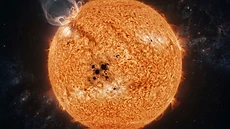
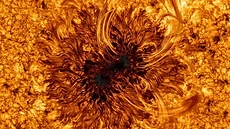
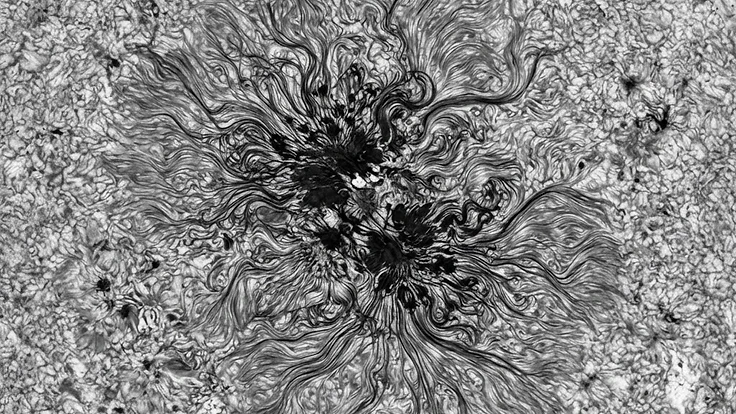
Sunspots appear as dark, cool patches on the bright surface of the Sun. While they look like mere blemishes, they represent areas of intense magnetic activity that govern the behaviour of our closest star. Understanding these features is vital because they serve as the primary drivers of solar flares and coronal mass ejections that affect Earth.
Space weather remains a constant backdrop to our high technology world. Just as we monitor the climate on our own planet, scientists track the evolving state of the Sun to protect global infrastructure. Recognising how these magnetic regions work allows us to predict the risks posed to our satellite networks and electrical grids.
The Science Behind It
The Sun is a massive sphere of hot, ionised gas known as plasma. Because the Sun is not a solid body, its equator rotates faster than its poles, which twists and tangles its magnetic field lines over time. When these field lines become sufficiently knotted, they erupt through the photosphere, creating regions where convection is inhibited.
This cooling effect makes these areas look darker compared to the surrounding incandescent surface.
These magnetic knots are the origin points for massive releases of energy. A complex sunspot group can store vast amounts of magnetic tension that eventually snaps and releases as a solar flare. These events can eject clouds of charged particles into space, known as coronal mass ejections, which travel far faster than the steady solar wind.
When these particles reach our planet, they interact with the magnetosphere to trigger a geomagnetic storm, potentially causing widespread disruptions to long range radio communication or power distribution networks.
Real-World Implications
The impact of active solar regions extends far beyond the upper atmosphere. When a solar storm hits, it forces the upper atmosphere to heat and expand, which increases drag on satellites orbiting at lower altitudes. This additional friction can cause satellites to lose their operational posture or even re-enter the atmosphere prematurely.
Operators must rely on consistent monitoring to manage these risks, as detailed in our guide on monitoring solar storms to protect satellite infrastructure.
Modern electronics are similarly sensitive to these fluctuations. High frequency radio signals, which rely on reflecting off the ionosphere, often suffer from signal degradation during intense solar activity. You can read more about how this works in our analysis of the solar cycle and its impact on high frequency radio communication.
The glossary can also help you parse the technical jargon associated with these complex interactions.
What You Can Do
Staying informed does not require a degree in astrophysics. You can easily track solar cycles and active regions using tools that provide visual data directly from solar observatories. Seeing the latest solar imagery helps you understand the current state of the Sun before a storm even reaches Earth.
If you are planning to travel for a chance to witness the natural beauty of the aurora, it is essential to check current conditions first.
We recommend looking into guided aurora tours in destinations like Iceland, Norway, Canada, and Alaska to ensure you have the best chance of success under clear skies.
For those who maintain their own websites, integrating live data feeds can help keep your audience updated automatically. You might consider using embeddable widgets to show real time solar activity or current storm indices without needing to manage the raw data yourself. These tools turn abstract solar physics into actionable information for anyone interested in the space environment.
Key Takeaways
Sunspots are the visible evidence of the magnetic cycles that define our solar system. By tracking these features, we gain the ability to forecast space weather events that have real consequences for our modern lives. The 11 year solar cycle reminds us that our star is dynamic and that we exist in an interconnected cosmic environment.
Preparation remains the best defence against the effects of solar storms. Whether you are an amateur astronomer, a radio enthusiast, or someone interested in protecting critical infrastructure, awareness is your primary tool. By keeping an eye on the sun, we can better appreciate and manage the risks of the space age.
Solar viewing note
Sunspots make the Sun’s changing surface visible as well as scientifically significant. For readers curious about observing or photographing sunspots, explore an observation setup, using appropriate solar safety precautions.
Ad · Affiliate link. Flarient may earn a commission if you purchase through this link, at no additional cost to you.
People Also Ask
How long does a solar cycle last?+
A solar cycle typically lasts about 11 years on average. During this period, the number and activity level of sunspots rise to a maximum and then decline to a minimum. This cycle is driven by the internal magnetic field dynamics of the Sun, which flip periodically over the course of the cycle.
Do sunspots directly affect Earth's weather?+
Sunspots do not directly influence daily meteorological weather on Earth, such as rain or temperature. However, the solar activity associated with sunspots impacts space weather, which affects the upper atmosphere, satellite operations, and high-frequency radio communication systems globally.
Can you see sunspots with the naked eye?+
You should never look at the Sun with the naked eye or through standard binoculars. To view sunspots safely, you must use a telescope or binoculars equipped with a professional, certified solar filter that blocks the vast majority of visible and harmful infrared light.
Continue Reading
Forecast These Questions
View all →Express your probability on these active forecast questions.