Sunspots and Their Role in Shaping Space Weather
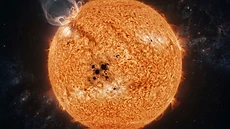
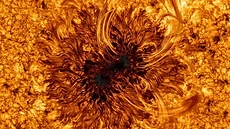
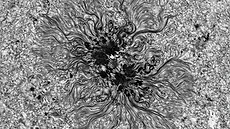
Sunspots are more than just dark patches on the solar surface. They are the primary drivers of solar activity, directly influencing space weather that affects satellites, power grids, and our global navigation systems.
Sunspots and Their Role in Shaping Space Weather
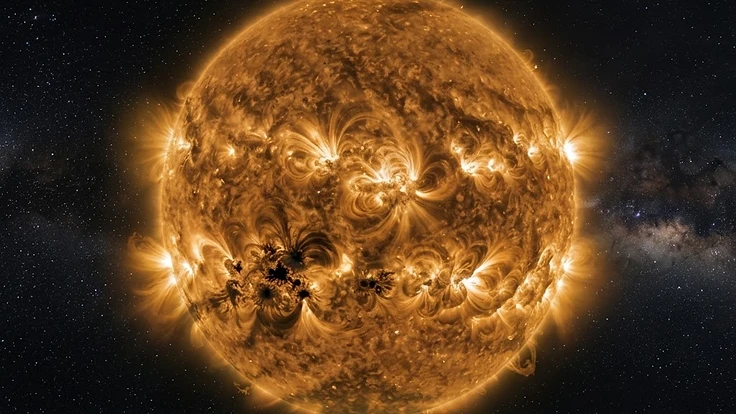
Sunspots are the most visible indicators of our star's complex and turbulent magnetic personality. To the casual observer, they appear as dark, cool blemishes on the blindingly bright photosphere of the Sun.
In reality, these spots are intense concentrations of magnetic field lines that inhibit the flow of heat from the solar interior. By studying these regions, we gain vital clues about the solar cycle, which lasts approximately 11 years and dictates the frequency of intense solar events.
The Science Behind It
The solar surface behaves like a fluid, meaning the Sun rotates faster at its equator than at its poles. This differential rotation stretches and twists the internal magnetic fields until they erupt through the surface to create sunspots.
These magnetic knots are where energy builds up, often leading to solar flares and coronal mass ejections. While a flare travels at the speed of light, arriving in minutes, the slower solar wind typically moves at 400 to 700 km per second.
CMEs are significantly faster, occasionally reaching speeds of 3,000 km per second. When these eruptions head toward Earth, they interact with our planet's magnetosphere, potentially causing geomagnetic storms.
Real-World Implications
Space weather events disrupt the delicate balance of our modern technological landscape. When a major solar storm hits, it can degrade high-frequency radio communications and interfere with the satellite signals we rely on for global navigation.
Power grids are also at risk, as geomagnetically induced currents can overwhelm transformers and lead to significant infrastructure damage. We measure the severity of these geomagnetic disturbances using the Kp index, which acts as a standardised gauge for planetary activity.
Beyond technical interference, high-energy particles from the Sun pose a radiation hazard to astronauts and high-altitude aircraft. Ensuring the safety of the ISS, which orbits at roughly 408 km above the surface, requires constant vigilance against solar outbursts.
What You Can Do
Monitoring space weather does not require a degree in astrophysics. You can track solar activity yourself through tools like our live solar imagery gallery to see active regions as they rotate across the disk.
If you plan to view the aurora, it is essential to monitor your local aurora forecast to ensure conditions are favourable for visibility in your area. For those looking for the ultimate experience, guided aurora tours in countries like Iceland, Norway, Canada, Finland, Sweden, and Alaska offer expert insights into these mesmerising lights.
If you represent a business or want to share data, consider how to embed on your site to provide your audience with real-time solar updates. Staying informed is the best way to appreciate the dynamic nature of our star while protecting your interests.
Key Takeaways
Sunspots serve as the fundamental markers of the solar cycle, signaling the potential for eruptions that ripple across the inner solar system. Understanding how these features work is essential for anyone interested in the resilience of our global technology.
While space weather can seem abstract, it is a constant force interacting with our magnetosphere. By keeping an eye on solar flares explained and similar resources, you turn complex data into manageable knowledge.
We live in a time of unprecedented reliance on space-based infrastructure, making solar awareness more relevant than ever. Keep track of current conditions to stay ahead of the weather in space.
A closer look at the Sun
Sunspots offer a visible way to connect the Sun’s changing magnetic activity with the space weather discussed here. For readers curious about observing the solar surface, explore an observation setup, using appropriate solar-safe equipment and never viewing the Sun without proper protection.
Ad · Affiliate link. Flarient may earn a commission if you purchase through this link, at no additional cost to you.
People Also Ask
Why are sunspots darker than the rest of the Sun?+
Sunspots appear darker because they are significantly cooler than the surrounding photosphere. While the average surface temperature is about 5,500 degrees Celsius, sunspots are roughly 1,500 degrees cooler. Their intense magnetic fields prevent hot plasma from rising to the surface, causing these cooler, dimmer regions.
How long does it take for solar wind to reach Earth?+
Solar wind typically travels at speeds between 400 and 700 kilometres per second. At these speeds, the plasma particles usually take between two and four days to cross the roughly 150 million kilometres of space between the Sun and Earth to reach our atmosphere.
Can I see sunspots without a telescope?+
You should never look directly at the Sun. Viewing sunspots safely requires a telescope or binoculars equipped with a certified solar filter. Alternatively, you can use a projection method to cast the Sun's image onto a piece of white paper, which allows for safe observation of the solar disk.
Continue Reading
Forecast These Questions
View all →Express your probability on these active forecast questions.