How to Spot Noctilucent Clouds
Noctilucent clouds are rare, electric-blue displays that glow in the deep twilight. Learn the science behind these night-shining clouds and how to catch them.
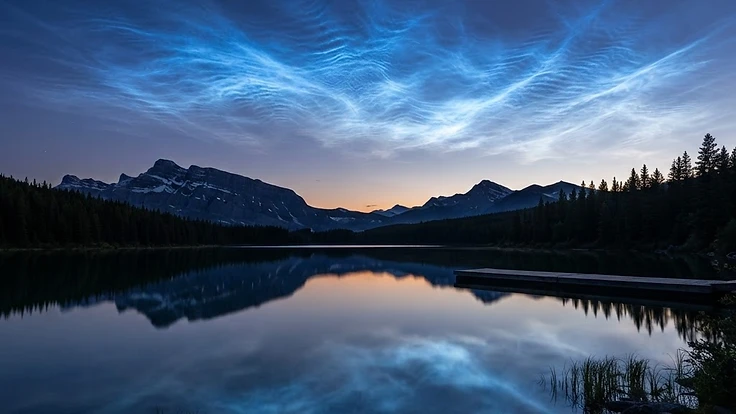
Noctilucent Clouds Are Night-Shining Wonders of the Upper Atmosphere
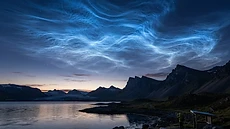
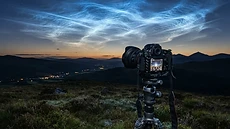
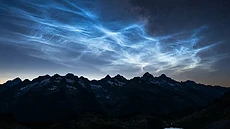
Noctilucent clouds, or NLCs, are among the most ethereal sights in the night sky. These noctilucent, or night-shining, clouds appear as luminous, wavy sheets of electric blue against the dark backdrop of a summer evening. They typically emerge in the deep twilight after the sun has dipped below the horizon, yet they remain high enough to catch the final rays of light.
Spotting them requires patience and a bit of meteorological luck. Unlike the aurora which reacts to solar wind, these clouds form at the very edge of space. They are a phenomenon of the mesosphere, far above the weather we experience on the ground.
The Science Behind It
These clouds form in the mesosphere, roughly 80 kilometres above the surface of the Earth. At this extreme altitude, the air is bone dry and incredibly thin. For clouds to manifest, the atmosphere must reach temperatures below minus 120 degrees Celsius.
Water vapour migrates to these heights, where it freezes onto microscopic dust particles. These particles often originate from meteor smoke, which is the fine debris left behind by a near-Earth asteroid or other interplanetary dust as it burns up in the atmosphere. The sunlight reflects off these ice crystals to create the glowing effect.
Real-World Implications
While they are a visual delight, NLCs serve as a sensitive barometer for changes in the upper atmosphere. Scientists analyse them to understand how greenhouse gases and climate patterns alter the mesosphere. A warming lower atmosphere can actually lead to a colder upper atmosphere, which encourages more frequent cloud formation.
These clouds also disrupt radio signals that rely on ionospheric reflection. If you are interested in how atmospheric changes affect long-distance communication, consider reading more in our glossary of space weather terms. They represent the delicate balance of our planet as it interacts with the harsh conditions of space.
What You Can Do
To see them, you must look toward the poleward horizon during the summer months. In the Northern Hemisphere, this usually means June and July. You need a clear view of the sky, free from light pollution, when the sun is between six and sixteen degrees below the horizon.
If you want to track sky conditions, you can use Flarient's [local aurora forecast](/#local) to help monitor general visibility and clear skies in your area. For those looking to see even grander atmospheric light shows, we recommend booking guided aurora tours which offer expert led experiences across countries like Iceland, Norway, Canada, Finland, Sweden, and Alaska.
Observing these events teaches you how to read the sky like a professional.
Key Takeaways
Noctilucent clouds are a fleeting reminder of the beauty at the threshold of space. They form in the mesosphere, require extreme cold, and act as indicators of atmospheric health. You can find them by keeping an eye on the horizon during the deep twilight of summer.
For more on how our planet behaves in the context of the solar system, explore our archive of past events. Keep looking up, as the night sky holds many secrets for the patient observer.
For observers
If you want to photograph noctilucent clouds rather than just watch them, one compact option is to use a portable astrophotography rig suited to widefield twilight shots. See an accessible way to capture the sky.
Ad · Affiliate link. Flarient may earn a commission if you purchase through this link, at no additional cost to you.
People Also Ask
What altitude do noctilucent clouds form at?+
Noctilucent clouds form at an altitude of approximately 80 kilometres in the mesosphere. This is the highest level of the atmosphere where clouds can exist. At this height, the air is extremely dry and cold enough for ice crystals to form on dust particles.
Are noctilucent clouds related to the aurora borealis?+
No, they are entirely different phenomena. Auroras are caused by charged particles from the sun interacting with the Earth's magnetic field. Noctilucent clouds are physical clouds made of ice crystals reflecting sunlight, occurring much lower than the typical altitude of the auroral oval.
Why do noctilucent clouds appear blue?+
The clouds appear electric blue because of the way sunlight is scattered by the tiny ice crystals that compose them. These crystals are small enough to scatter the shorter wavelengths of blue light more efficiently than other colours, giving the clouds their distinctive, glowing appearance in the deep twilight.
Continue Reading
Forecast These Questions
View all →Express your probability on these active forecast questions.