Individual Preparedness for Extreme Solar Weather Events
Solar storms are a natural part of our space environment. Understanding how these geomagnetic disturbances work allows you to prepare for potential disruptions to our modern infrastructure.
Individual Preparedness for Extreme Solar Weather Events
Space weather is not a distant scientific abstraction. It is an active, dynamic process that can reach down from the upper atmosphere to affect the power grids, navigation systems, and telecommunications networks that support our daily lives.
While major solar events are rare, they are inevitable. Understanding the risks and taking modest steps to build personal resilience ensures you are ready when the sun becomes particularly active.
The Science Behind It
The sun undergoes a natural cycle of activity lasting approximately 11 years. Solar Cycle 25 began in December 2019, bringing with it an increase in sunspots, solar flares, and coronal mass ejections.
Live Solar Flare Monitor
Powered by Flarient — embed this on your site →
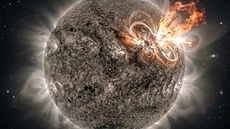
Solar flares are intense bursts of radiation. When a massive cloud of magnetized solar material known as a coronal mass ejection is directed towards Earth, it can interact with our magnetic field.
This interaction creates a geomagnetic storm, which scientists classify using a G-scale from G1 to G5. The intensity of these storms is often measured by the Dst index, where negative values indicate the magnitude of the geomagnetic disturbance.
Particles from the solar wind travel at hundreds of kilometres per second. When they strike the magnetosphere, they accelerate towards the poles, creating the aurora as they collide with oxygen and nitrogen atoms in our atmosphere.
Real-World Implications
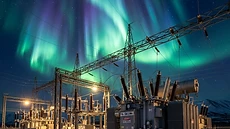
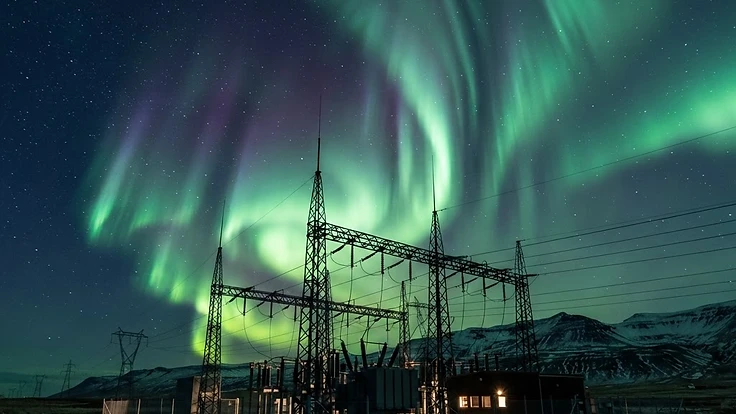
Most solar activity passes without notice, but intense events pose risks to high-altitude technology and power grids. Geomagnetic currents can induce electrical surges in long transmission lines, potentially overwhelming local infrastructure.
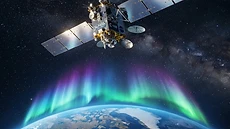
Satellite operations are particularly sensitive. Increased solar radiation heats the upper atmosphere, causing it to expand and increase drag on objects in orbit, which can alter the trajectories of satellites orbiting well above the Kármán line.
Communication blackouts can occur, especially for systems relying on high-frequency radio or precise GPS timing. While the mechanics of orbital motion are well understood, unexpected solar weather can still complicate navigation and tracking for global logistics.
What You Can Do
Preparedness begins with awareness. Monitor space weather conditions using Flarient's live dashboard to stay informed about current activity levels without needing a deep background in heliophysics.
If you live in higher latitudes, you might notice the [local aurora forecast](/#local) showing increased activity during stronger storms. Those interested in the spectacle can book guided aurora tours in locations like Iceland, Norway, Canada, or Sweden to experience the phenomenon safely with local experts.
Maintain a basic emergency kit with manual alternatives for communication and power. Familiarise yourself with glossary terms to better understand the data you see in forecasts and updates.
Key Takeaways
Solar events are a natural consequence of living on a planet with a protective magnetic field. By tracking solar cycles and observing past events, we gain perspective on our place in the solar system.
Modern technology has built a degree of vulnerability into our systems, but informed individuals are rarely caught off guard. Keep an eye on space weather reports, maintain your emergency supplies, and stay curious about the forces shaping our cosmic environment.
For those who integrate these habits, space weather becomes less of a threat and more of a fascinating window into the power of our star.
People Also Ask
Can a solar storm destroy the internet?+
While an extreme solar storm could cause widespread and prolonged disruption to electrical grids and undersea cables, it is unlikely to permanently destroy the internet. Most of the damage would involve transformer failure, which takes time to repair but is a manageable, albeit difficult, infrastructure challenge.
How do I know if a solar storm is happening?+
You can monitor official sources like the NOAA Space Weather Prediction Centre or use tools like our live dashboard to check the current Kp index. Elevated Kp values and alerts from these services are the most reliable indicators of ongoing geomagnetic activity.
Are solar flares dangerous to human health?+
Solar flares themselves do not harm humans on the ground because our atmosphere and magnetic field act as a shield. Astronauts aboard the ISS or in high-altitude flights may face increased radiation exposure during extreme events, but ground-based life remains safely protected by the Earth.
Continue Reading
Forecast These Questions
View all →Express your probability on these active forecast questions.