Noctilucent Clouds Pose No Threat to Life on Earth
Noctilucent clouds are a beautiful atmospheric phenomenon that occur high above the Earth. While they capture the imagination of observers, they remain completely harmless to human activity.
Noctilucent Clouds Pose No Threat to Life on Earth
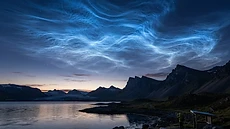
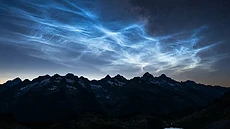
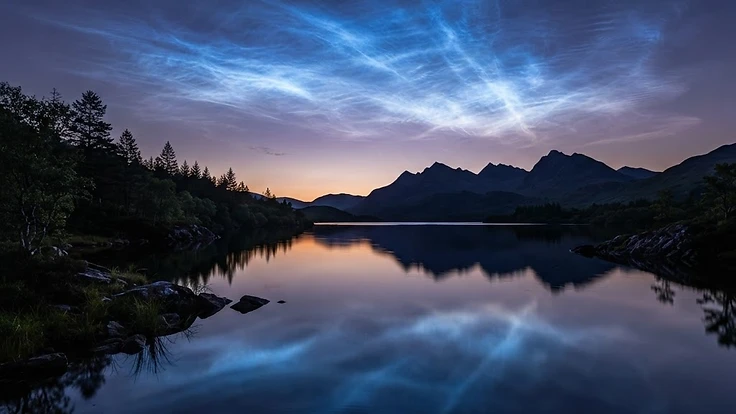
Noctilucent clouds, often called night shining clouds, appear as ethereal, electric blue ripples in the sky long after the sun has dipped below the horizon. These visual marvels form in the mesosphere, roughly 80 kilometres above our planet, making them the highest clouds in the Earth's atmosphere. They are a purely natural occurrence that fascinates researchers and stargazers alike.
It is important to clarify that despite their alien appearance, they pose absolutely no danger to us.
The Science Behind It
These clouds consist of ice crystals that gather on tiny particles of dust, often remnants from meteors that have burnt up upon entering the atmosphere. Because they reside so high up, they remain illuminated by sunlight even when the ground below is shrouded in darkness. Their formation requires extremely low temperatures, often below minus 120 degrees Celsius, and a sufficient supply of water vapour.
They are most commonly spotted at high latitudes during the summer months.
While we associate the upper atmosphere with space weather, such as the aurora activity driven by solar wind, noctilucent clouds are distinct in their origin. They are not influenced by the K-index or other geomagnetic indicators. Instead, they provide scientists with a unique window into atmospheric dynamics and climate patterns.
Their increasing frequency is currently a subject of study, particularly regarding the potential influence of greenhouse gas emissions on the upper atmosphere.
Real-World Implications
For the general public, noctilucent clouds are essentially a visual gift. They do not interfere with radio communication, aviation, or power grids, unlike the solar particle events that can sometimes disrupt our modern infrastructure. You might be interested in monitoring solar storms to protect satellite infrastructure to understand what actually causes concern for our technological systems, but these clouds are entirely benign.
Their presence does not signify any environmental collapse or impending space catastrophe. They are merely a physical reflection of high altitude conditions. Even when solar flares influence modern electronic infrastructure, these ice clouds remain unaffected by the energetic particles that traverse our sky.
They are purely an optical phenomenon, posing no threat to the biosphere or our daily technological operations.
What You Can Do
If you want to observe these clouds, you simply need a clear view of the sky during the twilight hours. They are best seen from latitudes between 50 and 70 degrees north or south. Keeping a consistent watch during the summer solstice period increases your chances of spotting their signature blue glow.
For those travelling to witness natural wonders, guided aurora tours in countries like Iceland, Norway, and Canada often provide the best vantage points for stargazing and observing other high altitude phenomena.
While you scan the skies for these clouds, you can also keep an eye on broader atmospheric conditions. Use the Flarient live dashboard to stay informed about what is happening above us in real time. Accessing tools like our local aurora forecast or checking our glossary helps you understand the difference between high altitude ice crystals and active geomagnetic events.
For those who prefer experience over apps, guided aurora tours in Tromsø, Abisko and the Kola Peninsula combine local dark-sky knowledge with on-the-night forecasting.
Key Takeaways
Noctilucent clouds are a harmless, beautiful reminder of the complex layers that make up our atmosphere. They require specific, cold conditions to form and serve as a passive indicator of the state of the mesosphere. They are not connected to geomagnetic storms or other space weather hazards.
You can enjoy these displays without any worry, as they are a stable and fascinating component of our natural world.
Keep looking up and enjoying the wonder of the night sky.
After-dark field note
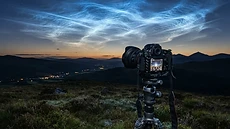
Noctilucent clouds are best seen during summer twilight at high latitudes, where their pale blue patterns can reward a patient look upward. For readers drawn to recording night-sky scenes, explore an observation setup as one route to capturing the sky.
Ad · Affiliate link. Flarient may earn a commission if you purchase through this link, at no additional cost to you.
People Also Ask
Do noctilucent clouds affect the ozone layer?+
Noctilucent clouds do not directly cause ozone depletion. While they form in the same atmospheric region where chemical reactions involving ozone occur, they are a result of natural cooling and water vapour transport rather than being a chemical driver of ozone loss themselves.
Can you see noctilucent clouds during the day?+
No, noctilucent clouds are generally not visible during the day because they are too thin and faint to be seen against the bright daylight sky. They are only visible during deep twilight when the sun is between 6 and 16 degrees below the horizon, illuminating the high clouds from below.
Why are noctilucent clouds becoming more common?+
Scientists suggest that the increasing frequency of noctilucent clouds may be linked to rising levels of methane in the atmosphere. Methane reaches the mesosphere and oxidises to form water vapour, which provides the necessary moisture for these ice crystals to grow at high altitudes.
Continue Reading
Forecast These Questions
View all →Express your probability on these active forecast questions.