Predicting Solar Flares Remains an Elusive Science
Solar flares impact our modern world in profound ways. We explore the current state of solar forecasting and why perfect prediction remains out of reach.
The Science of Predicting Solar Flares
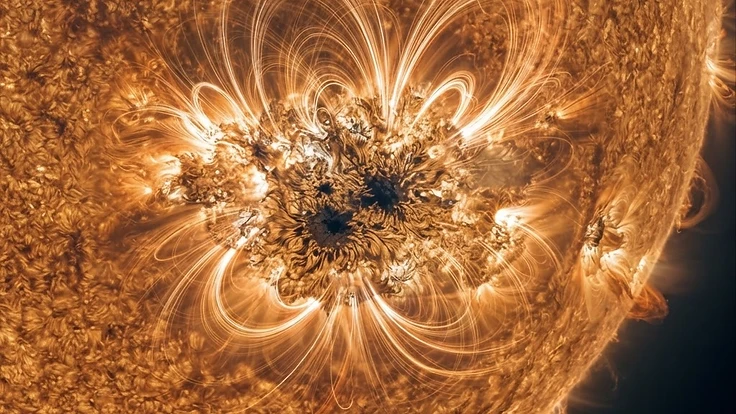
Solar flares are sudden, intense bursts of radiation emanating from the solar atmosphere. These events originate in active regions of the sun where complex magnetic field lines twist and snap. When these magnetic structures reconnect, they release vast amounts of energy in the form of X-rays and extreme ultraviolet radiation.
Live Solar Flare Monitor
Powered by Flarient — embed this on your site →
Because this energy travels at the speed of light, it reaches Earth in roughly eight minutes. This speed makes traditional prediction based on observation nearly impossible for the initial flare. Scientists instead rely on monitoring the magnetic complexity of sunspot groups to assess the probability of a flare occurring in the coming hours or days.
Solar Cycle 25, which began in December 2019, reminds us that the sun is a dynamic engine. We have improved our ability to track these cycles over the traditional 11-year period. However, pinpointing the exact moment a flare will trigger remains one of the great challenges in modern astrophysics.
The Mechanisms Behind Solar Activity
To understand why we cannot perfectly predict flares, we must look at the solar surface. Sunspots are cooler, darker areas where intense magnetic fields inhibit convection. It is within these chaotic magnetic landscapes that the potential for a flare builds over time.
When these fields become sufficiently twisted, they reach a breaking point. This process is similar to how a rubber band snaps when stretched beyond its limit. While we can identify high-risk regions by looking at solar imagery from the SDO or other observatories, we lack the granular data to predict the exact moment of rupture.
While flares arrive instantly, the associated coronal mass ejections move much slower. These clouds of solar plasma typically travel at speeds between 400 and 700 km/s, though high-speed events can reach 3,000 km/s. This lag gives us a critical window of hours or days to prepare for geomagnetic impacts on our planet.
Real-World Implications of Solar Weather
When a significant solar flare occurs, the ionizing radiation impacts the ionosphere. This phenomenon often leads to HF radio blackouts for aviation and maritime communications. You can learn more about these effects by reviewing our deep dive into the physics of solar flares.
Geomagnetic storms, often measured by the Kp index or the G-scale, follow the arrival of solar material. A G1 storm is minor, while a G5 event represents an extreme disruption to our power grids and satellite navigation systems. Such events can increase atmospheric drag on satellites orbiting in low Earth orbit.
Infrastructure like the ISS, which maintains an altitude of approximately 408 km, remains vulnerable to radiation hazards. Ensuring the safety of our orbital assets requires a constant understanding of the space environment. Monitoring the storm leaderboard helps us track these historical impacts and prepare for future solar maxima.
Practical Preparedness and Tools
While you cannot stop a solar flare, you can stay informed about current conditions. Accessing a reliable live dashboard allows you to monitor incoming solar wind data in real time. For those interested in tracking the beautiful result of these storms, checking a local aurora forecast is a fantastic way to engage with solar physics.
If you are planning to witness the northern lights, guided aurora tours in countries like Iceland, Norway, Canada, Finland, Sweden, and Alaska offer expert insight into these natural spectacles. Having a glossary at hand can also help clarify technical terms like Dst index or magnetic reconnection when you are analysing solar data.
Modern technology allows us to integrate real-time updates directly into our personal devices. Using embeddable widgets on your own website or dashboard provides a seamless way to keep an eye on solar activity. These tools turn complex data into actionable information for students and enthusiasts alike.
If you'd rather skip the planning, guided aurora tours across Iceland, Norway, Canada and Sweden handle transport, timing and dark-sky location selection — all driven by real-time space weather data.
Key Takeaways for the Future
Predicting solar flares is a field defined by probability rather than certainty. While we have mastered the art of monitoring solar cycles and identifying high-risk sunspots, the internal trigger mechanism of a flare stays hidden from view. Continued investment in solar observation is essential for our technological defence.
As our reliance on satellite infrastructure grows, so does the necessity for better predictive modelling. We are learning more every day about how Earth remains connected to the sun through these cosmic events. By maintaining a vigilant watch, we can better safeguard our world against the unpredictable nature of our nearest star.
People Also Ask
What happens when a solar flare hits Earth?+
When a solar flare hits Earth, it ionises the upper atmosphere, causing disruptions to high-frequency radio communications and satellite signals. If a coronal mass ejection accompanies the flare, it may cause a geomagnetic storm, potentially inducing electrical currents that can stress power grids and cause auroral displays.
How often do major solar flares occur?+
The frequency of major solar flares varies significantly throughout the 11-year solar cycle. During solar maximum, major flares occur much more frequently, sometimes several times a week. During solar minimum, months may pass without a significant X-class flare occurring on the sun's visible surface.
Can solar flares destroy the internet?+
While an extreme solar event could potentially disrupt long-distance submarine communication cables and damage sensitive satellite electronics, it is unlikely to destroy the internet entirely. Modern infrastructure is becoming increasingly hardened, but the risk of regional service outages remains a significant concern for global telecommunications operators.
Continue Reading
Forecast These Questions
View all →Express your probability on these active forecast questions.