Solar Flare Impacts on Global Satellite Navigation Systems
Solar activity can disrupt GPS accuracy by altering the Earth's ionosphere. Learn how space weather influences satellite navigation and what you can do to stay prepared.
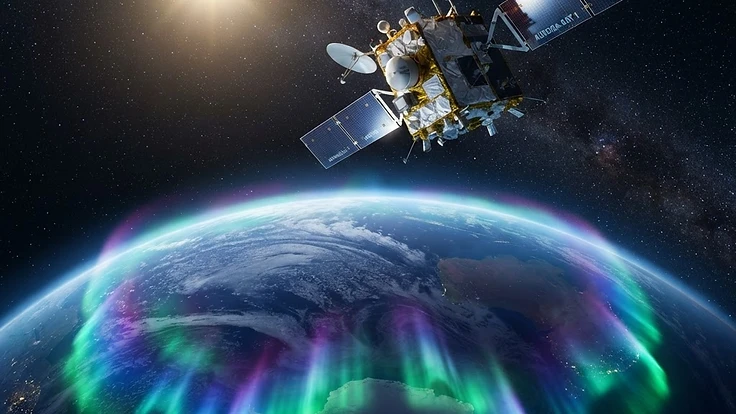
Solar Activity Influences Global Navigation Systems
GPS relies on precise timing and signal propagation through the atmosphere to provide accurate location data. When the Sun experiences periods of intense activity, these signals can face significant interference, leading to errors in positioning for users on the ground.
Understanding how solar energy interacts with our magnetic environment is essential for anyone relying on precise navigation. This relationship between solar output and technological accuracy remains a critical area of study in modern atmospheric science.
The Science Behind It
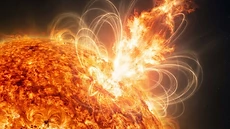
Solar flares emit intense bursts of electromagnetic radiation, travelling at the speed of light. These flares often accompany coronal mass ejections, which consist of charged particles that take longer to reach our planet.
Live Solar Flare Monitor
Powered by Flarient — embed this on your site →
When these particles strike the upper atmosphere, they create a geomagnetic storm that distorts the ionosphere. The ionosphere is the layer of charged particles that radio and satellite signals must penetrate to reach receivers on the surface.
As the ionosphere density changes, signals experience delays or refraction. This phenomenon, which can be measured using the G-scale, effectively shifts the perceived position of the satellite from the perspective of a ground-based user.
For more insight into the fundamental physics, you can explore the physics of solar flares to see how these events scale in magnitude.
Each class of flare, from A to X, signifies a ten-fold increase in intensity, with X-class events posing the most significant risk to satellite infrastructure.
Real-World Implications
Modern infrastructure relies on the millisecond precision provided by satellite constellations. During a severe space weather event, the resulting ionospheric turbulence can lead to signal loss or multi-metre inaccuracies in coordinate calculations.
This impact is particularly noticeable in aviation, maritime shipping, and precision agriculture, where centimetres matter. While consumer grade navigation typically masks these small variances, industrial applications can experience substantial operational downtime during peak solar activity.
High-latitude regions often face the most acute challenges due to the configuration of Earth's magnetic field. This is also where you might see an aurora, which serves as a visual indicator that the geomagnetic environment is currently disturbed.
What You Can Do
Preparation for space weather events is similar to tracking traditional weather patterns. Monitoring real-time data allows logistics and navigation managers to anticipate periods of reduced accuracy and adjust their operational schedules accordingly.
If you are planning to observe the skies, whether for scientific interest or to witness the natural beauty of the Northern Lights tours in countries like Norway, Sweden, or Canada, keeping an eye on solar activity is vital. Tools like accessing reliable real-time space weather data can provide the necessary context to understand if your current signal quality might be compromised.
You can use embeddable widgets on your own platform to keep your team or users informed about current solar conditions. Staying ahead of the data ensures that you are never caught off-guard by unexpected signal drift.
Key Takeaways
Solar flares influence GPS accuracy by modifying the ionospheric density through which satellite signals travel. These disturbances are a natural consequence of our dynamic star and are part of the broader solar cycle, which typically lasts about eleven years.
While we cannot stop solar weather, we can certainly monitor and mitigate its effects on our technology. By utilising accurate data, we can maintain reliable navigation even during periods of high solar activity.
For those interested in how these events compare to historical records, the archive provides a way to study past disruptions. Continuous learning is the best defence against the unpredictable nature of our space environment.
People Also Ask
Can solar flares permanently damage GPS satellites?+
While solar flares can cause operational anomalies or temporary reboots in sensitive satellite electronics, they rarely cause permanent damage. Engineers design satellites with robust shielding to withstand radiation, though extreme events can occasionally degrade solar panels or internal circuitry over time.
Do solar flares affect cell phone signals?+
Solar flares generally do not affect cellular phone signals directly, as these rely on ground-based towers. However, the electrical grid that powers those towers can be affected by extreme geomagnetic storms, potentially leading to widespread power outages and indirect service loss.
How often do solar flares disrupt global navigation?+
Significant disruptions to civilian GPS are relatively rare. Most solar flares have a minor impact that is corrected by ground-based augmentation systems. Only during intense geomagnetic storms do users typically notice a loss in positional accuracy or intermittent signal dropouts.
Continue Reading
Forecast These Questions
View all →Express your probability on these active forecast questions.