Solar Flares and Their Physical Impact on Earth
Solar flares are intense bursts of radiation from the Sun that influence our technological world. Understanding their mechanics helps us grasp how they disrupt satellites and power grids.
Solar Flares and Their Physical Impact on Earth
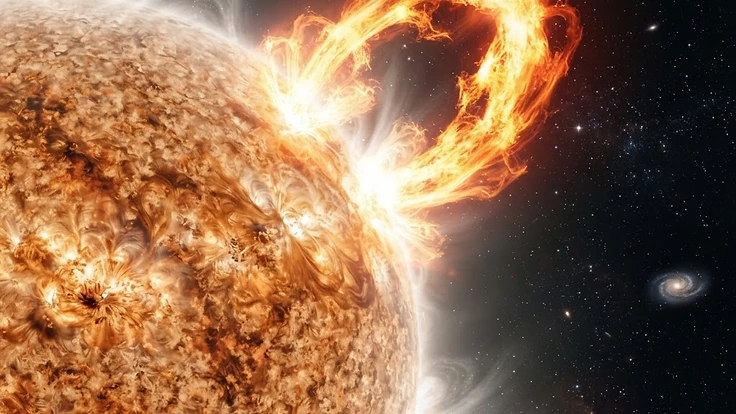
The Sun is a dynamic star that frequently releases immense amounts of energy. A solar flare is a sudden, powerful eruption of electromagnetic radiation from the solar atmosphere, often occurring near complex sunspot groups.
Live Solar Flare Monitor
Powered by Flarient — embed this on your site →
While these events happen millions of kilometres away, their influence reaches across the solar system. We live within the outer atmosphere of our star, and understanding how these eruptions interact with our magnetic environment is essential for modern life.
The Science Behind It
Solar flares are categorised by their intensity using a letter-based system: A, B, C, M, and X, with each level representing a tenfold increase in energy output. These events result from the sudden release of magnetic energy stored in the solar atmosphere.
When a flare occurs, it emits radiation across the entire electromagnetic spectrum, from radio waves to X-rays. Because light travels at roughly 300,000 km/s, the radiation impacts Earth in about eight minutes.
Some flares are accompanied by coronal mass ejections, which are vast clouds of solar plasma. These clouds travel significantly slower than light, moving between 400 and 3,000 km/s, and take days to arrive.
Once they reach our neighbourhood, they can compress our magnetosphere. This is often measured using the G-scale, which helps scientists classify the potential for global disruption.
Real-World Implications
When high-energy particles interact with the upper atmosphere, they ionise gases in the ionosphere. This process can degrade high-frequency radio communications and disrupt navigation systems that rely on satellite signals.
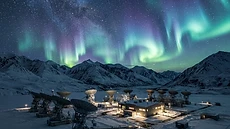
For those interested in how these events create visual phenomena, aurora displays often follow major geomagnetic activity. Particles flowing along magnetic field lines excite atmospheric gases, causing the sky to glow near the poles.
Beyond visual beauty, intense storms can induce electrical currents in long-distance pipelines and power grids. Major events can overload transformers, which is why operators carefully monitor the storm leaderboard to ensure grid stability.
Spacecraft in orbit, such as the International Space Station at 408 km, must also account for increased drag and radiation during peak solar activity. You can learn more about these risks in our deep dive into solar particle events.
What You Can Do
Staying informed is the best way to mitigate the impact of solar weather. You can monitor space weather conditions through our live dashboard to track current conditions as they evolve in real time.
If you are planning to witness the northern lights, you might consider booking guided aurora tours in destinations like Iceland, Norway, or Alaska. These experts provide local knowledge that makes your trip much more likely to succeed.
For those managing infrastructure or simply wanting to share data, we offer embeddable widgets for your website. These tools allow you to show real-time solar activity metrics to your audience with minimal effort.
Always remember to check our glossary if you encounter technical terms that seem confusing. Having a solid understanding of the basics makes following solar cycles much easier.
Key Takeaways
Solar flares are natural components of the 11-year solar cycle, which entered Cycle 25 in December 2019. While they create spectacular light displays, they also demand vigilance for our satellite and electrical infrastructure.
By keeping an eye on solar imagery and geomagnetic indices, we can better appreciate the complex connection between our star and our planet. This ongoing relationship defines much of our modern space-based economy.
Understanding these mechanisms ensures we remain prepared, whether for minor radio disruptions or major geomagnetic events. The study of space weather remains a vital field for protecting our future on Earth.
People Also Ask
Can solar flares cause power outages?+
Yes, extreme solar flares can induce electrical currents in long-distance power grids. These currents can overwhelm transformers and lead to localized or regional power outages, though modern grids are designed with protective measures to mitigate these risks during most geomagnetic storms.
How often do solar flares happen?+
The frequency of solar flares fluctuates throughout an 11-year solar cycle. During the solar maximum, many flares can occur in a single day, while during the solar minimum, the Sun may remain quiet for long periods. Activity levels are tied to the number of visible sunspots.
Are solar flares dangerous to humans?+
Solar flares are not dangerous to humans on the ground because our atmosphere and magnetic field act as a protective shield. The radiation is blocked before it reaches the surface, meaning the primary risks are to technology, satellites, and astronauts working in orbit.
Continue Reading
Forecast These Questions
View all →Express your probability on these active forecast questions.