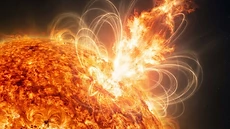
Solar Flares Are Composed of High Energy Plasma
Solar flares are intense bursts of radiation originating from the Sun's magnetic activity. Discover the composition of these powerful events and how they impact our technology on Earth.
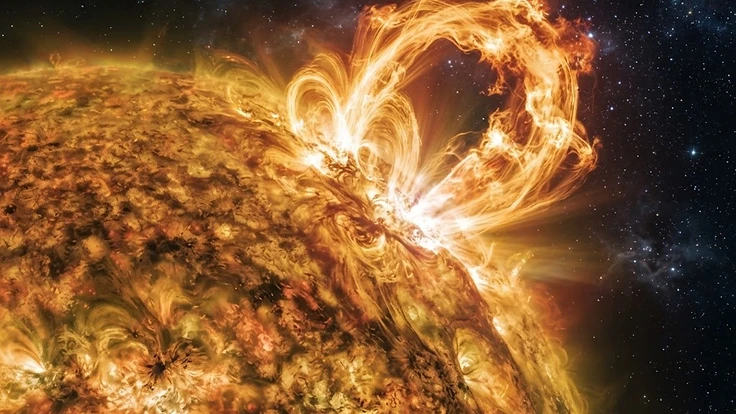
Solar Flares Are Composed of High Energy Plasma
Solar flares represent the most explosive events in our solar system. These sudden, powerful flashes of radiation emanate from the Sun, typically near active regions like sunspots where magnetic fields are twisted and unstable.
Live Solar Flare Monitor
Powered by Flarient — embed this on your site →
Understanding what these flares consist of requires looking beyond the visible light we see on Earth. By studying the mechanics of solar activity, we gain insight into the broader solar cycle and how it drives the space weather that touches our planet.
The Science Behind It
A solar flare is essentially a massive release of electromagnetic radiation. It is composed of accelerated charged particles, primarily electrons and protons, moving through a magnetic field at relativistic speeds.
This energy is unleashed when magnetic field lines in the solar corona snap and reconnect. This process converts stored magnetic energy into thermal and kinetic energy, accelerating particles into the interplanetary medium.
These particles emit radiation across the entire electromagnetic spectrum. This includes radio waves, visible light, ultraviolet light, and high energy X-rays or gamma rays.
While the light arrives at the speed of light, reaching Earth in about eight minutes, the associated matter can take longer to travel. For context, NASA notes that flares are classified by their X-ray brightness, with X-class flares being ten times stronger than M-class events.
Real-World Implications
When a flare reaches Earth, it primarily interacts with our upper atmosphere. The sudden surge in X-rays and extreme ultraviolet radiation ionises the ionosphere, which is the layer responsible for reflecting and refracting radio waves.
This disruption impacts satellite communications, GPS navigation, and high frequency radio propagation. For a deeper look at how these fluctuations affect long distance signals, read our article on Solar Cycles Drive Long Distance Radio Communication.
If the flare is accompanied by a coronal mass ejection, it may arrive later as a cloud of plasma. When this plasma strikes our magnetic field, it triggers a geomagnetic storm which can lead to auroral displays at lower latitudes.
These storms also create induced currents in power grids and pipelines. If you are interested in historical perspective, our archive documents past events that shaped our understanding of solar risks.
What You Can Do
Preparedness begins with awareness of current solar conditions. By monitoring indices like the Kp index, you can gauge the likelihood of geomagnetic activity before it disrupts your local systems.
For those seeking to view the effects firsthand, [guided aurora tours](https://vi.me/HuXHi) in countries such as Iceland, Norway, Canada, and Sweden offer the best chance to witness the night sky lighting up during these periods of high activity. These tours provide the expertise needed to navigate remote locations safely.
If you want to track activity yourself, you can use embeddable widgets to monitor solar flux and geomagnetic indices on your own website or personal dashboard. Keeping an eye on these metrics helps you plan your activities around potential solar interference.
Key Takeaways
Solar flares are manifestations of magnetic energy transforming into radiation and particle acceleration. They remain a constant feature of the 11 year solar cycle, which governs the intensity of space weather we experience.
While we cannot stop these events, modern technology and forecasting tools allow us to mitigate their impact on our infrastructure. Remaining informed about solar activity is the best defence against the temporary disruptions caused by our star.
People Also Ask
How long does a solar flare take to reach Earth?+
The electromagnetic radiation from a solar flare, including light and X-rays, travels at roughly 300,000 kilometres per second, reaching Earth in about eight minutes. However, the associated plasma clouds from a coronal mass ejection move much slower, typically arriving in one to three days.
Are solar flares dangerous to humans?+
On the ground, humans are protected by the atmosphere and the magnetosphere, so solar flares pose no direct physical threat. However, they can pose radiation risks to astronauts in space and can disrupt the sensitive electronic infrastructure that modern society depends on for communication and power.
Can solar flares cause earthquakes?+
There is no scientific evidence linking solar flares or geomagnetic storms to earthquakes. Geological activity is driven by tectonic plate movements within the Earth, whereas solar flares influence the upper atmosphere and magnetic environment rather than the Earth's crust.
Continue Reading
Forecast These Questions
View all →Express your probability on these active forecast questions.