The Atmospheric Mechanics of Noctilucent Clouds
Noctilucent clouds are rare, electric-blue formations occurring at the edge of space. Learn the physics behind these polar mesospheric clouds and how they offer a unique window into our atmosphere.
The Atmospheric Mechanics of Noctilucent Clouds
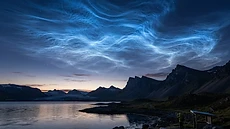
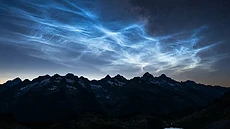
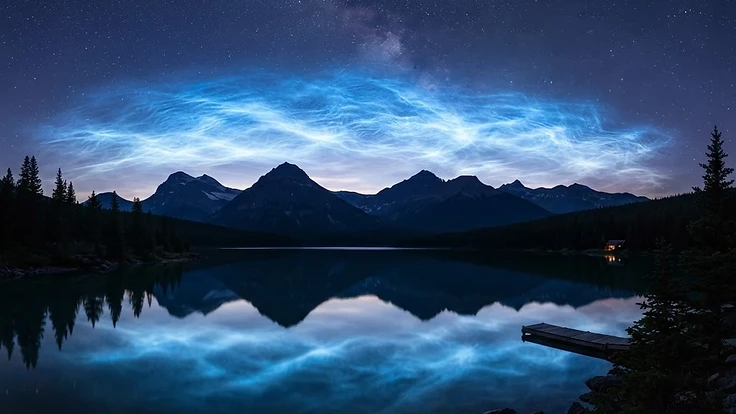
Noctilucent clouds, or night-shining clouds, appear as ghostly, electric-blue ripples against the twilight sky. These ethereal displays occupy the mesosphere, specifically at altitudes around eighty kilometres, far above the weather patterns we experience on the ground.
They represent the highest clouds in our atmosphere, residing just below the boundary where terrestrial air gives way to the vacuum of space. While their beauty is undeniable, their formation requires a delicate balance of specific conditions that remain a fascinating subject for atmospheric scientists.
The Science Behind It
To understand why these clouds form, one must look at the extreme cold of the mesosphere during the summer months. Despite the high temperatures at the surface, the upper atmosphere near the poles drops to temperatures below minus one hundred degrees Celsius.
Water vapour must be present to form ice crystals at these heights. This vapour migrates toward the poles and rises into the upper reaches of the atmosphere, often carried by gravity waves or through the breakdown of methane molecules.
Dust particles act as the essential nuclei for these clouds, likely originating from meteoric smoke. As cosmic debris burns up upon entering the atmosphere, it leaves behind fine dust that allows the sparse water vapour to freeze into tiny ice crystals.
These crystals are small, measuring mere nanometres, which is why they scatter the short, blue wavelengths of light so effectively. Even when the sun has dipped below the horizon for observers on the ground, these high-altitude clouds remain illuminated by sunlight from the other side of the globe.
Real-World Implications
Studying these clouds provides critical data on the changing state of our upper atmosphere. Because they are highly sensitive to water vapour and temperature, they act as subtle indicators of long-term climatic shifts that occur in the layer just below the Kármán line.
Their presence can also offer insight into the complex coupling between the lower and upper atmosphere. Understanding these interactions helps researchers model how solar cycles or large-scale disturbances, such as those we see when monitoring the aurora, affect the delicate balance of the entire air column.
They serve as a reminder that the atmosphere is not a static shield but a dynamic, interconnected system. While they pose no direct threat, tracking their seasonal frequency helps scientists refine their understanding of upper-atmospheric currents.
What You Can Do
If you want to observe these phenomena, your best chance lies in mid-to-high latitude regions during the summer solstice. Keep a clear view of the northern or southern horizon during the nautical twilight hours, as this is when the sun angle is perfect for illuminating the clouds.
For those interested in the broader context of sky observation, keeping an eye on the Kp levels is helpful, as high geomagnetic activity can sometimes coincide with periods where you might also spot auroral activity. If you are planning an expedition to catch these rare sights in places like Iceland, Norway, or Canada, booking guided aurora tours can provide the local expertise needed to navigate the best viewing conditions across different countries.
You can also consult a glossary to familiarise yourself with the terminology used by observers. Preparing for your night of stargazing is much more effective when you understand the environmental factors at play.
Key Takeaways
Noctilucent clouds are a beautiful, high-altitude manifestation of atmospheric physics. They require extreme cold, trace water vapour, and meteoric dust to exist in the mesosphere.
Their appearance serves as a visual bridge to the edge of space, reminding us of the complexities governing our planet. Monitoring these clouds remains an essential part of understanding the global atmospheric circulation.
As we continue to observe the skies, we gain deeper insights into the layers that protect us. For those seeking to learn more about the broader context of atmospheric science, reading more articles on the topic can provide further clarity.
Twilight observation
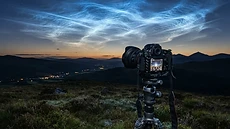
Their high altitude and lingering illumination make noctilucent clouds an especially rewarding twilight phenomenon to watch and photograph from suitable latitudes. For readers interested in documenting these delicate structures, explore a compact capture setup as one accessible route from atmospheric science to sky observation.
Ad · Affiliate link. Flarient may earn a commission if you purchase through this link, at no additional cost to you.
People Also Ask
Are noctilucent clouds visible from anywhere on Earth?+
Noctilucent clouds are primarily visible from high-latitude regions, generally between 50 and 70 degrees latitude. They are most frequently observed during the summer months when the sun remains at a specific angle below the horizon, allowing it to illuminate the high-altitude ice crystals from beneath.
Do noctilucent clouds relate to climate change?+
Scientists use noctilucent clouds as indicators of change in the upper atmosphere. Increasing concentrations of methane, which breaks down into water vapour in the mesosphere, have been linked to an increase in the frequency and brightness of these clouds, suggesting they are sensitive to broader climatic shifts.
How high are noctilucent clouds?+
Noctilucent clouds form in the mesosphere at an altitude of approximately 80 to 85 kilometres. This makes them significantly higher than standard tropospheric clouds, which rarely exceed 15 kilometres, and places them near the transition zone where the Earth's atmosphere begins to blend into outer space.
Continue Reading
Forecast These Questions
View all →Express your probability on these active forecast questions.