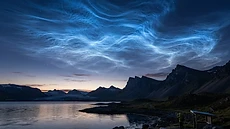
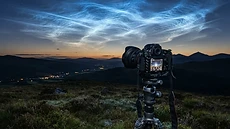
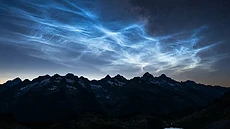
The Cosmic Origins of Noctilucent Clouds
Noctilucent clouds are rare, electric-blue displays that shimmer in the mesosphere. Discover what these mysterious night-shining clouds are made of and how they form.
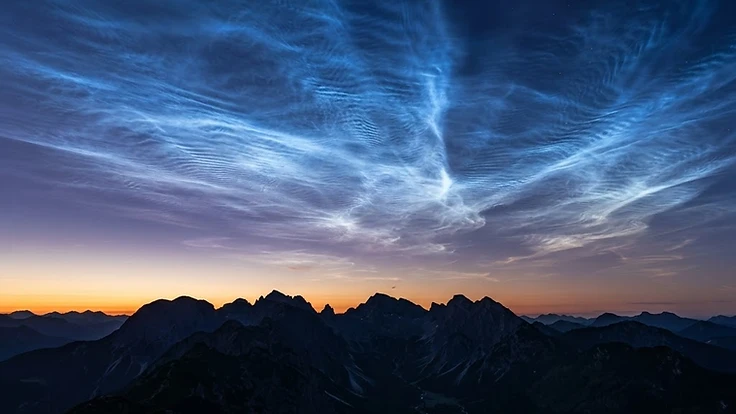
The Composition of Night-Shining Clouds
Noctilucent clouds, or polar mesospheric clouds, represent one of the most striking phenomena in the upper atmosphere. These electric-blue displays typically appear during the summer months at high latitudes, glowing long after the sun has dipped below the horizon.
While they appear ethereal, their composition is grounded in hard science. They are made of tiny ice crystals that form at extreme altitudes, roughly 80 kilometres above the Earth's surface.
The Science Behind It
To form these clouds, the atmosphere requires three distinct ingredients: water vapour, extremely cold temperatures, and microscopic dust particles. The mesosphere is exceptionally dry, yet enough water vapour drifts up to condense at these heights.
Temperatures must drop below -130 degrees Celsius for ice to crystallise. This occurs primarily during the summer solstice when the upper atmosphere undergoes a unique cooling cycle.
These crystals latch onto 'seeds' provided by meteoric smoke. As space debris enters our atmosphere and vaporises, it leaves behind a trail of fine dust, which provides the nucleation points necessary for these clouds to grow.
Real-World Implications
Studying these clouds provides a window into the health of our upper atmosphere. Because they are highly sensitive to temperature and water vapour levels, they serve as long-term indicators of climate change and shifting patterns in the middle atmosphere.
Their appearance also shares a relationship with solar activity and the Kp index, as changes in the solar cycle can influence the thermal structure of the atmosphere. When the sun is active, shifts in ultraviolet radiation can heat the upper layers, sometimes suppressing the formation of these icy clouds.
Their presence reminds us that Earth does not exist in a vacuum. Just as we monitor the auroral oval for space weather events, observing these clouds helps us track the complex interplay between terrestrial weather and the near-Earth environment.
What You Can Do
Capturing these clouds requires patience and clear, dark skies. If you want to document them, understanding the local weather is essential, as is knowing how to use mastering camera settings for capturing the aurora to handle low-light conditions.
While monitoring for clouds, you can keep an eye on other celestial events by using our local aurora forecast for your area. Keeping a broad perspective on the sky ensures you never miss a rare atmospheric display.
If you want to track more than just clouds, consider exploring our glossary to learn about the various terms defining our space environment. Staying informed turns every night spent under the stars into a learning opportunity.
Rather outsource the chase? Guided Northern Lights tours in Tromsø, Fairbanks, Rovaniemi and the Isle of Mull put a local between you and the forecast — you just show up and look north.
Key Takeaways
Noctilucent clouds are a beautiful reminder of the cosmic dust falling onto our planet every single day. They serve as a physical bridge between the freezing vacuum of the mesosphere and the life-giving atmosphere below.
By observing these clouds, we gain insight into the delicate balance of our planet's upper layers. They remain a testament to the fact that the most incredible phenomena often occur just out of sight, high above the world we think we know.
Continue Reading
Forecast These Questions
View all →Express your probability on these active forecast questions.