The Reality of Solar Flares and Global Radio Communications
Solar flares are powerful bursts of energy, but can they actually silence all radio communications on Earth? We examine the science behind the disruption.
Solar Flares and the Resilience of Earth's Communication Networks
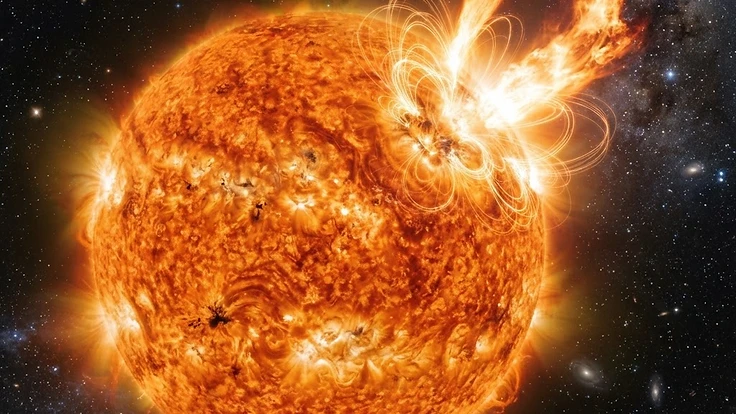
Solar flares are immense eruptions of radiation from the Sun that capture our collective imagination. When a large flare erupts, it often triggers concern about the potential for a total blackout of our communication systems. While space weather is a potent force, the reality of these impacts is more nuanced than science fiction suggests.
HF Radio Conditions
Powered by Flarient — embed this on your site →
Understanding how solar energy interacts with our atmosphere helps clarify why our modern world remains standing even during intense periods of activity.
The Science Behind It
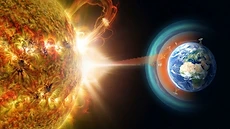
A solar flare is a sudden flash of increased brightness on the Sun, usually observed near its active regions. These events are classified by their X-ray intensity, ranging from A and B classes to the most powerful X-class flares. The energy released by an X-class flare travels at the speed of light, reaching Earth in about eight minutes.
When this radiation hits our ionosphere, it creates sudden ionospheric disturbances that can affect high frequency radio propagation.
Alongside flares, we monitor Coronal Mass Ejections which are massive clouds of solar plasma. These travel much slower than light, moving at speeds between 400 and 3,000 kilometres per second. If a cloud strikes the Earth, it creates a geomagnetic storm.
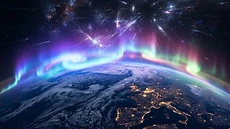
Scientists measure the severity of these storms using a G-scale or by looking at the Kp index to determine potential interference with technology and the auroral oval.
Real-World Implications
The primary danger posed by solar activity to communications is the degradation of High Frequency radio signals. Radio waves rely on the ionosphere to bounce around the curve of the Earth for long-distance transmission. When solar radiation alters the density of this layer, signals can become distorted, fade away, or disappear entirely.
This impact is well-documented in the study of how solar flares impact modern electronics.
Infrastructure providers have learned to manage these fluctuations through sophisticated modelling and hardened systems. While satellite communications and power grids are vulnerable to extreme geomagnetic events, the entire global network does not vanish at once. Modern aviation and maritime shipping have protocols to mitigate signal loss during high-activity periods.
For more context on these historical events, you can explore the archive of recorded solar activity.
What You Can Do
Staying informed is the best defence against the uncertainty of space weather. Tools like the NOAA SWPC provide essential monitoring, but you can also use local trackers to observe real-time data.
If you are interested in the visual effects of these storms, [guided aurora tours](https://vi.me/HuXHi) in countries like Iceland, Finland, and Canada offer an incredible way to see the atmosphere reacting to solar energy.
Using embeddable widgets on your own site can help keep your community updated on the current geomagnetic state.
Monitoring these events helps you understand when conditions are optimal for radio propagation or sky watching. By keeping an eye on the Kp index, you learn to spot the patterns that precede atmospheric changes. This proactive approach turns space weather from a source of anxiety into a fascinating field of study.
You might also find it helpful to review a glossary of terms to better interpret the incoming data streams.
Key Takeaways
Solar flares represent a significant, though manageable, challenge to our communication infrastructure. While they can disrupt radio waves and affect navigation, they rarely cause total or permanent failure across the entire planet. Humanity has developed the technical resilience to withstand the vast majority of solar cycles.
By monitoring the Sun, we continue to bridge the gap between volatile space weather and our terrestrial needs.
Staying curious and prepared allows us to appreciate the beauty of our star without fearing the inevitable oscillations of its natural cycle.
People Also Ask
What is the strongest solar flare ever recorded?+
The most intense solar flare observed was the Carrington Event in 1859. It caused widespread telegraph failures and produced aurorae so bright they were visible near the equator. Modern satellites and ground-based instruments have since allowed us to measure these events with much greater precision.
How do solar flares affect GPS signals?+
Solar flares impact GPS by introducing noise into the ionosphere, which causes signal delays for satellite-to-receiver transmissions. This can lead to decreased positioning accuracy, particularly for high-precision systems used in surveying or aviation, during periods of intense solar activity.
Are solar cycles getting stronger?+
Solar cycles last approximately 11 years and vary in intensity. While Solar Cycle 25 has shown more activity than initial predictions, it remains within the historical range of solar variability. Scientists continuously monitor these cycles to improve our predictive models for space weather impacts.
Continue Reading
Forecast These Questions
View all →Express your probability on these active forecast questions.