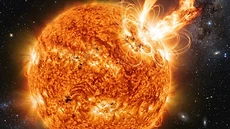
Solar Flares and the Sudden Disruption of HF Radio Communications
Solar flares can disrupt high-frequency radio signals, silencing communications across the globe. Understanding this phenomenon helps operators navigate the complexities of our sun's unpredictable behaviour.

Solar Flares and the Sudden Disruption of HF Radio Communications
High frequency radio remains a pillar of global communication, serving aviation, maritime, and amateur radio operators alike. Yet this invisible web of signals is vulnerable to the violent outbursts of our star. When a solar flare erupts, it can trigger an immediate blackout of these frequencies, leaving operators in total silence for minutes or even hours.
HF Radio Conditions
Powered by Flarient — embed this on your site →
This disruption is not a random malfunction but a calculated consequence of solar physics. By understanding how these events affect the ionosphere, we can better anticipate when our airwaves might fade. Exploring the science of radio propagation provides clarity in an otherwise unpredictable environment.
The Science Behind It
A solar flare is an intense burst of radiation originating from the release of magnetic energy associated with sunspots. This energy travels to Earth at the speed of light, reaching our upper atmosphere in just over eight minutes. The primary impact occurs in the D-region of the ionosphere, located between 60 and 90 kilometres in altitude.
Normally, the D-region is relatively weak and allows high frequency radio waves to pass through to higher layers for reflection back to Earth. A strong X-ray burst from a flare ionises this layer, turning it into a dense, absorbing shield. Incoming radio waves are absorbed by this increased density rather than being reflected or transmitted, causing a total blackout of signals.
Real-World Implications
These blackouts primarily affect the sunlit side of the planet, where the atmosphere is directly exposed to solar radiation. Aviation and maritime industries often rely on HF for long-range navigation and weather updates. When signals vanish, pilots and captains may experience temporary loss of communication, forcing them to rely on backup systems.
It is essential to distinguish these events from a geomagnetic storm, which involves a slower-moving cloud of solar particles. While a flare causes an instantaneous blackout, a geomagnetic storm affects the auroral oval and can persist for days. Operators often consult a glossary to differentiate these terms, as they require distinct mitigation strategies for reliable communication.
What You Can Do
Staying informed is the best defence against unexpected signal loss. Monitoring solar activity through reliable data sources helps operators predict periods of instability. If you maintain a website for your local radio club, you can use embeddable widgets to display live solar flux levels and alert your community to upcoming flare risks.
For those interested in the visual effects of solar activity, guided aurora tours in countries like Iceland, Norway, Canada, and Sweden offer a chance to witness the atmospheric consequences of solar energy firsthand. You can learn more about how these particles interact with our planet in our detailed guide on [How Solar Wind Shapes Earth Magnetosphere](/blog/how-solar-wind-shapes-earth-magnetosphere).
Preparation is key when the sun begins to show its active side.
Key Takeaways
Solar flares act as a sudden gatekeeper for HF radio, capable of absorbing signals before they reach their intended destination. Because these events arrive with the light of the flare, there is no advance warning before the blackout begins. Awareness of solar activity levels remains the most effective tool for those relying on long-range radio transmissions.
By keeping a close eye on real-time solar data, you turn a potential hazard into a manageable technical variable. Even as we advance technologically, we remain tethered to the whims of the sun. Continuing to study these interactions ensures that we keep our global communications secure, regardless of the solar cycle.
People Also Ask
How long do HF radio blackouts usually last?+
The duration of an HF radio blackout depends on the intensity and duration of the solar flare. Most X-ray-induced blackouts last from a few minutes to an hour. However, if the flare is associated with a larger solar eruption, associated radio interference can persist for several hours.
Are all solar flares capable of causing a radio blackout?+
No, only flares with significant X-ray output cause notable HF blackouts. Flares are classified by intensity as A, B, C, M, and X. Generally, only M-class and especially X-class flares provide enough ionising radiation to significantly increase D-region absorption and disrupt high-frequency radio communications.
Do solar flares affect satellite GPS signals?+
While solar flares primarily affect HF radio by interacting with the D-region of the ionosphere, they can also cause scintillation in satellite signals. This interference can degrade the accuracy of GPS and GNSS systems, particularly at high latitudes where the ionosphere is most sensitive to solar energy.
Continue Reading
Forecast These Questions
View all →Express your probability on these active forecast questions.