The Carrington Event and Future Solar Risks
In 1859, the most powerful geomagnetic storm in recorded history struck Earth. Understanding the Carrington Event helps us assess if our modern grid could survive a similar solar blast today.
The Carrington Event and Future Solar Risks
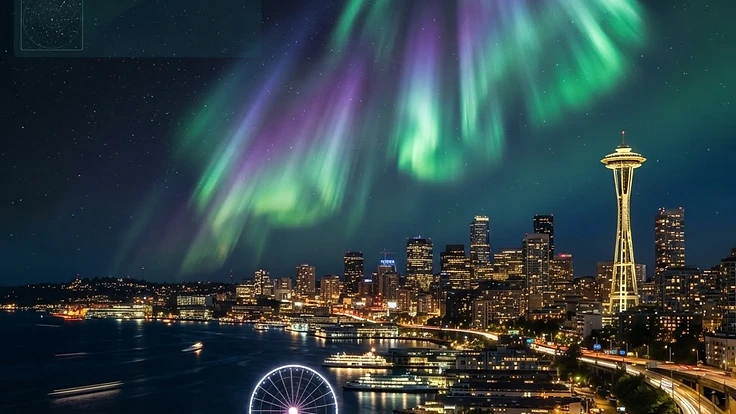
In September 1859, telegraph operators around the globe reported sparks showering from their equipment, while vivid light displays filled the night sky as far south as the Caribbean. This massive disturbance, now known as the Carrington Event, remains the benchmark for extreme space weather. It serves as a stark reminder of our planet's vulnerability to the volatile moods of our parent star.
Live Space Weather Dashboard
Powered by Flarient — embed this on your site →
Studying this historic anomaly provides essential context for modern infrastructure planning. While our technology has evolved, our dependence on global electrical grids and satellite constellations creates new vectors for potential failure. Experts continue to analyse past events to prepare for the inevitable arrival of another major solar cycle peak.
The Science Behind It
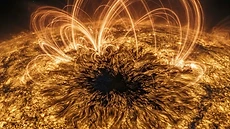
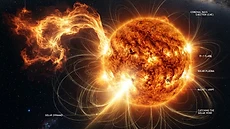
The sun functions as a giant magnetic engine that cycles through periods of high and low activity approximately every eleven years. During the peak of this cycle, sunspots appear more frequently, marking regions of intense magnetic pressure. When these magnetic lines snap and reconnect, they release energy in the form of solar flares.
Sometimes, these flares are accompanied by a coronal mass ejection or CME, which is a massive cloud of charged particles travelling through space. While light reaches Earth in just over eight minutes, these particle clouds take between one and three days to arrive. If a CME strikes our magnetic field, it creates a geomagnetic storm that we measure using the G-scale or the Kp index.
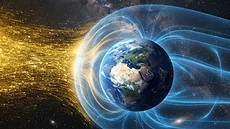
When these particles slam into our magnetosphere, they induce electrical currents that flow through the ground and into long conductive networks like power grids or undersea cables. A storm of the magnitude seen in 1859 would cause a massive drop in the Dst index, far exceeding the threshold of a G5 event. Scientists monitor these trends using solar imagery and satellite data provided by groups like NASA and the NOAA SWPC.
Real-World Implications
Today, we rely on delicate silicon chips and complex satellite links that were non-existent in the nineteenth century. A modern Carrington Event would likely trigger widespread transformer failures, leading to prolonged power outages across entire continents. The economic cost of such a collapse would be staggering, impacting everything from global logistics to simple household appliances.
Beyond the power grid, our orbital infrastructure faces significant threats during intense geomagnetic storms. High-energy particles can degrade solar panels, disrupt sensitive electronics, or even cause atmospheric heating that increases orbital drag on the ISS and other low Earth orbit satellites. If you are interested in the physics of these events, you can explore more in our article on how sunspots and solar flares dictate the environment of space.
Communication systems, particularly high-frequency radio and satellite navigation services, are also highly susceptible to signal distortion. Relying on GPS during a major storm could lead to significant navigation errors for maritime and aviation traffic. For those tracking the broader context of celestial threats, comparing solar weather with the risks posed by a near-Earth asteroid helps build a complete picture of planetary defence.
What You Can Do
Preparedness begins with awareness. By staying informed about current solar conditions, you can anticipate periods of elevated risk to satellite or radio equipment. We offer embeddable widgets that allow you to track real-time space weather data directly on your own website, keeping your audience updated on the latest solar activity.
If you have a passion for the night sky, you might be interested in the light displays caused by these geomagnetic interactions. Many enthusiasts enjoy [guided aurora tours](https://vi.me/HuXHi) in destinations like Iceland, Norway, Canada, and Alaska, where the northern lights are most visible.
Planning your travel around the current phase of the solar cycle can significantly improve your chances of witnessing a spectacular display.
Remember to consult our glossary if you encounter technical terms regarding solar magnetism or geomagnetic indices. Keeping a watchful eye on solar flares and their impact on power grids will ensure you understand the specific warnings issued by space weather agencies.
Key Takeaways
The Carrington Event was not a unique occurrence but rather a demonstration of the power our sun can unleash during a typical solar cycle. While our modern digital society is more vulnerable than the world of 1859, we are also far better equipped to monitor, predict, and mitigate these risks.
By leveraging advanced forecasting tools, we can manage the impact of solar storms on our vital infrastructure. Staying informed about space weather is a shared responsibility, ensuring that our technological civilisation continues to thrive under the gaze of an active, ever-changing star. The future of our security lies in our ability to anticipate the invisible waves of energy flowing across the solar system.
People Also Ask
How often do massive solar storms occur?+
While storms on the scale of the Carrington Event are rare, they are estimated to happen roughly once every century. The sun operates on an 11-year cycle, meaning the risk fluctuates. We monitor these patterns closely to improve our long-term predictions and grid resilience strategies.
Can we predict a solar storm before it hits?+
Yes, we can. Once a coronal mass ejection leaves the sun, satellites like the SOHO or SDO provide data on its speed and trajectory. We typically have between 18 to 72 hours of lead time before the particle cloud reaches Earth's magnetosphere, allowing us to prepare critical systems.
What is the Kp index?+
The Kp index is a scale from 0 to 9 used to characterise the magnitude of geomagnetic storms. A Kp of 0 indicates very quiet magnetic conditions, while a Kp of 9 signifies an extreme storm that can cause significant disruptions to satellite operations and power grids globally.
Continue Reading
Forecast These Questions
View all →Express your probability on these active forecast questions.