The Earth Magnetosphere and the Invisible Shield Protecting Life
The Earth magnetosphere acts as an invisible shield against the harsh conditions of space. Learn how this magnetic bubble protects our atmosphere, technology, and biological life from the constant bombardment of solar wind.
The Earth Magnetosphere as a Planetary Shield
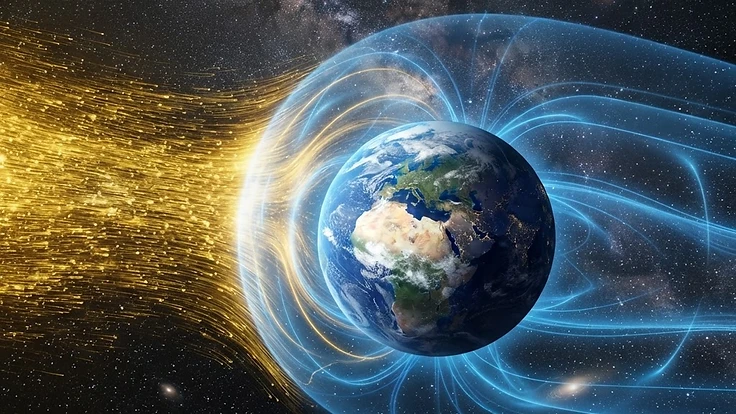
The Earth magnetosphere is an expansive region of space surrounding our planet that is dominated by its magnetic field. It acts as a primary buffer between the Earth and the turbulent environment of interplanetary space, constantly deflecting the stream of charged particles known as the solar wind.
Live Space Weather Dashboard
Powered by Flarient — embed this on your site →
Without this protective barrier, our atmosphere would be slowly eroded by high energy particles from the Sun. Life as we know it depends on this magnetic bubble to maintain stable conditions on the surface, making it one of the most critical features of our terrestrial home.
The Science Behind Our Magnetic Protection
Our magnetosphere is generated by the geodynamo, which is the movement of molten iron and nickel in the Earth outer core. This motion creates a robust magnetic field that extends thousands of kilometres into space, interacting directly with the solar wind.
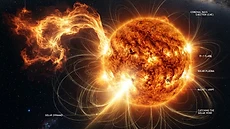
When these charged particles strike the magnetosphere, they are diverted around the planet rather than directly impacting the atmosphere. This interaction creates complex structures like the bow shock and the magnetotail, which you can visualise through modern solar imagery.
If you want to understand how intense these interactions can become, you should read our guide on [understanding the Dst index and geomagnetic storm intensity](https://flarient.com/blog/understanding-the-dst-index-and-geomagnetic-storm-intensity). The strength of these events is measured by the G-scale, which quantifies the potential disruption to our satellite and power grid infrastructure.
Real-World Implications of Space Weather
While the magnetosphere protects the surface, it cannot stop all solar activity from impacting our modern systems. When a massive solar flare or coronal mass ejection hits the magnetosphere, it can trigger currents that threaten global power grids, as discussed in our deep dive on how geomagnetic storms impact global power grids.
Satellites orbiting in the vacuum of space often face the brunt of these events, sometimes requiring operators to take protective measures. This is why monitoring solar storms to protect satellite infrastructure is a vital task for space agencies around the world.
When particles penetrate the magnetosphere near the poles, they collide with atmospheric gases to create the beautiful aurora. You can find more detail on this in our article the physics and formation of the aurora borealis.
What You Can Do to Stay Informed
Understanding the space weather environment helps us appreciate the delicate balance that sustains life. If you are planning a trip to witness the northern lights, there are guided aurora tours available in countries like Iceland, Norway, Canada, and Finland that provide expert insights into the phenomenon.
To stay prepared for space weather events, you can keep track of current conditions using tools that monitor the Kp index in real-time. Whether you are an enthusiast or a professional, you can easily embed on your site data feeds that visualise these magnetic fluctuations.
Checking these tools regularly allows you to anticipate when geomagnetic activity might be high. It is a simple but effective way to engage with the science of our planet and the space that surrounds it.
Key Takeaways
The Earth magnetosphere is an essential component of our planet that deflects harmful solar radiation and maintains our atmosphere. While it keeps us safe on the ground, space weather remains a factor for our satellites and high-tech infrastructure.
Staying informed about solar activity helps us prepare for disruptions and enjoy natural displays like the aurora. By tracking the magnetosphere, we gain a deeper understanding of our place in the solar system and the forces that shape our existence.
People Also Ask
What would happen if Earth lost its magnetic field?+
If Earth lost its magnetic field, our atmosphere would be slowly stripped away by the solar wind. This would increase surface radiation levels, potentially threatening all biological life and destroying modern technology, similar to the current environment on Mars.
Does the magnetosphere change shape?+
Yes, the magnetosphere is highly dynamic. The side facing the Sun is compressed by the constant pressure of the solar wind, while the side facing away from the Sun is stretched into a long, trailing structure known as the magnetotail.
How far does the magnetosphere extend?+
The magnetosphere extends roughly 65,000 kilometres toward the Sun and can stretch over 6 million kilometres into a tail on the side opposite the Sun. Its size is not static and expands or contracts based on the intensity of solar wind activity.
Continue Reading
Forecast These Questions
View all →Express your probability on these active forecast questions.