The Physics and Formation of the Aurora Borealis
Discover how solar wind interacts with Earth's magnetic field to create the natural light display known as the aurora borealis, a phenomenon that has captivated humanity for millennia.
The Mechanics of Auroral Formation
The aurora borealis is a celestial light show that begins millions of kilometres away on the surface of the Sun. This process starts when the Sun releases a continuous stream of charged particles known as solar wind, occasionally punctuated by more intense bursts from coronal mass ejections.
Live Aurora Forecast
Powered by Flarient — embed this on your site →
These particles travel through space until they encounter the protective barrier of our planet. Earth is shielded by its magnetic field, which acts like a giant, invisible umbrella against the harsh conditions of space weather.
How Earth Interacts with Solar Particles
When these charged solar particles strike our magnetosphere, they are funnelled toward the magnetic poles. This interaction creates the aurora as particles enter the upper atmosphere, usually between 80 and 300 kilometres above the ground.
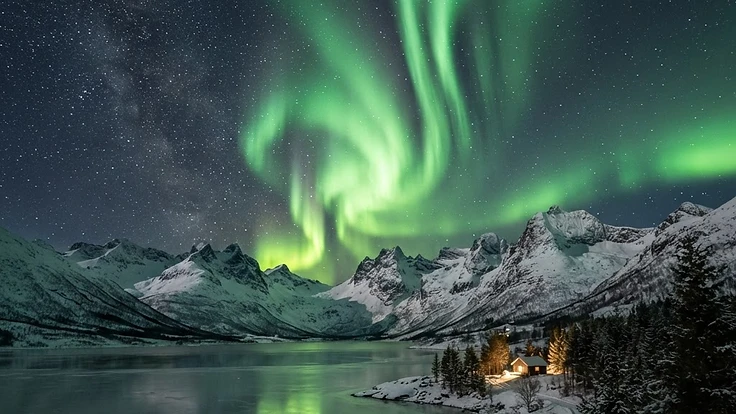
As these particles collide with oxygen and nitrogen atoms, they transfer energy, causing the atoms to emit light. Oxygen produces the familiar green and red hues, while nitrogen can result in purple or blue fringes.
Understanding Geomagnetic Storms
Not all displays are equal, and their intensity often relies on the broader state of space weather. Scientists monitor the K-index to measure the magnitude of these geomagnetic disturbances, which fluctuate during the 11-year solar cycle.
Significant disturbances can cause widespread disruptions to technology, which is why monitoring solar storms remains vital for modern infrastructure. You can learn more about how these storms are measured and classified in our glossary.
Observing the Northern Lights
If you want to catch a glimpse of the lights, you need to be prepared for the right conditions. Checking a reliable local aurora forecast is essential before travelling, as clear, dark skies are critical for visibility.
For those seeking a professional experience, there are many guided aurora tours available in regions like Iceland, Norway, Canada, Finland, Sweden, and Alaska. These experts help you navigate the best viewing spots while explaining the local geography and weather patterns.
Reflecting on Solar Phenomena
Understanding the northern lights is just one part of keeping up with our dynamic space environment. Whether you are tracking the storm leaderboard for historical events or keeping an eye on the latest solar images in our gallery, staying informed enriches your appreciation of the cosmos.
Nature is constantly active, and space weather acts as a reminder of our connection to the solar system. By following these patterns, we learn to predict and adapt to the influence our Sun exerts on our own planet.
People Also Ask
What colours appear in the aurora?+
The most common aurora colour is green, caused by oxygen atoms hit at lower altitudes. Red aurorae are caused by oxygen at higher altitudes, while nitrogen produces blue or purple fringes. The specific colour depends on which gas is being energised and at what altitude the collision occurs.
Does the aurora only happen in the North?+
No, aurorae happen at both poles. The northern lights are called the aurora borealis, while the southern lights are known as the aurora australis. Both poles experience these light displays simultaneously when solar wind particles interact with the Earth's magnetic field, though they are rarely seen at the same time.
Are auroras dangerous to humans on Earth?+
Auroras are not dangerous to humans on the ground. The Earth's atmosphere and magnetic field absorb the energy of incoming solar particles long before they reach us. While intense geomagnetic storms can impact satellites, power grids, and radio communication, they pose no direct physical threat to people.
Continue Reading