Companies Providing Specialized Space Weather Forecasting for Businesses
Modern infrastructure relies on precise space weather data. Discover how commercial providers and government agencies deliver the forecasts that keep our satellites and power grids operating safely.

Commercial Space Weather Services Support Modern Infrastructure
Space weather has moved from a niche scientific interest to a critical business concern. As our dependence on satellite navigation, global telecommunications, and high altitude aviation grows, so does our need for reliable data regarding solar activity.
Live Solar Flare Monitor
Powered by Flarient — embed this on your site →
While government bodies like the NOAA SWPC provide essential public data, a dedicated sector of commercial providers now offers tailored insights.
These firms transform complex raw data into actionable intelligence for industries that simply cannot afford downtime during a geomagnetic disturbance.
The Science Behind Solar Dynamics
The sun operates on an 11 year cycle, currently progressing through Solar Cycle 25 which began in December 2019. During these cycles, the sun releases bursts of energy known as solar flares, classified from A to X, with each level representing a tenfold increase in intensity.
When a coronal mass ejection occurs, solar plasma can travel at speeds up to 3,000 km/s. If this plasma reaches Earth, it interacts with our magnetosphere, causing a geomagnetic storm. These events are measured by the Dst index in nanoteslas, where a value of -100 nT signals a G3 level event, while -250 nT reaches G4 intensity.
Real-World Implications for Global Industry
Space weather directly impacts systems operating in orbit and on the ground. Satellites in low Earth orbit, which reside near the 408 km mark of the International Space Station, face increased drag and radiation damage during high solar activity.
Ground based infrastructure also faces significant risks from induced currents. Power grids can experience transformer failures if the geomagnetic activity is sufficiently intense. As explored in our deep dive into monitoring solar storms to protect satellite infrastructure, understanding these risks is essential for the long term viability of our technological assets.
Practical Steps for Staying Prepared
Business leaders and individual enthusiasts should monitor the K-index to gauge the severity of incoming solar events. You can track these fluctuations using Flarient's live dashboard, which provides a clean visual representation of current solar conditions.
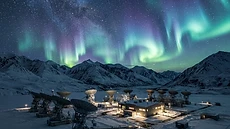
For those who need to share this data, our embeddable widgets allow you to display real-time space weather metrics directly on your own website. If you are planning to travel for the aurora, many travellers now use guided aurora tours in countries like Iceland, Norway, Canada, and Finland to ensure they catch the best view when the magnetosphere is active.
Key Takeaways for Future Planning
The field of space weather forecasting is maturing into an essential component of modern risk management. By leveraging professional insights, organisations can better defend their digital and physical assets against the unpredictable nature of our star.
Whether you are a satellite operator or simply an observer of the night sky, staying informed is the best defence. We invite you to explore our glossary to familiarise yourself with the technical terminology that defines our understanding of the space environment.
People Also Ask
How do companies forecast space weather?+
Companies use a combination of satellite imagery, ground-based magnetometers, and complex physical models to simulate solar wind speeds and trajectories. By analysing data from assets like the Solar Dynamics Observatory, they predict arrival times and expected intensity of geomagnetic disturbances for their clients.
Why is space weather forecasting important for businesses?+
Space weather can cause signal loss in GPS systems, drag on satellites leading to orbit decay, and induced currents in power grids. Businesses in aviation, telecommunications, and energy rely on these forecasts to mitigate operational risks and protect expensive hardware from permanent damage.
What is the difference between a solar flare and a CME?+
A solar flare is an intense burst of electromagnetic radiation, travelling at the speed of light. A coronal mass ejection, or CME, is a massive eruption of solar plasma and magnetic field lines, which travels much slower and is responsible for significant geomagnetic storms on Earth.
Continue Reading
Forecast These Questions
View all →Express your probability on these active forecast questions.