Monitoring Solar Storms to Protect Satellite Infrastructure
Space weather directly impacts our orbital assets. Learn how to track solar activity and understand the indicators that signal risks to satellite communications and navigation systems.
Monitoring Solar Storms to Protect Satellite Infrastructure
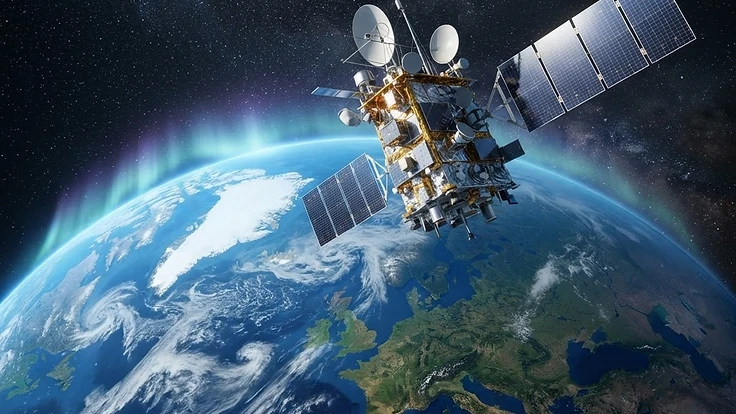
Modern life depends on satellites orbiting our planet, from the GPS signals in your phone to global weather monitoring systems. These craft operate in a harsh environment where space weather is a constant factor that can disrupt sensitive electronics and damage hardware.
Solar storms are not just distant space phenomena, as they represent tangible risks to human technology. Understanding how to monitor these events is essential for engineers, hobbyists, and anyone interested in the resilience of our space based infrastructure.
The Science Behind It
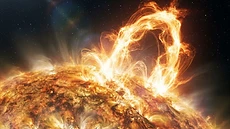
The sun undergoes a magnetic cycle lasting approximately 11 years, with the current Solar Cycle 25 having commenced in December 2019. During peak activity, the sun ejects plasma and magnetic fields known as Coronal Mass Ejections, or CMEs, which can travel through space at speeds of up to 3,000 kilometres per second.
Live Solar Flare Monitor
Powered by Flarient — embed this on your site →
When these charged particles strike Earth, they interact with our magnetic field and cause a geomagnetic storm. Scientists quantify the intensity of these events using various metrics, such as the Dst index which measures the magnetic disturbance in nanoteslas.
Solar activity is also categorised by flare strength, ranging from A and B to C, M, and X, where each level represents a tenfold increase in energy. Monitoring these flares provides early warning, as light from a flare arrives at Earth in roughly 8 minutes at the speed of light, while CMEs take much longer to traverse the void.
Real-World Implications
Satellite operators must account for increased atmospheric drag during solar storms, which can cause premature orbital decay. High-energy particles can also cause single-event upsets in computer memory, leading to lost data or faulty instructions within onboard systems.
Beyond individual satellites, widespread radio interference often follows significant solar events. As discussed in our analysis of space weather disrupting high-frequency radio communications, signal degradation can affect commercial aviation and maritime navigation globally.
Infrastructure on the ground remains vulnerable too, as intense currents induced in the power grid can mimic terrestrial electrical loads. We have seen how solar flares and their impact on power grids create cascading failures that demand robust mitigation strategies.
What You Can Do
Staying informed does not require a degree in astrophysics, as several public tools make the data accessible. You can track current solar wind speed and solar imagery through official portals like NOAA SWPC or NASA, which provide near-real-time updates on active regions.
For those who enjoy chasing the results of these storms, [guided aurora tours](https://vi.me/HuXHi) in countries like Iceland, Norway, Canada, and Finland offer the best chance to see the northern lights caused by these particles. If you manage a website or a technical community, you can keep your audience updated by adding embeddable widgets that pull live data directly from space weather observatories.
Monitoring the K-index is the most practical way for an individual to gauge whether a storm is currently affecting the magnetosphere. Watching for spikes in this index helps you anticipate when satellite interference or auroral activity is likely to peak.
Key Takeaways
Monitoring space weather is a vital component of protecting our technological future as we become more reliant on orbital assets. By following established metrics like the G-scale and keeping an eye on past events to learn from history, we can better predict and manage the impacts of solar cycles.
While we cannot stop the sun from releasing energy, we can certainly improve our ability to react to it. Remaining vigilant and using the right data sources allows us to navigate the challenges posed by our active star with confidence and foresight.
People Also Ask
How do solar storms damage satellites?+
Solar storms damage satellites through high-energy particle radiation that can cause physical degradation of solar panels, and by creating electromagnetic interference that causes glitches or permanent failures in delicate onboard electronic circuitry and computer processors.
What is the difference between a solar flare and a CME?+
A solar flare is an intense burst of radiation coming from the release of magnetic energy on the sun, arriving at light speed. A Coronal Mass Ejection is a massive cloud of solar plasma ejected into space, which travels much slower and carries magnetic material that causes geomagnetic storms.
Can satellites survive an X-class solar flare?+
Most satellites are built with radiation hardening to survive typical solar activity. However, an extreme X-class event can overwhelm these protections, potentially leading to communication blackouts, loss of orientation control, or, in severe cases, the permanent loss of the satellite.
Continue Reading
Forecast These Questions
View all →Express your probability on these active forecast questions.