Solar Flares and Their Impact on Power Grids
Solar flares can disrupt modern infrastructure, but understanding the mechanics of geomagnetic storms helps us prepare for potential grid interference.
Solar Flares and Their Impact on Power Grids
Solar activity shapes the environment of our entire solar system. While flares are bursts of intense electromagnetic radiation, the real concern for power grids often lies with the associated coronal mass ejections that follow these events. Understanding how these massive energy releases interact with our planet is vital for modern society.
Live Solar Flare Monitor
Powered by Flarient — embed this on your site →
The Science Behind It
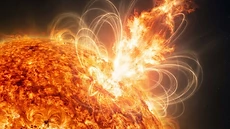
Solar flares are classified by their strength, ranging from A to X, with each level representing a tenfold increase in energy output. These events occur when magnetic energy is released in the solar atmosphere, accelerating particles outward. While light travels at 300,000 kilometres per second, reaching us in minutes, the plasma clouds known as coronal mass ejections move much slower.
These clouds of charged particles typically travel at speeds between 400 and 700 kilometres per second, though some can reach 3,000 kilometres per second. When this solar wind impacts the Earth's magnetic field, it creates a geomagnetic storm. You can consult our glossary to learn more about the physics behind these events.
The intensity of these storms is measured on the [G-scale](/ #kp), ranging from G1 to G5, indicating the potential for widespread disruption.
Real-World Implications
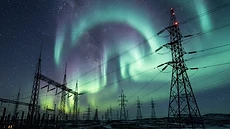
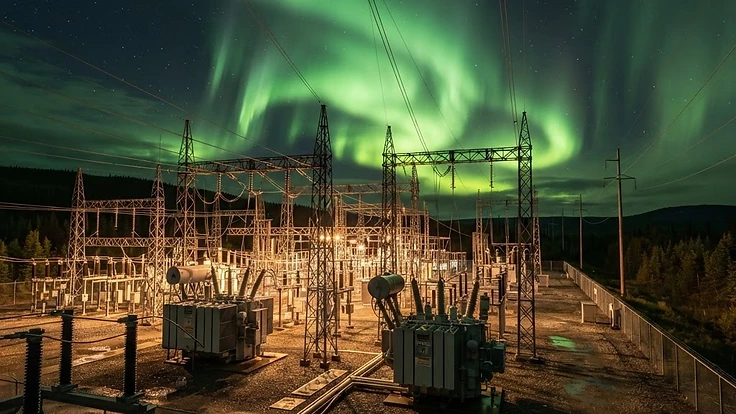
Geomagnetic storms induce electrical currents in long-distance conductors, such as high-voltage transmission lines. This can saturate transformers, potentially leading to instability or damage within the electrical infrastructure. The most severe storms can trigger a cascade of issues that strain the stability of regional power networks.
Beyond power grids, space weather affects satellite operations, high-frequency radio communications, and navigation systems. For a deeper dive into the technical details, you can explore our blog regarding radio interference. These events are not everyday occurrences, yet their capacity to influence critical infrastructure remains a subject of serious engineering focus.
You can view our leaderboard to see records of past events.
What You Can Do
Staying informed is the best defence against the unpredictable nature of space weather. Tools like our live dashboard provide real-time updates on solar activity and geomagnetic conditions. If you enjoy the visual results of these storms, we offer [local aurora forecast](/ #local) tools to help you track visibility from your area.
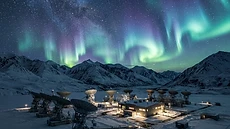
For those who want to witness these wonders firsthand, we highly recommend planning guided aurora tours in countries like Iceland, Norway, Canada, Finland, Sweden, or Alaska to experience the lights safely.
If you run a website or a technical blog, you can use our embeddable widgets to display current space weather data to your audience. This helps community members stay aware of potential solar developments without needing to check multiple sources. Preparedness starts with reliable data and a clear understanding of the environment.
Key Takeaways
Solar activity is a natural phenomenon that influences our technology through geomagnetic interactions. While not every solar flare causes a blackout, the risk to power infrastructure is a well-documented engineering challenge. We continue to improve our modelling and prediction capabilities to better secure our global power networks.
Monitoring space weather allows engineers and the public to stay one step ahead of solar disturbances. By utilising resources like historical archive data, we can learn how to build more resilient systems for the future. The sun remains the ultimate driver of our local space environment, and tracking its behaviour is essential for a connected world.
People Also Ask
What happens during a G5 geomagnetic storm?+
A G5 storm is the highest level of geomagnetic disturbance. It can cause widespread voltage control problems and protective system issues in power grids. It may lead to complete high-frequency radio blackouts and significant satellite navigation errors for several hours.
How often do major solar storms occur?+
Severe solar storms are relatively rare. They are linked to the 11-year solar cycle, with activity levels fluctuating over time. While minor storms are frequent, extreme events similar to the 1859 Carrington Event occur much less often, typically once or twice a century.
Can I protect my home electronics from a solar flare?+
While massive solar storms pose a risk to the large-scale power grid, standard home electronics are generally safe from direct solar impact. Using high-quality surge protectors is good practice for general electrical safety, though they do not guarantee protection against large-scale geomagnetically induced currents.
Continue Reading
Forecast These Questions
View all →Express your probability on these active forecast questions.