Essential Tools for Monitoring Ham Radio Space Weather
Navigating the complexities of high-frequency radio requires a deep understanding of solar activity. Discover the best digital tools to track ionospheric changes and keep your signal clear.
Monitoring Ionospheric Conditions for Ham Radio Success
Ham radio operators rely on the delicate state of the ionosphere to bounce signals across the globe. When solar activity shifts, it can either create the perfect conditions for long-distance communication or effectively silence the bands.
HF Radio Conditions
Powered by Flarient — embed this on your site →
Understanding how solar radiation interacts with our upper atmosphere is no longer a task for professional physicists alone. With the right set of digital tools, you can monitor real-time trends to ensure your equipment is ready for the next opening.
The Science Behind Ionospheric Propagation
The ionosphere is a layer of charged particles created when ultraviolet and X-ray radiation from the sun strips electrons from atoms in the upper atmosphere. This region is essential for high-frequency radio because it reflects signals that would otherwise disappear into deep space.
Solar activity is measured using several metrics, including the Kp index, which quantifies the magnitude of geomagnetic disturbances. While the solar cycle lasts approximately 11 years, the daily fluctuations caused by solar wind and coronal mass ejections can change propagation conditions within minutes.
Energy from these events travels across the solar system at varying speeds. Solar wind typically travels between 400 and 700 km/s, but powerful coronal mass ejections can accelerate to 3,000 km/s. When this material strikes the magnetosphere, it can cause a geomagnetic storm that disrupts radio communication by increasing absorption in the D-layer of the ionosphere.
Real-World Implications for Global Communication
The impact of space weather on radio operations is profound. During periods of high solar activity, classified by the NOAA SWPC using the G-scale from G1 to G5, global radio networks can experience significant signal degradation or total blackouts.
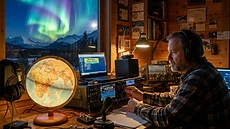
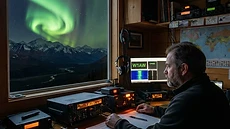
These disturbances often coincide with the appearance of the aurora at high latitudes, as energetic particles precipitate into the polar atmosphere. For an operator, this means your signal might fail to refract properly, causing unexpected fade-outs or noise interference.
Beyond basic radio performance, extreme events can damage power grids and orbital infrastructure. Understanding these risks is part of a broader commitment to planetary science that every modern communicator should embrace.
What You Can Do to Stay Informed
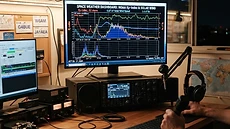
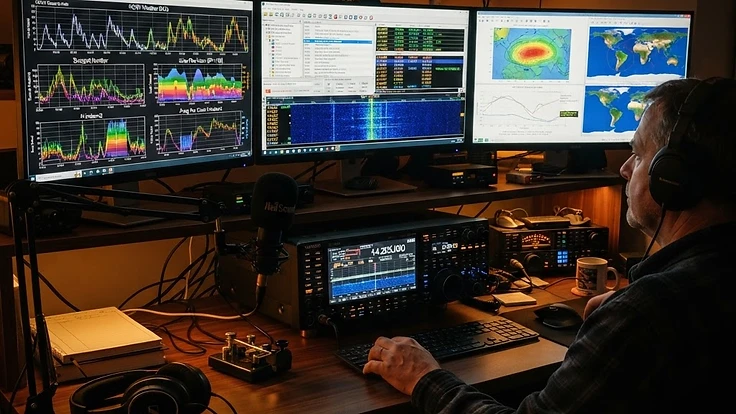
The most effective way to stay ahead is to build a reliable monitoring routine using modern software. Many operators now rely on Flarient's free live dashboard to track current solar flux levels and geomagnetic conditions without needing a complex observatory setup.
If you want to share data with your club or local community, you can use embeddable widgets to show live solar status directly on your personal website. By integrating these tools into your station, you turn raw data into actionable intelligence for every contest or casual QSO.
For those interested in how these particles create the spectacular lights often associated with solar storms, viewing our glossary of terms is a helpful first step in understanding the physics involved. We also encourage you to look into guided aurora tours available in locations like Iceland, Norway, Canada, and Alaska, as experiencing the physical result of this weather helps demystify the science.
Key Takeaways for Every Operator
Space weather remains a dynamic and unpredictable influence on the radio spectrum. While you cannot stop the sun from flaring, you can certainly prepare for its effects by keeping a close eye on the indices that matter to your operating frequency.
Success in ham radio today is as much about data analysis as it is about antenna design. Use these resources to sharpen your predictive skills and maintain your competitive edge, regardless of what the sun decides to do next.
People Also Ask
How does the Kp index affect radio signals?+
The Kp index measures geomagnetic activity on a scale of 0 to 9. Higher values indicate increased magnetic disturbances, which often result in ionospheric instability. For ham radio, high Kp values can lead to increased noise floors and signal absorption, making it difficult to maintain reliable long-distance high-frequency communication.
What is the best way to monitor solar weather for ham radio?+
The best method is to use a combination of dedicated solar dashboards and real-time monitoring apps. Reliable sources like the NOAA Space Weather Prediction Centre offer the most accurate data, while personal dashboards help you visualise how these global changes specifically affect your local radio bands and propagation patterns.
Does solar activity affect all radio bands equally?+
No, the impact varies significantly by frequency. High-frequency bands are the most vulnerable to ionospheric changes because they rely on refraction. Conversely, Very High Frequency and Ultra High Frequency signals are generally less affected by ionospheric absorption but may experience different forms of interference during major space weather events.
Continue Reading