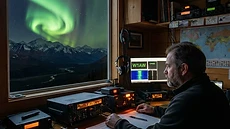
Understanding the Kp Index for Effective Ham Radio Planning
Learn how the Kp index influences ionospheric conditions and why monitoring solar activity is vital for successful long-distance radio communication.
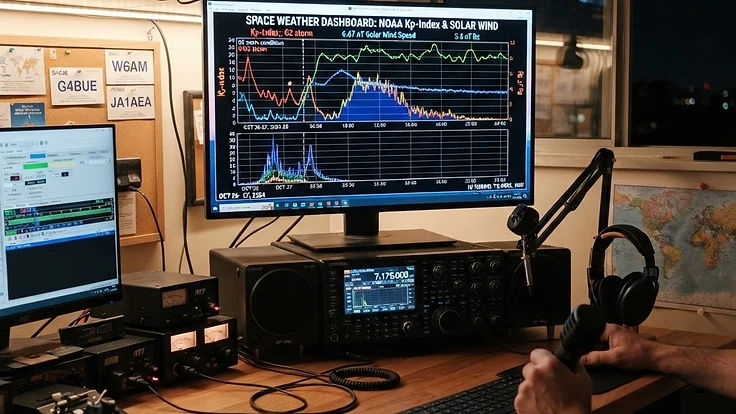
Navigating Radio Communication with the Kp Index
Radio amateurs often view the ionosphere as a reliable mirror for long distance communication. When solar activity shifts, that mirror can become distorted or even disappear entirely. Understanding the Kp index is essential for anyone looking to maintain a consistent signal across high frequency bands.
HF Radio Conditions
Powered by Flarient — embed this on your site →
This measurement provides a global overview of geomagnetic conditions caused by solar wind. By learning to interpret these values, you can anticipate periods of signal fade or enhancement, helping you decide when to get on the air and when to focus on equipment maintenance instead.
The Science Behind It
The Kp index, or planetary K index, quantifies disturbances in the Earth magnetic field on a scale from 0 to 9. These disturbances are primarily driven by solar wind interacting with our magnetosphere, a process explored in detail within the context of the Earth magnetosphere and the invisible shield protecting life.
When solar wind pressure increases, or when a coronal mass ejection reaches our vicinity, the Kp index rises. High values signify a geomagnetic storm, which alters the density and height of the ionospheric layers. These layers are responsible for refracting high frequency radio waves back to Earth.
Moderate activity often benefits radio propagation by supporting higher frequencies. Conversely, extreme geomagnetic storms often lead to complete absorption of radio signals, effectively silencing the bands for hours or even days. This is a primary driver behind how geomagnetic storms impact global power grids and telecommunications infrastructure.
Real-World Implications
For the radio operator, a high Kp value indicates that the ionosphere has been destabilised. Signals intended for long distance refraction may pass directly through the ionosphere into space, leading to a sudden loss of contact.
This phenomenon impacts everyone from casual enthusiasts to emergency communication teams. If you rely on stable propagation, monitoring the G-scale allows you to predict these interruptions. A G1 storm may only cause minor fluctuations, but a G4 or G5 event can render large portions of the spectrum unusable.
Beyond communications, these events are also the primary trigger for the aurora, which manifests when charged particles penetrate the atmosphere near the poles. For those curious about the science, exploring when aurora happens: the science of the northern lights offers a deeper look at the mechanism behind the lights.
What You Can Do
Success in radio planning requires access to real-time data. Rather than relying on static charts, use tools that provide live updates on the current Kp index and solar wind velocity. If you are also chasing the lights, you can book guided aurora tours across destinations like Iceland, Norway, and Alaska to experience these geomagnetic effects firsthand.
Integrate embeddable widgets into your own station dashboard to keep this data at your fingertips during contests or long operating sessions. Watching the trend is often more important than checking a single number, as it allows you to spot a rising storm before it hits your propagation path.
Flarient offers a free live dashboard that aggregates these metrics, allowing you to cross-reference radio conditions with current solar activity. Checking this data before you power up your rig saves time and reduces frustration during periods of poor propagation.
Key Takeaways
The Kp index is your most reliable gauge for ionospheric health. While high values often signal poor communication conditions, they also provide a warning to adjust your frequency choice or postpone operations.
Building a habit of checking solar data will refine your understanding of how the sun drives our global communication network. By staying informed, you transform from a passive observer of atmospheric conditions into an active manager of your radio station capabilities. Always remember to check the glossary if you encounter unfamiliar terms regarding space weather and solar cycles.
People Also Ask
What Kp index is considered bad for ham radio?+
Generally, a Kp index of 5 or higher indicates a geomagnetic storm that can significantly degrade high frequency radio propagation. While conditions vary, most operators find that once the Kp index reaches this level, the ionosphere becomes unstable, making long-distance communication difficult or impossible due to signal absorption.
How does the Dst index compare to the Kp index?+
The Kp index provides a global estimate of geomagnetic activity on a 0-9 scale, while the Dst index provides a more granular, hourly measure of the equatorial ring current intensity in nanoteslas. Scientists use the Dst index to classify the severity of storms more precisely than the broader Kp scale.
Does a high Kp index always mean poor radio conditions?+
Not always. While high Kp values often cause signal loss, mild increases in activity can sometimes improve propagation on certain bands by enhancing the density of the ionosphere. However, once the index reaches storm levels, the negative impacts on signal refraction typically outweigh any temporary benefits to frequency range.
Continue Reading