How Solar Energy Creates the Aurora Borealis
Discover the science behind the dance of the northern lights, from solar wind interactions to the shimmering atmospheric collisions that light up the night sky.
The Origins of the Northern Lights
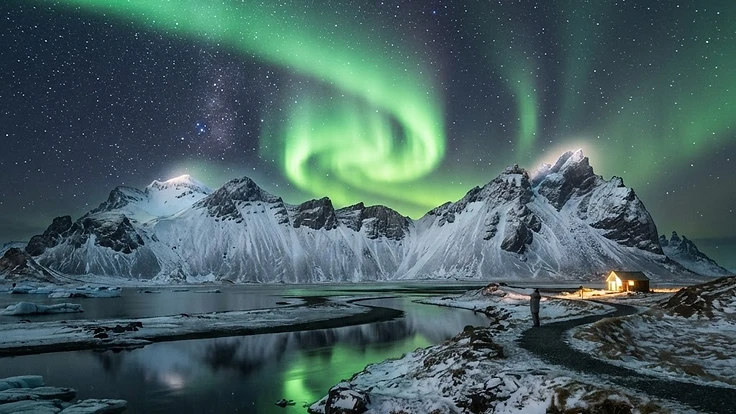
The aurora borealis is a spectacle that has captivated humanity for centuries. It transforms the night sky into a canvas of shifting curtains, waves, and glows, primarily in high latitude regions. While ancient myths once attributed these lights to celestial battles or the presence of spirits, modern science offers a more grounded explanation.
Live Aurora Forecast
Powered by Flarient — embed this on your site →
This phenomenon is a direct consequence of our relationship with the Sun.
Everything begins millions of kilometres away on the surface of our host star. The Sun constantly releases a stream of charged particles known as the solar wind. These particles travel through the vacuum of space, carrying the magnetic influence of the Sun across the entire solar system.
When this wind encounters the magnetic shield of our planet, it triggers a series of complex interactions that culminate in the vibrant display known as the aurora.
The Science Behind It
The Earth is surrounded by an invisible magnetic field, the magnetosphere, which acts as a protective bubble. This shield deflects most of the solar wind around the planet. However, some particles are captured and funnelled toward the magnetic poles.
As these charged particles descend into the upper atmosphere, they collide with oxygen and nitrogen atoms.
These collisions excite the atoms, causing them to gain energy. When the atoms return to their original state, they release this excess energy in the form of light. The specific colours observed depend on the type of gas being hit and the altitude of the interaction.
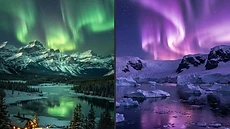
Oxygen typically produces green and red light, while nitrogen often contributes blue and purple hues.
This process is highly dependent on the intensity of space weather. When solar activity is high, more particles reach the atmosphere, creating brighter and more frequent displays. Scientists monitor this using the Kp index, a measurement that describes the magnitude of geomagnetic activity.
Periods of high solar activity are often discussed in broader contexts, such as in our analysis of understanding the solar cycle and its impact on space weather.
Real-World Implications
While the northern lights are a beautiful sight, the conditions that create them have practical consequences. Strong solar storms, which produce brilliant aurora displays, can also interact with Earth's technological infrastructure. Geomagnetic storms can induce electric currents in long-distance power lines, potentially affecting grids.
They can also disrupt satellite operations, including those used for GPS and telecommunications.
These impacts extend to aviation, particularly for flights travelling over polar regions. High levels of atmospheric ionisation can degrade radio communications, forcing flight paths to be altered for safety. It is a reminder that the environment surrounding our planet is dynamic and often volatile.
Just as we monitor the aurora, we must remain vigilant about the broader influence of solar flares regularly impact earth's environment.
Modern infrastructure is increasingly sensitive to these fluctuations. Engineers now design power systems and satellite electronics with radiation hardening and surge protection in mind. Understanding these risks is as vital as appreciating the aesthetic value of the sky itself.
What You Can Do
Staying informed is the best way to catch an auroral display. You can track current solar activity by monitoring real time data, which helps determine when a storm is likely to produce visible lights at your latitude. If you are planning an expedition to see the phenomenon in person, consider booking guided aurora tours which offer expert local knowledge across popular destinations like Iceland, Norway, Canada, and Finland.
Tools like the local aurora forecast allow you to plan your nights effectively, accounting for your specific geographic position. For those interested in deeper scientific context, you might look into our glossary to understand technical terms like Dst index or interplanetary magnetic fields. You can also explore our archive to see how past storms compared to current events, giving you a better sense of how solar activity cycles through the years.
Key Takeaways
The aurora borealis is a visible manifestation of the intricate bond between the Sun and Earth. By understanding how charged particles from the solar wind trigger atmospheric reactions, we gain a deeper appreciation for the physics governing our planet. This science is not merely academic, as it directly informs how we protect our infrastructure and maintain our modern way of life.
Whether you are an observer looking to witness the green glow of the poles or a student of space weather, the sky offers a constant source of wonder. Keep watching, stay curious, and continue to explore the data that connects our home to the wider solar system. The universe is active, and our ability to observe these patterns is a testament to our ongoing exploration of space.
People Also Ask
What causes the different colours in the aurora?+
The colours are determined by the type of gas atoms interacting with the solar wind particles and the altitude at which these collisions occur. Oxygen atoms at lower altitudes typically produce green light, while high-altitude oxygen emits red. Nitrogen molecules are responsible for the rarer blue and purple shades.
Does solar activity affect human health?+
Current scientific consensus indicates that solar activity, such as solar flares and geomagnetic storms, does not pose a direct physical threat to human health. While space weather can affect sensitive technological systems, the Earth's atmosphere and magnetic field provide sufficient protection for humans living on the surface.
Are the northern and southern lights the same?+
Yes, they are essentially the same phenomenon. The northern lights, or aurora borealis, occur in the northern hemisphere, while the southern lights, or aurora australis, occur in the southern hemisphere. Both are caused by the same interaction between solar wind and the Earth's magnetosphere near the magnetic poles.
Continue Reading
Forecast These Questions
View all →Express your probability on these active forecast questions.