How the Aurora Borealis Is Created
Discover the science behind the Northern Lights, a mesmerising celestial dance caused by solar particles colliding with Earth's magnetic field and atmosphere.
The Physics of the Aurora Borealis
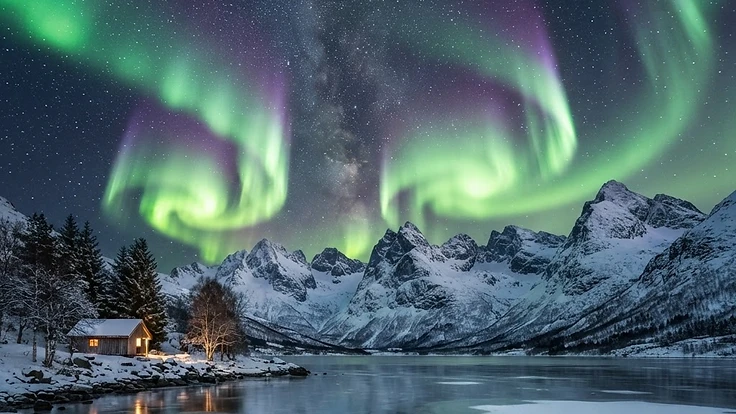
The Northern Lights, or aurora borealis, rank among nature's most captivating displays. This celestial phenomenon occurs when charged particles from the Sun interact with the magnetic environment surrounding our planet.
Live Aurora Forecast
Powered by Flarient — embed this on your site →
While we often see them as ethereal ribbons of light in the night sky, they are actually the visible footprint of a complex space weather system. Understanding these lights reveals our intimate connection to the Sun and the protective nature of our own magnetic field.
The Science Behind It
The process begins on the Sun, where solar wind carries a constant stream of plasma into the solar system. Occasionally, flares or coronal mass ejections launch even larger clouds of charged particles toward Earth.
When these particles reach our planet, they are guided by the magnetosphere toward the polar regions. The magnetic field lines funnel this energy into the upper atmosphere, known as the aurora oval.
At this altitude, the charged particles collide with oxygen and nitrogen atoms. These collisions excite the atoms, forcing them to release energy in the form of photons which we perceive as vibrant colour.
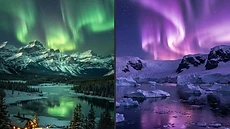
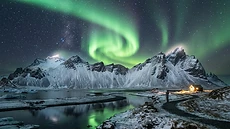
Oxygen typically emits green and red light, while nitrogen often creates blue or purple hues. This atomic reaction mirrors the processes scientists study when they model solar impacts, as explained in our article on [scientists predict CME arrival times using advanced modelling](/blog/scientists-predict-cme-arrival-times-using-advanced-modelling).
Real-World Implications
Geomagnetic storms, which trigger intense auroral displays, also have significant impacts on modern infrastructure. Strong storms can induce currents in power grids and affect satellite communications or high-frequency radio transmissions.
These events are categorised using the K-index, which measures the degree of disturbance in Earth's magnetic field. Monitoring these levels is vital for operators of sensitive electronic systems that might otherwise face signal degradation.
Furthermore, solar activity influences the atmosphere in ways that can affect the orbital drag experienced by satellites in low Earth orbit. Even the International Space Station, orbiting at 408 kilometres, must account for variations in the density of the upper atmosphere during periods of high solar activity.
What You Can Do
If you hope to witness this spectacle, preparation is essential. Tracking the current geomagnetic conditions helps you decide whether to venture into the cold for a glimpse of the sky.
Many enthusiasts participate in guided aurora tours across locations like Iceland, Norway, Canada, and Finland to maximise their chances of success with experienced hunters. You can also explore the glossary to learn more about the technical terms that define space weather.
Using digital tools allows you to receive notifications when conditions become favourable. Accessing reliable data turns a guessing game into a planned journey under the stars.
Key Takeaways
The aurora borealis remains a constant reminder of Earth's interaction with the wider solar system. From the Sun's magnetic energy to the vibrant gas excitation in our atmosphere, it is a testament to the power of our planet's invisible defences.
By keeping an eye on the local aurora forecast, you can better understand when these lights might appear in your region. Enjoying the wonder of the night sky is always more rewarding when you know exactly what is happening above your head.
People Also Ask
What is the difference between aurora borealis and aurora australis?+
The primary difference is their location. The aurora borealis appears in the Northern Hemisphere, centred around the North Pole, while the aurora australis occurs in the Southern Hemisphere, near the South Pole. Both are caused by the same physical process of solar particles interacting with Earth's magnetic field.
Can you hear the aurora borealis?+
While the auroras are silent, there have been historical reports of crackling or popping sounds associated with intense displays. Scientists suggest these sounds may be related to electrostatic discharges near the ground, though they are rarely heard and remain a subject of ongoing atmospheric research.
Why do auroras have different colours?+
The colour depends on which gas atoms are being excited by solar particles and their altitude. Oxygen at lower altitudes produces green light, while high-altitude oxygen produces red. Nitrogen molecules are responsible for blue and purple hues, typically seen during very energetic displays.
Continue Reading
Forecast These Questions
View all →Express your probability on these active forecast questions.