How the Solar Cycle Dictates Global Ham Radio Propagation
The solar cycle governs the ionosphere, directly influencing HF radio communication. Understanding this relationship helps operators predict signal propagation.
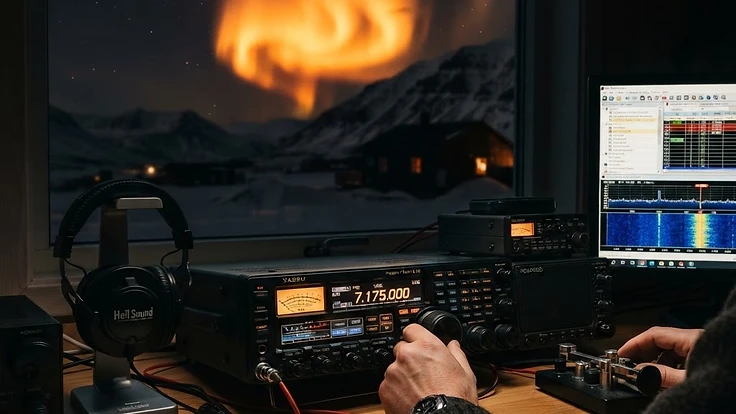
The Solar Cycle Governs Global Radio Propagation
Radio amateurs know that the invisible layer above our heads determines whether a signal travels around the world or dies in the backyard. This layer, the ionosphere, acts as a mirror for high frequency radio waves, but its reflective properties are entirely at the mercy of the sun. The solar cycle, which repeats roughly every eleven years, dictates the intensity of solar radiation hitting our atmosphere.
HF Radio Conditions
Powered by Flarient — embed this on your site →
Since Solar Cycle 25 began in December 2019, operators have watched with interest as activity trends toward a solar maximum.
Understanding this rhythm is not just academic for the radio enthusiast. When solar activity is high, the ionosphere becomes more heavily ionised, allowing for higher frequencies to refract back to Earth. When the sun is quiet, long distance communication on those same bands becomes difficult or impossible.
By tracking these patterns, you can plan your operations to match the natural cycles of our local star.
The Science Behind It
The sun emits a constant stream of charged particles known as the solar wind, which interacts with the Earth's magnetosphere. When solar flares occur, they release intense bursts of electromagnetic radiation that travel at the speed of light, reaching Earth in mere minutes. This energy alters the electron density in the upper atmosphere, which is the primary driver of HF radio propagation.
You can learn more about how this energy exchange functions in our detailed overview on how solar wind shapes Earth magnetosphere.
During peak solar activity, the F2 layer of the ionosphere reaches its highest density. This enables the use of higher frequency bands such as 28 MHz and even 50 MHz for global contacts. Conversely, during the solar minimum, the ionosphere is weak, and signals often pass straight through into space.
It is a fundamental truth of radio physics that the sun remains the most significant component of your antenna system.
To dive deeper into the mechanics of these signals, consult our glossary for key terms regarding ionospheric refraction.
Real-World Implications
Solar activity does not merely dictate band availability, as it also brings the risk of geomagnetic disturbance. When a coronal mass ejection reaches our planet, it can trigger a geomagnetic storm that disrupts communications and creates significant noise. While minor disturbances might only degrade signal quality, severe events can trigger a complete blackout of HF bands.
We have documented some of the most intense historical disruptions on our storm leaderboard to provide context for these recurring challenges.
Operators must also consider the impact of solar flares on satellite communication and the sensitive electronics used in modern radio setups. While most amateur operations are ground-based, those using satellites orbiting near the Kármán line at 100 km face unique radiation environments. Understanding these risks helps in protecting equipment and maintaining schedules during periods of high solar flux.
You can find more information on the historical perspective of these space weather risks in our analysis of the Carrington Event and modern solar risks.
What You Can Do
Practical preparation begins with monitoring current conditions rather than relying on guesswork. Having access to a real-time feed of solar indices allows you to adjust your frequency selection based on the current state of the ionosphere. For those looking to integrate these metrics directly into their own station software or websites, our embeddable widgets provide a professional way to display live data.
It is often helpful to view historical trends as well, which you can browse through our extensive archive of past solar observations.
For those who enjoy the auroral displays that often accompany these disturbances, guided aurora tours in countries like Iceland, Norway, Canada, and Alaska offer a spectacular way to witness the visual manifestation of this energy. Always match your radio operating goals to the prevailing solar weather. If you want to refine your technical approach, our guide on [mastering the science of HF radio propagation](/blog/mastering-the-science-of-hf-radio-propagation) provides the foundational knowledge required to succeed during both quiet and active periods.
If you'd rather follow a guide than a graph, bookable Northern Lights tours operate in Iceland, Sweden, Canada and Alaska — each with a photographer who knows when the oval will dance.
Key Takeaways
The solar cycle acts as the master switch for global HF communication. While radio enthusiasts cannot influence the sun, they can certainly adapt their strategies to thrive during its various phases. Monitoring the current solar flux and ionospheric density is the most effective way to ensure successful long-distance contacts.
Whether we are in the midst of a solar maximum or a quiet period, the ability to read the signs of solar activity remains an essential skill for the modern amateur operator.
Continue to observe, learn, and adapt to the changing conditions provided by our sun. With the right data and a bit of patience, you will find that the ionosphere remains a reliable partner for global communication. Stay tuned to the changing indices and keep your station ready for the next peak in the cycle.
People Also Ask
Does solar activity make radio signals stronger?+
Yes, increased solar activity raises the electron density of the ionosphere. This allows the F2 layer to reflect higher frequencies back to Earth, which significantly improves long-distance HF radio propagation, particularly on bands like 10 metres and 12 metres that are often 'closed' during solar minimums.
What is the best solar cycle phase for DXing?+
The period around the solar maximum is generally considered the best time for long-distance DXing on higher HF bands. During this time, the increased solar radiation enables worldwide communication on frequencies that would otherwise be unusable, allowing operators to make contacts across continents more easily.
Can a solar flare damage my radio equipment?+
While a solar flare itself is an electromagnetic event that does not usually damage grounded radio equipment, the resulting geomagnetic storm can induce large currents in long wire antennas. In extreme cases, these induced currents might damage sensitive front-end components if the station is not properly protected with surge arresters.
Continue Reading