How Solar Wind Shapes Earth Magnetosphere
Solar wind constantly sculpts our planet's magnetic shield. Discover how this silent cosmic interaction drives everything from global radio patterns to the breathtaking aurora.
Solar Wind Dynamics and the Planetary Shield
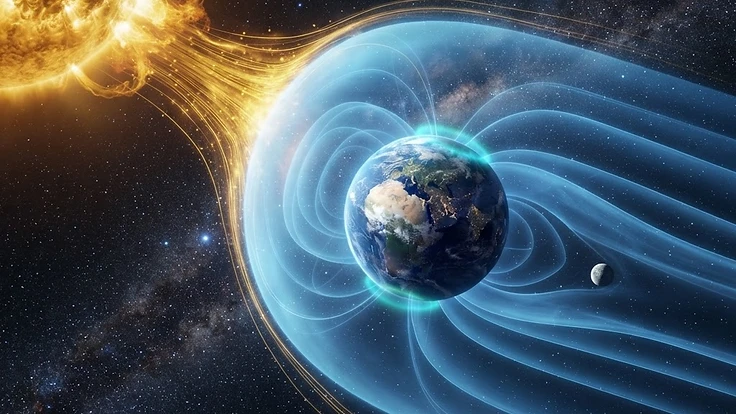
Earth exists within the extended atmosphere of the Sun. This stream of charged particles, known as the solar wind, flows outward at speeds between 400 and 700 kilometres per second.
Live Space Weather Dashboard
Powered by Flarient — embed this on your site →
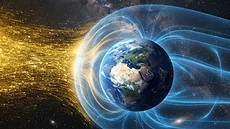
Our planet generates its own magnetic field, forming a protective bubble called the magnetosphere. When solar wind hits this barrier, it shapes our immediate space environment and dictates the behaviour of our upper atmosphere.
The Science Behind It
Solar wind is composed primarily of electrons and protons. When these particles reach Earth, the magnetosphere deflects the bulk of the plasma flow around the planet.
This interaction creates a bow shock, similar to the wave formed in front of a ship travelling through water. The shape of this shield changes constantly based on the pressure exerted by the Sun.
During periods of intense solar activity, particles can inject into our near-Earth environment. This leads to fluctuations in the Kp index, a standard measure of geomagnetic disturbance that tracks how the solar wind stresses our magnetic field.
These energetic particles travel along magnetic field lines toward the poles. Upon reaching the upper atmosphere, they collide with nitrogen and oxygen atoms to produce the aurora, which manifests as vibrant light displays in the sky.
Real-World Implications
Technological infrastructure faces challenges when solar wind activity increases. Strong geomagnetic storms can induce electric currents in power grids, potentially stressing transformers and causing voltage instabilities.
Satellite operators must also monitor these events closely. As discussed in our analysis of The Van Allen Radiation Belts and Their Impact on Satellite Technology, increased solar wind density alters drag on low-earth orbit craft.
Communication systems also bear the brunt of these interactions. High-frequency radio propagation suffers during extreme disturbances, which is why operators often reference a glossary of technical terms to understand current signal degradation patterns.
What You Can Do
Staying informed about the current state of space weather is the best way to prepare for potential disruptions. You can track solar indices using Flarient's live dashboard, which provides a clear view of current magnetic conditions.
If you are planning an expedition to see the lights, check our local aurora forecast to see if activity is predicted for your area. We also recommend researching guided aurora tours in countries like Iceland, Norway, Canada, Finland, Sweden, or Alaska to gain expert insight into the best viewing conditions.
For those managing their own websites, consider using our embeddable widgets to keep your audience updated with live space weather data. It is a straightforward way to provide context on how the Sun influences our local environment.
Key Takeaways
The relationship between solar wind and Earth is a constant, physical dialogue between our star and our planet. While our magnetosphere provides a robust defence, the variability of the Sun means that we must remain vigilant.
Understanding these mechanisms helps us protect the critical technologies that support modern society. By tracking data from resources like NOAA SWPC, we turn invisible cosmic forces into actionable information for daily life.
People Also Ask
What happens when solar wind hits Earth?+
When solar wind encounters the magnetosphere, it is largely deflected around the planet. However, some particles are funnelled toward the magnetic poles. This interaction creates geomagnetic storms, fluctuates the Kp index, and triggers auroral displays in the upper atmosphere while affecting satellite drag and radio communications.
How strong is a G5 geomagnetic storm?+
A G5 storm is the highest level on the NOAA G-scale. It represents extreme geomagnetic conditions where power systems may experience widespread voltage control problems and grid stability issues. These events can also result in long-term radio blackouts and aurora visible at extremely low latitudes.
Does solar wind cause solar flares?+
No, solar wind and solar flares are distinct phenomena. Solar wind is a continuous stream of plasma from the Sun, whereas solar flares are sudden, intense bursts of electromagnetic radiation caused by magnetic reconnection in the solar atmosphere. Both are manifestations of the Sun's dynamic magnetic activity.
Continue Reading
Forecast These Questions
View all →Express your probability on these active forecast questions.