
The Van Allen Radiation Belts and Their Impact on Satellite Technology
Discover how the Van Allen radiation belts trap high-energy particles and why these invisible zones pose significant challenges for modern satellite operations and space exploration.
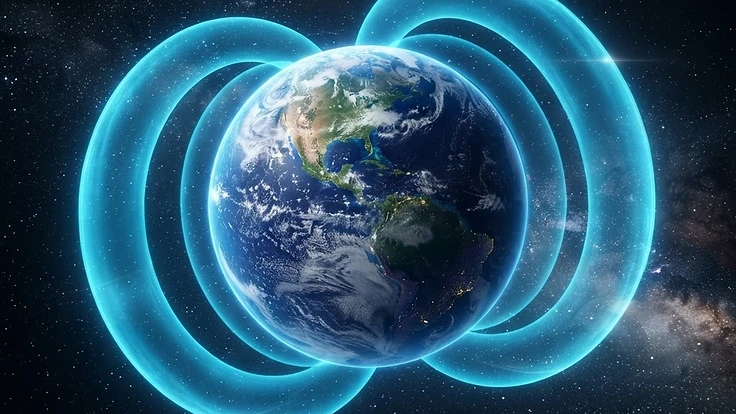
The Van Allen Radiation Belts Shape the Near-Earth Environment
The Van Allen belts are two massive, donut-shaped zones of energetic charged particles held in place by Earth's magnetic field. Named after James Van Allen, these regions serve as a protective trap, gathering protons and electrons that originate from the sun and cosmic rays.
While the belts shield the surface of our planet from high levels of radiation, they create a hostile environment for human-made spacecraft. Understanding these regions is essential for protecting the infrastructure that powers our global communication, navigation, and weather monitoring networks.
The Science Behind It
These belts exist because Earth acts like a giant bar magnet, funnelling plasma and solar wind toward the magnetic poles. The inner belt, located roughly 1,000 to 6,000 kilometres above Earth, primarily contains high-energy protons.
The outer belt spans approximately 13,000 to 60,000 kilometres and is dominated by electrons. These particles are not static, as they fluctuate in intensity based on solar activity and the current Kp levels that measure geomagnetic disturbances.
When the sun undergoes a coronal mass ejection, the resulting solar storm can pump massive amounts of energy into these regions. This sudden infusion of particles causes the belts to swell and become more volatile, occasionally creating a third, transient belt.
Understanding these dynamics helps researchers analyse how radiation environments change over time. It is a critical component of space weather science, helping us distinguish between standard quiet periods and solar storms.
Real-World Implications
Satellites travelling through these regions face significant risks from cumulative radiation damage. High-energy electrons can penetrate spacecraft shielding, leading to deep-dielectric charging, which causes electrical arcing that can fry sensitive circuitry.
This is why engineers must meticulously design radiation-hardened components for missions passing through or operating within these zones. It is a persistent challenge similar to the risks outlined in Solar Radiation Storms and Their Impact on Earth.
If a satellite is not properly protected, it may experience signal anomalies, permanent data loss, or total mission failure. These impacts are felt by everyday users through occasional disruptions in GPS accuracy or satellite-based internet services.
Predicting when the belts will spike in intensity is vital for the longevity of our orbital assets. It ensures that operators can safely navigate their spacecraft during periods of high solar activity, much like they would prepare for the The Carrington Event and Modern Solar Risks.
What You Can Do
Monitoring space weather is the most effective way to understand the conditions affecting satellite health. By tracking solar wind speeds and geomagnetic indices, you gain a clearer picture of when the Van Allen belts might become particularly hazardous.
You can use embeddable widgets on your own platform to keep your audience informed about real-time changes in the space environment. These tools provide a window into the otherwise invisible forces that influence our technology, including the aurora patterns seen near the poles.
If you are planning an expedition to see the lights, check out guided aurora tours in countries like Iceland, Canada, or Sweden to get an expert view of the phenomena that result from these particle interactions. Always refer to a reliable glossary when interpreting technical data to ensure you are accurately tracking the severity of current events.
Key Takeaways
The Van Allen belts are dynamic, energetic regions that act as a gateway to deep space. While they protect life on Earth, they remain a primary hurdle for satellite engineering and mission planning.
By staying aware of the fluctuations in these belts, we can better safeguard the satellite fleets we rely on every day. Continued research and real-time monitoring remain our best defences in the ongoing challenge of operating safely within the Earth-Moon system.
People Also Ask
Are the Van Allen belts dangerous for astronauts?+
Yes, they can be dangerous, but the radiation exposure is managed. Astronauts in low-Earth orbit, such as on the ISS, typically stay below the belts. Missions traveling to the Moon or further must traverse them quickly to minimize the dose of ionizing radiation received by the crew and hardware.
Do the Van Allen belts move?+
The intensity and physical boundaries of the belts are not fixed. They swell, shrink, and reorganize in response to solar wind, coronal mass ejections, and changes in the Earth's magnetic field. During intense solar storms, the belts can be significantly altered or even temporarily augmented by new particle populations.
How do satellites protect themselves from radiation?+
Satellite engineers use radiation hardening, which involves using specialized materials, redundant circuitry, and thick shielding to prevent particle penetration. They also implement autonomous safe modes that can shut down sensitive systems during extreme solar events to prevent permanent electrical damage from deep-dielectric charging.
Continue Reading
Forecast These Questions
View all →Express your probability on these active forecast questions.
Related Articles

Satellite Operators Use Advanced Strategies to Mitigate Space Weather Risks
2026-11-10 · 5 min read

Understanding the Mechanics of Sun-Synchronous Orbits
2026-10-16 · 5 min read

Tracking the International Space Station in Real Time
2026-10-02 · 5 min read